• 2026.03.23 (Mon)
  • All articles
  • LOGIN
  • JOIN
Global Economic Times
fashionrunwayshow2026
  • Synthesis
  • World
  • Business
  • Industry
  • ICT
  • Distribution Economy
  • Well+Being
  • Travel
  • Eco-News
  • Education
  • Korean Wave News
  • Opinion
  • Arts&Culture
  • Sports
  • People & Life
    • International Student Report
    • With Ambassador
  • Column
    • Cho Kijo Column
    • Cherry Garden Story
    • Ko Yong-chul Column
    • Kim Seul-Ong Column
    • Lee Yeon-sil Column
  • Photo News
  • New Book Guide
MENU
 
Home > Synthesis

South Korean Small Businesses Struggle with Debt Amidst Economic Downturn

Hwang Sujin Reporter / Updated : 2025-02-17 09:52:06
  • -
  • +
  • Print

Seoul - A recent report by Korea Credit Data reveals that approximately 1 in 10 small businesses in South Korea that had taken out loans were forced to close their doors in the fourth quarter of last year. This surge in closures is attributed to a combination of factors, including the lingering effects of the COVID-19 pandemic, a decline in consumer confidence following the 12.3 emergency declaration, and the subsequent failure to achieve the anticipated recovery in sales.

The report, which surveyed 160,000 businesses registered with the "Cash Note" business management service, estimates that as of the end of last year, there were 3,622,000 businesses with outstanding personal business loans. Of these, 86.7% (3,140,000) were still operating, while 13.3% (482,000) had closed down.

The average amount of overdue payments for closed businesses was 5.68 million won, with an average loan balance of 61.85 million won. The total loan balance for all individual businesses was 716 trillion won, an increase of 0.5% from the previous quarter and 2.3% from the same quarter of the previous year. Bank loans accounted for 60.5% of the total, while loans from non-bank financial institutions such as mutual savings banks made up the remaining 39.5%.

The report suggests that the difficulties faced by small business owners in repaying their loans are a direct result of their deteriorating business conditions. The estimated annual sales per small business in 2024 were 178.82 million won, with profits of 42.73 million won. While profits increased by 14.71% compared to the previous year, sales decreased by 0.57%.

This increase in profits despite a decline in sales is likely due to small business owners' efforts to reduce expenditures. The average annual expenditure per business in 2024 was 136.09 million won, a decrease of 4.56% from the previous year. However, sales in the fourth quarter of 2024 were estimated to be 47.98 million won (15.99 million won per month), an increase of 1.07% from the same period of the previous year and 10.77% from the previous quarter.

A representative from Korea Credit Data stated, "Small business owners had hoped for a full-fledged recovery in 2024 after years of severely depressed consumption due to the COVID-19 pandemic and a partial recovery in 2023. However, with the economic downturn and the emergency declaration, the special year-end season disappeared, and sales last year remained stagnant at a level lower than or similar to 2023."

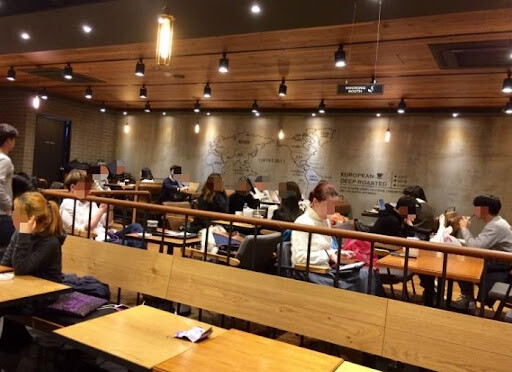
Among various business sectors, cafes were the hardest hit by the decline in consumer spending. In the fourth quarter of last year, cafe sales among food service businesses plummeted by 9.5% compared to the third quarter. Sales of fast food and bars also decreased by 1.8% and 1.7%, respectively, compared to the previous quarter. On the other hand, sales of general restaurants such as Western, Asian, Japanese, and Chinese restaurants showed a slight increase from the third quarter.

A representative from Korea Credit Data analyzed, "It is estimated that consumers, feeling economic and political 불안, reduced their spending on discretionary items such as coffee and alcohol."

In the service sector, sales of arts, sports, and leisure-related businesses decreased by 7.4% from the third quarter. In contrast, sales of professional, scientific, and technical services, including tax accountants and lawyers, increased by 30.1%, and transportation services also increased by 10.3%. While sales of general retailers such as supermarkets and convenience stores decreased by 0.1%, sales of specialized retailers, including furniture, stationery, eyewear, and musical instrument stores, increased by 12.4%.

[Copyright (c) Global Economic Times. All Rights Reserved.]

  • #globaleconomictimes
  • #글로벌이코노믹타임즈
  • #한국
  • #중기청
  • #재외동포청
  • #외교부
  • #micorea
  • #mykorea
  • #newsk
  • #nammidonganews
  • #singaporenewsk
Hwang Sujin Reporter

Popular articles

  • IVE Sheds "Princess" Persona for Darker Horizon with 2nd Full-Length Album 'REVIVE+'

  • BLACKPINK Becomes First Artist to Surpass 100 Million YouTube Subscribers, Receiving the ‘Red Diamond’ Award

  • "Daily Gains of 28 Million Won": Civil Servant’s High-Stakes Semiconductor Bet Becomes Viral Sensation

I like it
Share
  • Facebook
  • X
  • Kakaotalk
  • LINE
  • BAND
  • NAVER
  • https://www.globaleconomictimes.kr/article/1065574258680182 Copy URL copied.
Comments >

Comments 0

Weekly Hot Issue

  • Coway Clinches Top Honor at "Water Taste Awards" for 7th Consecutive Year
  • HP Targets Korea as Strategic Hub for 'Edge AI' Expansion, Seeking Startup Partnerships
  • Pearl Abyss’s 'Crimson Desert' Shatters Records with 2 Million Copies Sold on Day One
  • "BTS Over Books?" Indian Academies Issue Emergency Notices as Students Plot Mass Absences for Comeback Live
  • Naver to Shut Down Men's Fashion Service 'MR.' to Launch Expanded AI-Driven Fashion Platform
  • JBNU and SKKU Researchers Achieve Breakthrough in "Dream Material" MXene, Setting New World Records in Performance

Most Viewed

1
An Open Letter to BTS On the Eve of a Historic Performance
2
From Industrial Capital to Tourism Mecca... Ulsan Makes a Bold Move with ‘Experiential Content’ in 2026
3
Ko Sang-goo, President of World Federation of Korean Associations, Elected as First Private Sector Chair of World Korean Community Leaders Convention
4
It is Time for BTS’s Fandom, ARMY, to Step Forward
5
Korean Stock Market Plunges: Circuit Breaker and Sidecar Triggered Amid Geopolitical Crisis
광고문의
임시1
임시3
임시2

Hot Issue

Vishay Unveils Ultra-Compact 0404 RGB LED with Independent Chip Control for Enhanced Color Precision

Coway Clinches Top Honor at "Water Taste Awards" for 7th Consecutive Year

AI Medical Ecosystem in Focus: KIMES 2026 Opens in Seoul as Global Healthcare Hub

Netanyahu Declares Decisive Blow to Iran’s Nuclear and Missile Programs, Signals Early End to War

Let’s recycle the old blankets in Jeju Island’s closet instead of incinerating them.

Global Economic Times
korocamia@naver.com
CEO : LEE YEON-SIL
Publisher : KO YONG-CHUL
Registration number : Seoul, A55681
Registration Date : 2024-10-24
Youth Protection Manager: KO YONG-CHUL
Singapore Headquarters
5A Woodlands Road #11-34 The Tennery. S'677728
Korean Branch
Phone : +82(0)10 4724 5264
#304, 6 Nonhyeon-ro 111-gil, Gangnam-gu, Seoul
Copyright © Global Economic Times All Rights Reserved
  • 에이펙2025
  • APEC2025가이드북TV
  • 독도는우리땅
Search
Category
  • All articles
  • Synthesis
  • World
  • Business
  • Industry
  • ICT
  • Distribution Economy
  • Well+Being
  • Travel
  • Eco-News
  • Education
  • Korean Wave News
  • Opinion
  • Arts&Culture
  • Sports
  • People & Life 
    • 전체
    • International Student Report
    • With Ambassador
  • Column 
    • 전체
    • Cho Kijo Column
    • Cherry Garden Story
    • Ko Yong-chul Column
    • Kim Seul-Ong Column
    • Lee Yeon-sil Column
  • Photo News
  • New Book Guide
  • Multicultural News
  • Jobs & Workers