![[등록] 2026-09-01 15:48:31](/support/_updata/banner2/tl181982910_6749.png)


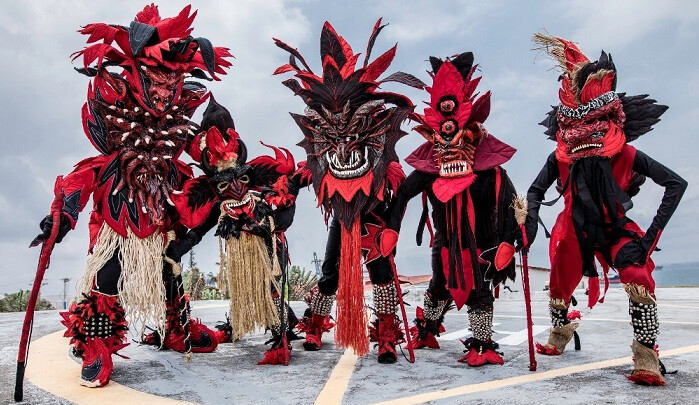
Nestled between the turquoise embrace of the Caribbean Sea and the emerald depths of the tropical rainforest, the quaint Panamanian town of Portobelo transformed last Saturday into a vibrant tableau of red, a color that pulsed with the narrative of struggle, a symbolic battle between good and evil, and the enduring resistance of enslaved people against Spanish colonial rule.
Each year, this historic enclave becomes the stage for the "Festival of Devils and Congos" (Festival de Diablos y Congos), a profound cultural expression where hundreds of residents take to the streets. This festival, imbued with the dramatic imagery and intense hues characteristic of Caribbean celebrations, vividly reenacts the historical fight of enslaved Africans against their colonial oppressors.
Participants adorn themselves in elaborate masks, predominantly red and black, which serve as a potent amalgamation of the devil and the Spanish colonizers. In stark contrast, those representing the enslaved Africans, known as the Congos, are resplendent in a kaleidoscope of colorful attire, finding protection in the presence of white-clad angels who symbolically chase away the demonic figures. Their dances culminate in a powerful representation of the oppressors' eventual conversion to good.
Eduardo Guadalupe, a 34-year-old participant, eloquently articulated the festival's significance: "This is a culture of memory, and the devil symbolizes the culture of the oppressor. In this case, the white man over the Black people of the slave era, the Congos." He participated in the procession, his face obscured by a large black mask adorned with red and black speckled flames that seemed to flicker upwards and sideways, embodying the very essence of the oppressor figure.
More than just an annual festivity, Portobelo's Festival of Devils and Congos stands as a vital piece of Panama's historical and cultural mosaic, a testament to the indomitable spirit of Afro-Panamanians. The festival's origins are deeply rooted in the Spanish colonial era. During this dark chapter of history, Africans forcibly brought to Panama as slaves developed unique forms of expression to preserve their cultural heritage, maintain their beliefs, and ignite the flames of resistance against the brutal oppression they faced.
The term "Congo" in this context refers to the enslaved people brought from Africa during the colonial period. In the festival, the Congos embody freedom and resistance through their vibrant costumes, dances, and songs, which narrate their stories of hardship, resilience, and the yearning for liberation. Their movements oscillate between expressions of sorrow and pain and fervent declarations of hope and freedom.
Conversely, the "Devil" figure in the festival symbolically represents the Spanish colonizers and their oppressive system. The red and black hues of the devil masks evoke both terror and authority, portraying them as entities relentlessly pursued by the Congos. This chase visually encapsulates the resistance against oppression and the determination to overcome it.
The "Angel" figures that appear in the festival are depicted as protectors and guides for the Congos. Dressed in white, they symbolize the forces of good, tasked with purifying and transforming the demonic oppressors. This element of the festival underscores the ultimate belief in the triumph of justice and the eventual arrival of peace.
The Festival of Devils and Congos transcends mere spectacle; it is a living repository of historical memory, passed down through generations, and a crucial ritual that reaffirms the community's identity. Through their masks and costumes, the participants not only remember the suffering and resistance of their ancestors but also share a collective hope for the future.
Today, Portobelo's Festival of Devils and Congos has become a significant cultural tourism draw for Panama, attracting visitors from both within the country and internationally who seek to witness this unique and powerful celebration. However, beneath the vibrant surface lies the poignant history of the colonial era, the resilient spirit of resistance that emerged from it, and the unwavering commitment of the community to remember and honor this legacy.
The crimson-tinged streets of Portobelo on this day are more than just a festive scene; they are a living history book, connecting the past, present, and future. The cries of ancestors who fought against injustice and yearned for freedom echo through the vibrant colors and dynamic movements, continuing to resonate powerfully in the present day.
To further enrich the understanding of this significant cultural event, additional research reveals several key aspects:
Syncretism of Cultures: The festival is a fascinating example of cultural syncretism, blending African traditions, indigenous influences, and elements of Catholicism introduced by the Spanish. The masks, music, and dances often incorporate symbolic elements from these different cultural spheres.
Music and Dance as Resistance: Music and dance were crucial forms of resistance for enslaved Africans. The rhythms and movements in the Congo dances often have roots in African musical traditions and served as a way to maintain cultural identity and communicate covertly. The drumming and chanting during the festival are integral to creating the atmosphere and conveying the historical narrative.
The Role of Oral Tradition: In the absence of written records, oral tradition played a vital role in preserving the history and stories of the enslaved people. The Festival of Devils and Congos serves as a powerful form of oral history, ensuring that the struggles and triumphs of the past are not forgotten.
Community Involvement: The festival is deeply rooted in the community of Portobelo. Preparations often involve entire families and neighborhoods, fostering a strong sense of collective identity and purpose. The creation of the elaborate costumes and masks is a significant part of this community effort.
Evolution Over Time: While the core themes of resistance and liberation remain central, the festival has likely evolved over time, incorporating new elements and adapting to changing social and political contexts. However, its fundamental connection to the history of slavery and the struggle for freedom has endured.
Recognition and Preservation Efforts: Recognizing its cultural and historical significance, there have been efforts to document and preserve the Festival of Devils and Congos. This includes academic research, archival documentation, and initiatives to support the continuation of the tradition by future generations.
Incorporating these additional insights, the significance of the Festival of Devils and Congos in Portobelo becomes even more profound. It is not merely a colorful spectacle but a powerful testament to the resilience of the human spirit, the enduring legacy of resistance against oppression, and the vibrant cultural heritage of Afro-Panamanians. The annual crimson tide that washes over Portobelo is a potent reminder of a history that continues to shape the present and inspire hope for a more just future.
[Copyright (c) Global Economic Times. All Rights Reserved.]