![[등록] 2026-09-01 15:48:31](/support/_updata/banner2/tl181982910_6749.png)


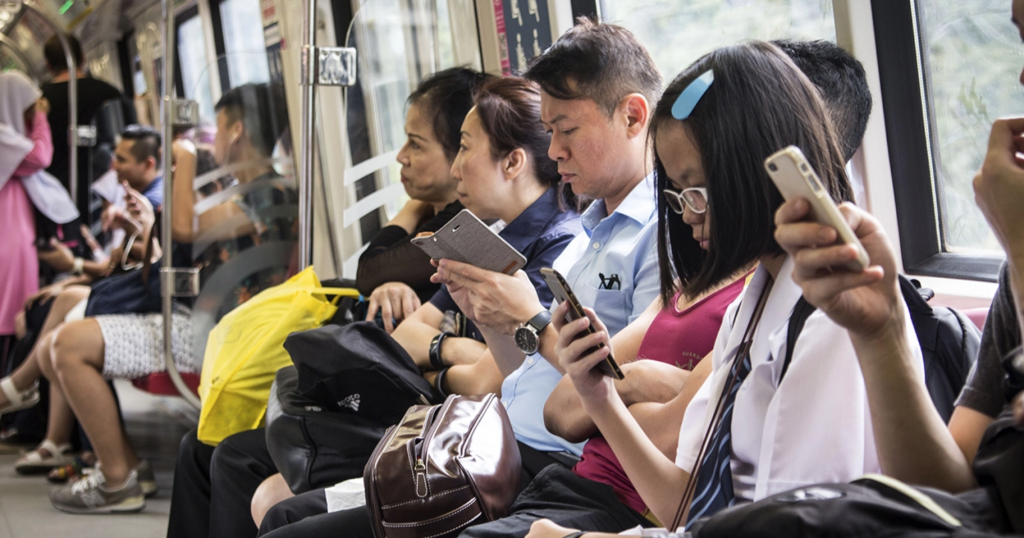
SINGAPORE – Gone are the days when mobile data in Singapore was a precious commodity, carefully measured in gigabytes and often tied to expensive, multi-year contracts. A dramatic price war that began in the mid-2010s has fundamentally reshaped the telecommunications landscape, driving the cost of a gigabyte of mobile data down from dollars to mere cents. This intense competition has empowered consumers, with some even ditching traditional home broadband in favor of affordable and abundant mobile data plans.
"It's fantastic," enthuses Jon Phua, a 35-year-old communications strategist. He exemplifies this trend, utilizing three SIM-only, contract-free mobile lines – one for personal use, another for work, and a third providing a hefty 290GB for just $9.90 a month from M1 sub-brand Maxx, which he uses as his primary home internet solution. His other mobile plans are with M1 and Simba, highlighting the ease with which consumers can mix and match providers to suit their needs. "Consumers benefit from such competition," he asserts.
The numbers speak for themselves. In 2017, the cheapest no-contract SIM-only plans typically cost upwards of $4 per GB. Fast forward to today, and similar plans from Singapore's telcos offer data at under 10 cents per GB – a staggering reduction of over 90 percent at the budget end of the spectrum. For instance, Singtel's sub-brand Gomo now offers 300GB for a mere $18.33. This is a stark contrast to Singtel's cheapest SIM-only offering in 2017, which provided just 5GB for $20.
This intense rivalry has positioned Singapore as a leader in mobile data affordability within the developed world. A 2023 analysis by price comparison site cable.co.uk, which examined 5,603 mobile data plans across 237 countries and territories, ranked Singapore 59th globally. The average price of 1GB in the Republic was found to be just 63 US cents (approximately 85 Singapore cents). While not as cheap as markets like Israel (2 US cents per GB) and Italy (9 US cents per GB), Singapore's prices are significantly lower than those in Japan (US$3.48) and the United States (US$6).
The Catalysts Behind the Competition
Several factors have fueled this dramatic shift. The rise of low-cost smartphone manufacturers like Xiaomi and Huawei played a crucial role. By offering feature-rich phones at significantly lower prices than established players like Samsung and Apple, they lessened the reliance on telco subsidies tied to long-term contracts. Xiaomi's 2014 entry into the Singapore market with the $169 Redmi was a pivotal moment, demonstrating that consumers could access quality smartphones without being locked into expensive plans.
This trend towards decoupling phone purchases from mobile plans gained momentum. By 2018, an Infocomm Media Development Authority (IMDA) survey indicated that one in six consumers had opted for SIM-only plans. As consumers became more comfortable purchasing their devices outright, the battleground for telco competition shifted from handset subsidies to data allowances and pricing.
New Entrants and MVNOs Disrupt the Market
Another significant driver of lower prices has been the arrival of new players in Singapore's telecommunications market. In 2016, Australian telecom company TPG (now operating as Simba) secured a license to become the fourth major telco, breaking a 15-year period without a new entrant. Simba's aggressive market entry in 2018, offering a year-long trial of "unlimited" data (capped at 2GB daily) for free, quickly amassed over 400,000 users. Following the trial, their $10 contract-free plan for 50GB a month set a new benchmark for affordability. By 2025, Simba has captured an 11 percent market share, according to BMI, challenging the dominance of market leader Singtel (44 percent).
"We had no legacy to contend with and could scale efficiently as demand for our services grew," explains Simba's chief technology officer, Benjamin Tan. He emphasizes their focus on providing quality, straightforward, and low-cost offerings, often including features for free that competitors charge for.
Simultaneously, the emergence of Mobile Virtual Network Operators (MVNOs) further intensified competition. MVNOs, such as Circles.Life, lease network capacity from established telcos instead of building their own infrastructure. The IMDA actively facilitated the entry of MVNOs in 2016. Circles.Life, launching in the same year on M1's network with a $28 contract-free plan, quickly gained traction by offering more generous data allowances.
"Our entry into the market catalysed a significant shift, not just in pricing but also in the overall customer experience," states Fabian Sossa, vice-president of corporate marketing at Circles, the parent company of Circles.Life. He attributes the increased affordability to technological advancements, operational efficiencies, and their pioneering fully digital business model in Singapore, which cuts costs by eliminating physical stores and relying on a user-friendly app for customer interactions.
The success of these new entrants and their lean business models prompted established players like Singtel and StarHub to launch their own budget sub-brands – Gomo and Giga, respectively – in 2019, further driving down prices and increasing data allowances.
A Data-Hungry Nation and the Rise of Provider-Hopping
Singaporeans' growing appetite for mobile data has also fueled this competitive environment. As smartphones evolved from primarily calling devices to hubs for social media, streaming, and online services, the demand for larger data bundles soared. This increasing data consumption made affordable and plentiful data a key differentiator for telcos.
The ease of porting mobile numbers between providers has further empowered consumers, leading to a phenomenon of "provider-hopping" in search of the best deals. Mr. Imtiaj Alom, a 31-year-old civil servant, is a prime example, having switched his mobile number three times in the past year, currently paying $16 a month for 300GB on a promotional plan. With 9,960,700 mobile subscriptions in Singapore at the end of 2024, translating to a 165 percent mobile penetration rate according to IMDA data, many consumers are actively seeking out the most cost-effective options, often maintaining multiple lines to take advantage of different promotions and benefits.
As Nanyang Technological University Associate Professor Dr. Eric Kwon notes, the regulator IMDA strategically fostered greater competition by licensing a fourth telco. However, the subsequent explosion of MVNOs and the resulting ultra-low pricing were largely driven by market forces that the IMDA enabled but did not directly control.
For Singaporean consumers, the mobile data price war has been a resounding victory. With abundant data available at remarkably low prices and the freedom to switch providers easily, they are enjoying connectivity that was unimaginable just a decade ago. As Matthew Tan aptly put it in 2019, "You lose out if you don’t switch" – a sentiment that continues to ring true in Singapore's dynamic and competitive mobile landscape.
[Copyright (c) Global Economic Times. All Rights Reserved.]