![[등록] 2026-09-01 15:48:31](/support/_updata/banner2/tl181982910_6749.png)


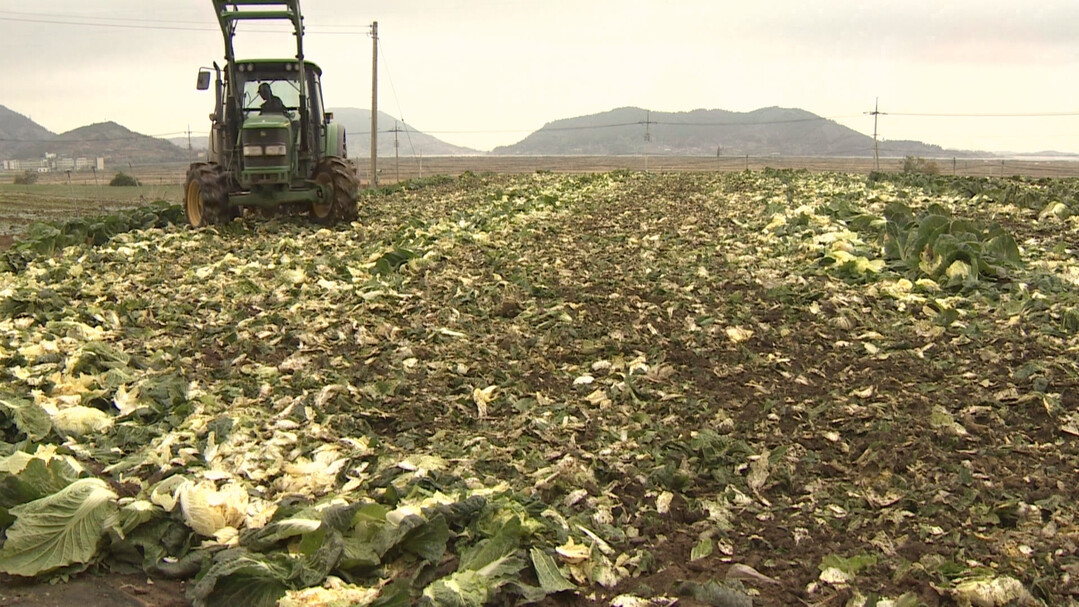
Introduction to the Agricultural Byproducts Upcycling Initiative The Chungbuk Agricultural Research and Extension Services (Director Cho Eun-hee) has officially launched the "Agricultural Byproducts Upcycling Task Force (TF)" in a collaborative effort combining private, public, research, and industrial sectors. Operating over a 16-month period from September 2026 to December 2027, this initiative aims to establish a high-value resource circular economy for regional agricultural byproducts while driving sustainable eco-friendly agriculture.
Traditionally, massive quantities of agricultural residues—such as discarded stems, leftover husks, and spent mushroom substrates—have been treated as waste, typically disposed of through simple landfilling or incineration. These conventional disposal methods not only incur significant economic costs for farmers and local governments but also contribute to environmental pollution through greenhouse gas emissions. To address these multi-faceted challenges, the newly formed TF operates under a tight "One-Team" collaborative framework, holding regular semi-annual meetings and ad-hoc working consultations to bridge academic research, field guidance, public administration, and corporate execution.
Multi-Sector Collaboration Structure and Organization
To maximize practical execution and synergy, the TF integrates five core institutions comprising nine specialized teams. The primary leading body is the Chungbuk Agricultural Research and Extension Services, spanning divisions specialized in insect research, special crops, food science, staple crop technology, and livestock special crops. They are joined by the National Academy of Agricultural Science (Department of Industrial Entomology) under the Rural Development Administration, the global food corporation Daesang Corp. (RF-Project Team), the National Agricultural Cooperative Federation (NACF) Chungbuk Headquarters, and the Chungbuk Industrial Insect Research Association.
To ensure comprehensive coverage from laboratory development to commercial realization, the TF is bifurcated into two specialized functional divisions: the "Research & Development (R&D) Division" and the "Commercialization & Institutional Improvement Division."
Detailed Division Responsibilities and Technical Strategies
The Research & Development Division focuses heavily on scientific analysis and bio-technological applications. By thoroughly analyzing the biochemical composition of various agricultural byproducts, researchers are developing optimized insect feeding sources and mass-rearing technologies. In particular, utilizing agricultural leftovers and spent mushroom substrates as nutritional feed for beneficial insects like the black soldier fly represents a major leap forward. Furthermore, the R&D division is actively researching eco-friendly pest control agents derived from spent growing media, minimizing reliance on chemical pesticides and promoting circular biological controls.
Concurrently, the Commercialization & Institutional Improvement Division concentrates on market integration and logistical viability. Leveraging Agricultural Products Processing Centers (APCs) as strategic hubs, this division works to secure a stable, consistent supply chain of raw agricultural byproducts. It also collaborates closely with Daesang Corp. to co-develop processed food products and alternative materials, bridging the gap between raw agricultural residue and marketable commercial goods. Additionally, the division plans and executes pilot demonstration projects for local farming households while identifying and resolving regulatory bottlenecks on-site to foster a favorable business ecosystem for upcycled products.
Broader Economic and Environmental Implications
The implications of this initiative extend far beyond simple waste management. By converting items previously discarded as worthless trash into valuable commodities often referred to as "golden eggs," the project drastically reduces environmental pollution and cuts down waste disposal expenditures for regional agricultural sectors. Moreover, by integrating agricultural waste streams with the expanding insect feed and alternative material industries, the project is poised to forge lucrative new income sources for local farmers, boosting rural economies through bio-economy innovations.
Future Outlook and Leadership Commitment
Heo Yoon-sun, Director of the Insect Research Institute under the Chungbuk Agricultural Research and Extension Services, emphasized the gravity of the project, stating, "To successfully overcome the climate crisis and achieve carbon neutrality, resource-circular upcycling of agricultural byproducts is an inevitable path for the future of agriculture." He further noted, "We will move beyond theoretical laboratory studies to complete practical models that enterprises and local farmers can directly experience, thereby leading eco-friendly agriculture throughout the Republic of Korea."
[Copyright (c) Global Economic Times. All Rights Reserved.]