![[등록] 2026-09-01 15:48:31](/support/_updata/banner2/tl181982910_6749.png)


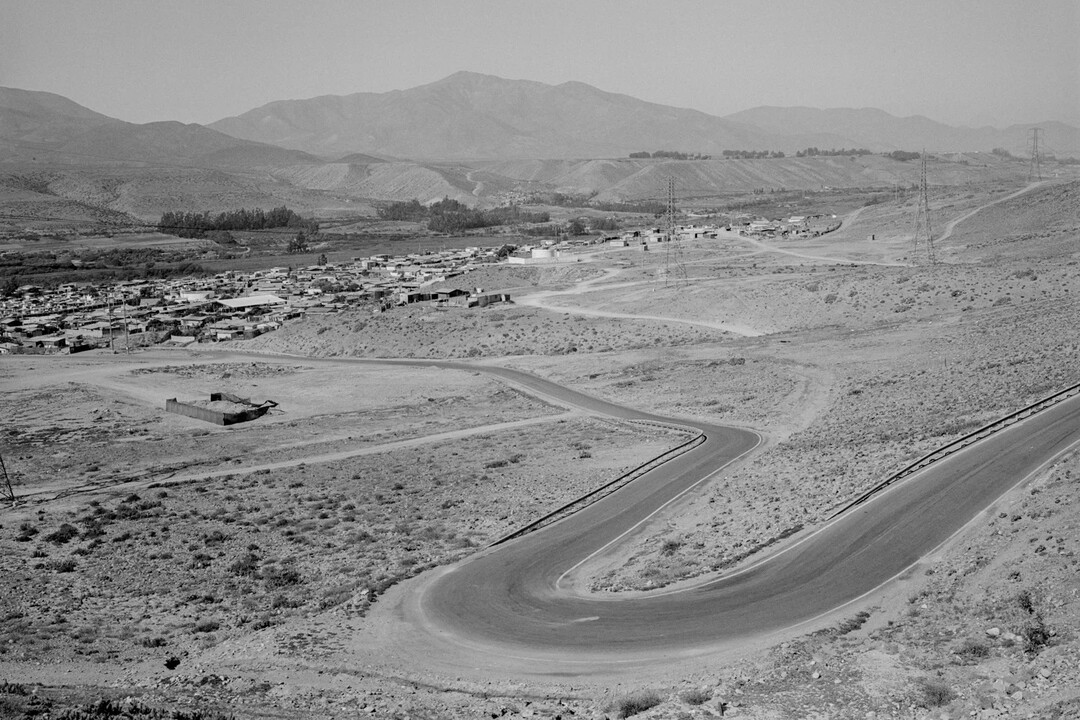
Santiago, Chile – In the arid expanse bordering the world's largest desert, the Atacama, Chilean photographer Cristian Ordóñez has turned his lens towards the often-overlooked reality of the Huasco Valley. Once known as the "Garden of Atacama" for its relative greenery, this region now bears the scars of poverty, pollution, and neglect, a stark contrast to its fertile past. Ordóñez's evocative images, part of his ongoing project "Valle" (Valley), document the silent crisis unfolding in the last communities before the desert's relentless advance.
Ordóñez, a photographer and graphic designer based in Toronto, Canada, characterizes his photographic style as documentary with a touch of abstraction. His solitary scenes and suspended atmospheres, often rendered in stark black and white or muted, warm tones, transcend specific times and places, hinting instead at a deeper sense of unease. Details like cracked walls, resilient plants pushing through concrete, and decaying buildings speak volumes about the state of these forgotten communities. Themes of territory, belonging, and memory permeate his work.
"I'm not interested in merely documenting reality as it is," Ordóñez explains. "I like a certain amount of abstraction that allows for imagination, interpretation, and wonder." This approach sets his work apart from traditional documentary photography, inviting viewers to contemplate the underlying issues rather than simply observing them. His meticulous graphic design for his photobooks further enhances this aesthetic, serving as a functional frame for his powerful imagery.
The "Valle" project, initiated in 2022, emerged from Ordóñez's explorations of the Huasco Valley with his brother, Dr. Eduardo Ordonez-Ponce, a researcher at Athabasca University. Their journey across the diverse landscapes, from the Pacific coast to the Andean foothills, involved extensive interviews with local residents. As they ventured closer to the Atacama, the brothers witnessed a disturbing trend: a decline in economic prosperity and a deterioration of health conditions, leaving communities increasingly vulnerable to poverty and environmental degradation.
Ordóñez emphasizes a broader understanding of poverty beyond mere material possessions. "Sometimes we define poverty only by what people own or lack. But poverty also involves education and access to modern society. In several of our interviews, I sensed that poverty was, first and foremost, a lack of opportunities and access to universal services."
The Huasco Valley's plight is intricately linked to the rise of mining activity. The region's four principal cities – Alto del Carmen, Vallenar, Freirina, and Huasco, home to approximately 72,000 people – now heavily rely on mining, which contributes significantly to the regional GDP. However, this economic dependence has come at a steep environmental and social cost.
The Huasco River, the last lifeline of water in this increasingly arid region and crucial for the valley's agricultural heritage, suffers from severe metal contamination due to mining operations. This pollution extends to the Pacific Ocean, impacting livestock, food products, and the health of the local population. Ordóñez recounts hearing from community members about the loss of loved ones due to the effects of pollution and mining.
While some local business owners view mining as a source of economic growth and job creation, the region has also seen numerous mining-related development projects abandoned due to social and environmental challenges, leaving behind a legacy of unfinished promises. Community leaders express a desire for greater investment from both the government and multinational corporations but are acutely aware of the inherent risks to their environment and way of life.
The environmental impact varies across the valley. Coastal areas, once thriving fishing communities, are now marred by pollution from a power plant built along the Pacific shore. Inland, the beauty of oases along the Huasco River, nestled within the desert's embrace, stands in stark contrast to the encroaching degradation.
Ordóñez also highlights the role of climate change, exacerbated by human activity, in transforming the Huasco landscape. Mining companies, particularly as they approach the Andes, often engage in public works to gain local support, yet the damage to the delicate microclimates formed by the convergence of mountains and the river is often irreversible.
Through his lens, Ordóñez captures a sense of ongoing abandonment. Unrepaired electrical cables crisscross the frame, serving as visual metaphors for the region's isolation and lack of essential infrastructure. Connectivity, including access to basic services and timely emergency assistance, remains a significant challenge for these remote communities.
Following his documentation in 2022, Ordóñez returned to the region in 2024, extending his research into the Antofagasta Region and San Pedro de Atacama. There, he observed a familiar pattern of exploitation with lithium extraction in what was once a protected natural reserve, raising further concerns about environmental sustainability and the well-being of local communities.
Cristian Ordóñez's poignant photographs serve as a powerful testament to the often-unseen consequences of development and the urgent need for greater environmental and social responsibility in resource-rich regions like the Huasco Valley. His work invites viewers to look beyond the immediate landscape and consider the human stories and environmental realities at the edge of the desert.
About Cristian Ordóñez:
Born in Chile in 1976, Cristian Ordóñez is a photographer and graphic designer based in Toronto, Canada. His work explores themes of memory and belonging, territory and architecture, and everyday vernacular and banality. He has received the Edward Burtynsky Grant (Canada) and an Urbanautica Institute Award (Italy). His series “Frequency” garnered international recognition, including a nomination for the 2022 Leica Oskar Barnack Award and a recent solo exhibition in Chile. "Frequency" was also self-published as a photobook in April 2023. His current project, “Valle,” created in collaboration with Dr. Eduardo Ordonez-Ponce, has been featured in a group exhibition in Berlin and is scheduled for exhibition at the Rencontres de la Photographie in Gaspésie, Québec, later this year.
[Copyright (c) Global Economic Times. All Rights Reserved.]