• 2025.12.10 (Wed)
  • All articles
  • LOGIN
  • JOIN
Global Economic Times
APEC2025KOREA가이드북
  • Synthesis
  • World
  • Business
  • Industry
  • ICT
  • Distribution Economy
  • Well+Being
  • Travel
  • Eco-News
  • Education
  • Korean Wave News
  • Opinion
  • Arts&Culture
  • Sports
  • People & Life
  • Column
    • Cho Kijo Column
    • Lee Yeon-sil Column
    • Ko Yong-chul Column
    • Cherry Garden Story
  • Photo News
  • New Book Guide
MENU
 
Home > APEC 2025 KOREA GUIDE

Jokbal: A Deep Dive into Korea’s Beloved Pig’s Trotters

Global Economic Times Reporter / Updated : 2025-07-28 10:41:35
  • -
  • +
  • Print

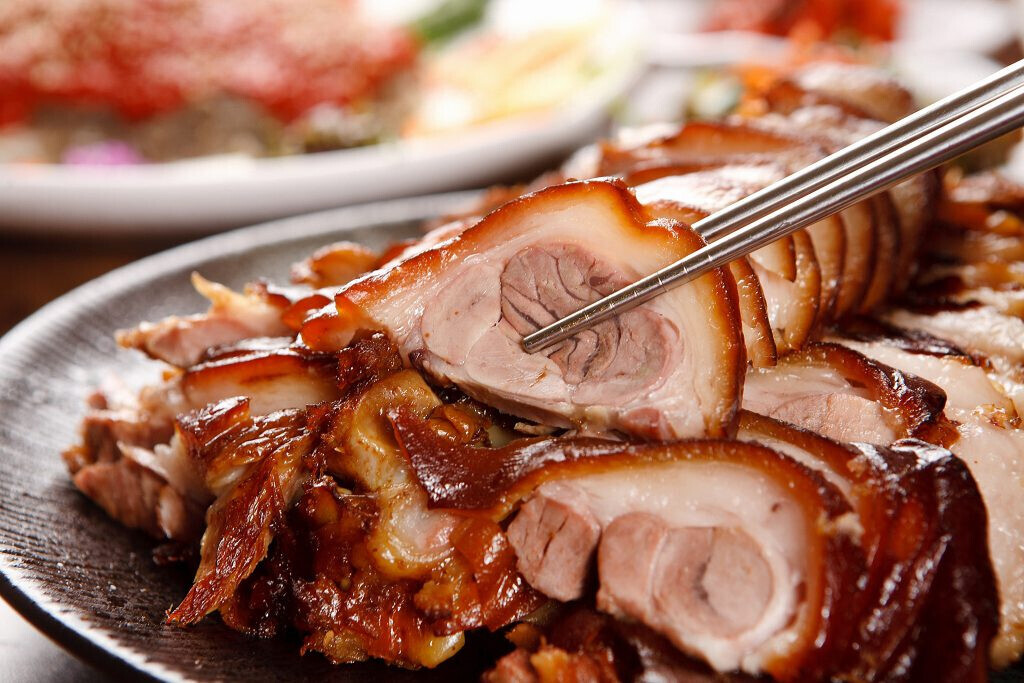
Jokbal, a Korean dish made from pig’s trotters, has been a beloved comfort food for centuries. This hearty and flavorful dish has a rich history and a unique preparation method.

A History of Jokbal The origins of jokbal can be traced back to Korea’s traditional dishes involving boiled pork. While boiled pork was a common dish, the specific practice of boiling pig’s trotters and preparing them as a standalone meal emerged later. It’s believed that the current form of jokbal, marinated and braised, was developed by refugees from North Korea who settled in Jangchungdong, Seoul, after the Korean War. To make a living, they adapted their traditional pork dishes, blending them with Chinese five-spice flavors, giving birth to the jokbal we know today.

The Making of Jokbal Creating the perfect jokbal is a meticulous process.

Boiling: Pig’s trotters are first boiled for several hours to make them tender.
Marination: The boiled trotters are then marinated in a mixture of soy sauce, garlic, ginger, and various spices.
Braising: The marinated trotters are braised until the meat is fall-off-the-bone tender and the sauce has reduced to a rich, sticky glaze.
Serving: Traditionally, jokbal is served sliced and accompanied by a variety of side dishes, such as kimchi, pickled radish, and sesame leaves.
Why Jokbal is Popular Jokbal’s popularity can be attributed to several factors:

Flavor: The combination of sweet, salty, and savory flavors is incredibly satisfying.
Texture: The tender, gelatinous skin and meat provide a unique mouthfeel.
Nutritional Value: Pig’s trotters are rich in collagen, which is beneficial for skin and joint health.
Cultural Significance: Jokbal has become a symbol of Korean cuisine and is often enjoyed during gatherings and special occasions.
Today, jokbal is a staple of Korean cuisine and can be found in restaurants throughout the country. Its unique flavor and rich history make it a must-try dish for anyone visiting Korea.

source : Global Economic Times(https://www.globaleconomictimes.kr)

[Copyright (c) Global Economic Times. All Rights Reserved.]

  • #APEC2025KOREA
  • #APEC2025GYEONGJU
  • #KOREA
  • #SEOUL
  • #K-FOOD
  • #K-CULTURE
  • #K-TOUR.
Global Economic Times Reporter
Reporter Page

Popular articles

  • Kioxia Plunges to Daily Limit on Disappointing Earnings, Rattling Global Chip Stocks

  • Primera Edición de los 'MYKOREA Awards in Bangkok' Concluye con Éxito... Confirmando el Potencial de la Plataforma de Intercambio Global para Expandirse a Países de Todo el Mundo

  • Farewell to a Legend: South Korea Mourns the Passing of Esteemed Actor Lee Soon-jae

I like it
Share
  • Facebook
  • X
  • Kakaotalk
  • LINE
  • BAND
  • NAVER
  • https://www.globaleconomictimes.kr/article/1065577265153841 Copy URL copied.
Comments >

Comments 0

Weekly Hot Issue

  • The Tragedy on the High Seas: Royal Caribbean Sued Over Passenger Death After 33 Drinks and Fatal Restraint
  • Australia's Digital Iron Curtain: The Global Aftershocks of a World-First Social Media Ban
  • A Golden Noel: The Vance Family's First Christmas at the Naval Observatory
  • A New Era of Transparency: Federal Judges Order Release of Voluminous Epstein Case Files
  • Monopoly or Media Evolution? Netflix-Warner Bros. Deal Triggers Bipartisan Antitrust Fury
  • Jay-Z's Marcy Venture Partners Bets $500M on the Global Growth of K-Culture

Most Viewed

1
Korean War Ally, Reborn as an 'Economic Alliance' Across 70 Years: Chuncheon's 'Path of Reciprocity,' a Strategic
2
A Garden Where the City's Rhythm Stops: Dongdaemun's 'Cherry Garden', Cooking Consideration and Diversity
3
The Sudden Halt of Ayumi Hamasaki's Shanghai Concert: Unpacking the Rising Sino-Japanese Tensions
4
Apple Poised to Overtake Samsung as World’s Largest Smartphone Maker After 14 Years, Driven by iPhone 17 Success
5
Travel Light, Fly Warm: Korean Air and Asiana Launch Coatroom Service for Winter Travelers
광고문의
임시1
임시3
임시2

Hot Issue

Monopoly or Media Evolution? Netflix-Warner Bros. Deal Triggers Bipartisan Antitrust Fury

Australia's Digital Iron Curtain: The Global Aftershocks of a World-First Social Media Ban

Forging the Drone Warfighter: USAREUR-AF Launches Inaugural Competition in Germany, Stressing Integrated Lethality

Europe at the Crossroads: Environmental Safeguards Under Threat from 'Simplification' Drive

Let’s recycle the old blankets in Jeju Island’s closet instead of incinerating them.

Global Economic Times
korocamia@naver.com
CEO : LEE YEON-SIL
Publisher : KO YONG-CHUL
Registration number : Seoul, A55681
Registration Date : 2024-10-24
Youth Protection Manager: KO YONG-CHUL
Singapore Headquarters
5A Woodlands Road #11-34 The Tennery. S'677728
Korean Branch
Phone : +82(0)10 4724 5264
#304, 6 Nonhyeon-ro 111-gil, Gangnam-gu, Seoul
Copyright © Global Economic Times All Rights Reserved
  • 에이펙2025
  • APEC2025가이드북TV
  • 독도는우리땅
Search
Category
  • All articles
  • Synthesis
  • World
  • Business
  • Industry
  • ICT
  • Distribution Economy
  • Well+Being
  • Travel
  • Eco-News
  • Education
  • Korean Wave News
  • Opinion
  • Arts&Culture
  • Sports
  • People & Life
  • Column 
    • 전체
    • Cho Kijo Column
    • Lee Yeon-sil Column
    • Ko Yong-chul Column
    • Cherry Garden Story
  • Photo News
  • New Book Guide
  • Multicultural News
  • Jobs & Workers