![[등록] 2026-09-01 15:48:31](/support/_updata/banner2/tl181982910_6749.png)


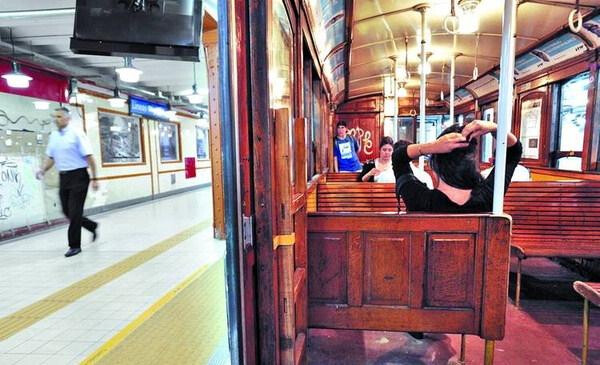
BUENOS AIRES – Argentina's capital, Buenos Aires, which was the first city in Latin America to introduce a subway system, is currently experiencing a severe decline in ridership. The Buenos Aires subway, boasting a rich 112-year history since its inauguration in 1913 as South America's first subway, is now seeing a drastic reduction in passengers, primarily attributed to a sharp increase in fares.
History and Present: Ridership Halved
The Buenos Aires subway, known as "Subte," was a pioneer in urban transportation in South America. Heavily influenced by Europe, Argentina adopted modern transportation systems early on, symbolizing its prosperity. At its opening, Subte provided citizens with fast and convenient transportation, driving the development of Buenos Aires. However, in 2025, this historic subway finds itself largely ignored.
According to recently released statistics, the number of Buenos Aires subway passengers in March was 14.3 million. This figure is only half of what it was in the same period in 2019, prior to the pandemic. While a global trend of declining public transportation use occurred during the COVID-19 pandemic, the prevailing analysis suggests that the continued decrease even after the effective end of the pandemic is not merely a temporary phenomenon. This is particularly evident given that ridership for other modes of transportation is gradually recovering, indicating a specific problem unique to Subte.
"Killer" Fare Hikes: The Main Culprit Burdening Citizens
The most direct and decisive reason for the sharp decline in subway ridership is the "fare explosion." In just a year and a half, the subway fare, which was around 80 pesos (approximately 90 Korean Won) in 2023, has skyrocketed 18-fold to nearly 1,440 pesos (approximately 1,600 Korean Won) today. This is more than twice the price of a regular bus fare, placing a significant burden on ordinary citizens.
Argentina has long suffered from high inflation, with the continuous depreciation of the peso and rising prices. Against this economic backdrop, the government implemented public transportation fare increases to address the fiscal deficit and reduce subsidies. Especially after the Javier Milei government took office, promoting "national reconstruction" through strong austerity measures, public transportation fare increases were seen as an inevitable step. However, the disproportionately high increase in subway fares compared to other modes of transportation has led to extreme public dissatisfaction.
Widening "Imbalance" Among Transportation Modes: Policy Failure Controversy
Experts point out that this rapid increase in subway fares has led to an inequitable fare system among transportation modes, exacerbating the overall imbalance in public transportation. While bus fares have also risen, their increase was not as drastic as the subway's, leading to a phenomenon where passengers are flocking to relatively cheaper buses. This ultimately lowers the subway's share of transportation, resulting in a decrease in the efficiency of the urban transportation system.
Roberto Gomez, a transportation expert in Buenos Aires, criticized, "The subway is a core public transportation method that serves as the backbone of the city. If fare policies disproportionately disadvantage a specific mode of transportation, citizens will naturally seek cheaper alternatives." He further emphasized, "Simply raising fares is not the solution. An urgent re-evaluation of fare policies is needed, with a long-term perspective that includes service quality improvement, line expansion, and most importantly, balanced development of the entire public transportation system."
The Challenge of Returning to Being "The People's Foot": Fare Policy Re-evaluation Needed
There is a growing consensus that a comprehensive re-evaluation of the current fare policy is essential for Subte to regain its role as "the people's foot." Beyond simply reflecting inflation or covering fiscal deficits, multifaceted considerations are needed:
Consideration of Social Function: The subway is not merely a mode of transportation but a crucial social infrastructure that guarantees citizens' right to mobility and supports urban economic activities. Excessive fares can restrict the mobility of low-income individuals and exacerbate social inequality.
Ensuring Equity Among Transportation Modes: The fare systems of various public transportation modes, such as subways, buses, and trains, should be adjusted to be complementary, encouraging citizens to make reasonable choices.
Seeking Sustainable Operating Models: Beyond fare increases, various measures for sustainable subway operation should be explored, including improving operational efficiency, developing non-fare revenue sources, and rationally allocating government subsidies.
Linking to Service Quality Improvement: Fare increases must be accompanied by corresponding improvements in service quality to appease public discontent and boost ridership again. Tangible efforts such as renovating aging facilities, shortening operating intervals, and enhancing safety must follow.
The Buenos Aires subway is an important legacy symbolizing Argentina's modernization. However, its current crisis demands deep consideration of urban policy and citizens' lives. All eyes are on the Argentine government's future policy decisions to see if they can return the subway, currently shunned by citizens, back "into the embrace of the people."
[Copyright (c) Global Economic Times. All Rights Reserved.]