![[등록] 2026-09-01 15:48:31](/support/_updata/banner2/tl181982910_6749.png)


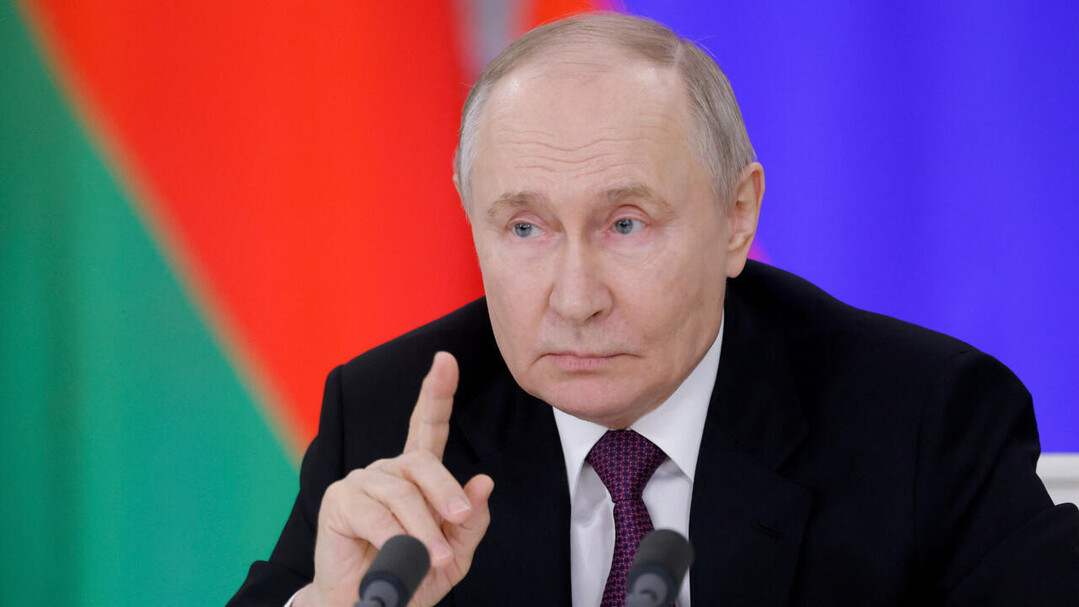
Russian President Vladimir Putin, facing fierce criticism from the West as an "aggressor" due to the invasion of Ukraine, appears to be making moves to transform overnight into a "peace mediator" in the Israel-Iran conflict. This is interpreted as an attempt to strengthen Russia's position in the international community and, particularly, to leverage his relationship with President Donald Trump to secure a favorable position in the Ukrainian issue.
Expression of Mediation Intent and Strategic Background
Kremlin spokesman Dmitry Peskov stated on June 16, 2025, that Russia is prepared to offer mediation services in the Israel-Iran conflict if needed. Russia has been a strategic ally of Iran while simultaneously maintaining a pragmatic relationship with Israel. Israel's recent denial of claims that it supplied Patriot or Barak air defense missile systems to Ukraine illustrates one facet of this relationship.
President Putin's move is linked to the goal of leveraging his relationship with President Donald Trump to seek a solution favorable to the Kremlin in the Ukrainian issue. Putin expressed his willingness to mediate during a phone call with Trump on June 4 and re-emphasized it over the weekend. Yuri Ushakov, the Kremlin's international advisor, explained that Putin strongly condemned Israel's airstrikes on Iran while advocating for a "political and diplomatic solution" to the Iranian nuclear issue.
In recent weeks, Russia has proposed "concrete steps" for a "mutually acceptable" agreement, including retrieving Iran's highly enriched uranium and converting it into fuel for civilian reactors. Peskov stated that this proposal remains valid, but the U.S. demands the retrieval of all uranium, and Iran insists on a resolution within the limitations of the 2015 nuclear agreement.
President Donald Trump has shown an "open attitude" toward Putin brokering an agreement on Iran's nuclear program to end the current conflict. Putin has also engaged in active diplomacy, calling Iranian President Masoud Pezeshkian and Israeli Prime Minister Benjamin Netanyahu on June 13 to offer mediation services to prevent "escalation" in the Middle East.
'Fishing in Troubled Waters' Strategy and the Ukraine War
Analysts interpret Putin's stance as a "fishing in troubled waters" strategy. In other words, any international conflict could help divert international attention from what is happening in Ukraine. Indeed, at the G7 summit, the U.S. appears unlikely to approve economic sanctions against Russia, and new weapons supplies to Ukraine are not expected to be approved at the next NATO summit.
While the Kremlin condemns Israel's attacks, independent Russian media outlets point out that Putin has done nothing to help Iran. Iran played a crucial role in supplying drones to Russia during the first two years of the Ukraine war. However, the strategic partnership agreement signed between Putin and Pezeshkian last January does not include a military assistance clause in case of invasion, unlike the agreement signed between Russia and North Korea in 2024. Furthermore, Russia has established an Iranian Shahed drone production facility in the Republic of Tatarstan, which was attacked by Ukrainian drones over the weekend.
Iran Mediation and the Continuation of the Ukraine War
Ostensibly, Putin's ultimate goal appears to be the continuation of military operations in Ukraine. Russian forces have made slow but significant progress in Donbas and have also succeeded in establishing buffer zones in the Kharkiv and Sumy regions. Just as Israel views Iran as a direct threat to its sovereignty, Russia wants the international community to recognize that Ukraine is also a matter of its strategic security.
Washington is also indirectly contributing to this Russian stance. Last week, U.S. Defense Secretary Pete Hegseth announced a reduction in military aid to Ukraine in the next budget, arguing that the U.S. military should be the top priority. He stated to the U.S. Congress, "This administration has a very different view of that conflict. We believe that a negotiated and peaceful resolution is in the best interest of both sides and our nation."
Additionally, Ukrainian President Volodymyr Zelensky recently accused Washington of sending 20,000 missiles, agreed upon with the Joe Biden administration, to the Middle East instead of Kyiv. The Middle East conflict also temporarily neutralized Europe's plan to lower the price cap on Russian oil from $60 to $45 per barrel. While the Kremlin appeared largely unconcerned by the European Union's plan, the rise in Brent crude prices from $63 to $75 per barrel in a few days is expected to benefit the Russian economy.
In conclusion, President Putin's attempts to mediate between Israel and Iran can be interpreted not merely as a pretense for peace in the Middle East but as part of a multi-layered strategy aimed at alleviating Russia's international isolation and gaining a favorable position in the Ukraine war. This illustrates the complexity of international dynamics and the intertwined interests of various nations.
소스
[Copyright (c) Global Economic Times. All Rights Reserved.]