


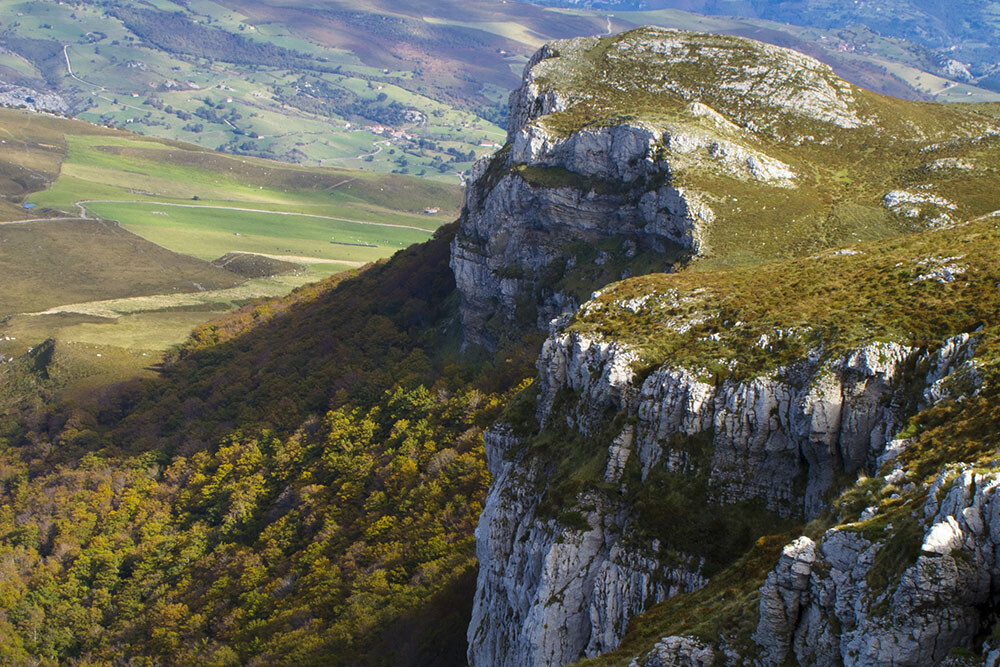
Cantabria, a hidden gem in northern Spain, is beautiful all year round, but autumn, when the deciduous forests turn golden, is the best time to experience the true essence of travel.
Here are five must-see places in Cantabria to enjoy the late autumn atmosphere and create unforgettable memories.
1. The Saja-Nansa Reserve (La reserva del Saja-Nansa)
Located in the basin of the Saja and Nansa rivers, this reserve features a spectacular landscape of beech and oak forests, representative of the Atlantic coast of Europe. The best way to fully enjoy its charm is to walk along the GR 71 hiking trail, which was once used by pilgrims.
This trail starts in Bárcena de Pie de Concha and passes through the village of Los Tojos. Los Tojos is a wonderful place to enjoy a panoramic view of the valley and the Saja Reserve. Villages like Colsa are almost abandoned, but beautiful stone mansions have been restored.
Following a path through ferns, plum trees, and hawthorns, you'll encounter a dense forest of beech, hazelnut, yew, and oak trees. This path follows an old cart trail, or 'barga,' that was once used to transport hay from the high-altitude pastures. Walking surrounded by the dense forest, you will feel a sense of being disconnected from the world.
2. Liébana
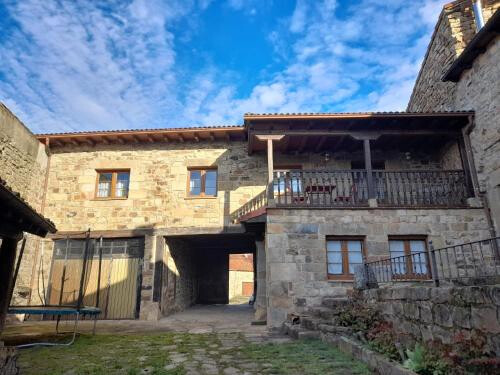
Liébana is a unique region of Cantabria, isolated from the outside world by rugged mountain peaks. The only natural passage is the dark and humid 'La Hermida' gorge, through which the Deva River flows. The writer Benito Pérez Galdós described it as "the esophagus of La Hermida," writing that every time he passed through it, he felt as if the Earth was swallowing him.
Liébana is composed of four valleys: Espinama, Cabezón de Liébana, Vega de Liébana, and the La Hermida gorge. All these valleys lead to Potes, the central and most charming village of the region.
Due to this geographical isolation, Liébana became a refuge for monks, nobles, and scholars fleeing the Arab invasion. The immigrants brought new ideas and cultures, which led to the construction of various monasteries, such as the Santo Toribio de Liébana monastery. Even today, local residents engage in livestock farming and produce unique cheeses like Liébana cheese and Picón de Tresviso.
The narrow, deep terrain of the Liébana valleys and their proximity to the sea create a unique microclimate. In autumn, the deciduous forests on the mountainsides turn golden, while oranges, grapes, wheat, and pomegranates are cultivated on the valley floor. Meanwhile, snow can accumulate on the peaks at an altitude of 2,500 meters.
3. Valles Pasiegos
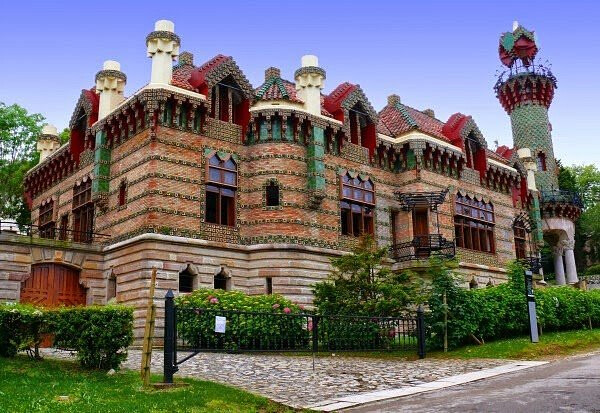
The Pas Valley, along with the neighboring Miera Valley, forms the Valles Pasiegos. The Pas-Miera region is characterized by steep pastures and "cabañas pasiegas" (Pasiega huts) scattered everywhere. Due to the low productivity of the high-altitude pastures, the residents of this area adopted a unique practice called "muda," which involves moving with their livestock between several huts in search of lush pastures.
The "cabañas pasiegas" commonly seen here boast a unique architectural style specific to Cantabria. The rectangular huts face east or south and have stone walls and roofs made of limestone slabs. Another characteristic is the second-floor terrace, called "solana," which is accessed via a stone staircase. The first floor was for livestock, while the second floor was used to store hay and as living quarters for the herders.
Although the landscape is predominantly pasture, dense deciduous forests still remain in the upper reaches of the rivers and on steep slopes. The "hayedo de Aloños" (Aloños beech forest) in the Pisueña River valley exudes a mysterious atmosphere, and the oak forest of Rubionzo is also highly valued. There are also valuable beech and oak forests around the village of Vega de Pas.
4. Valderredible
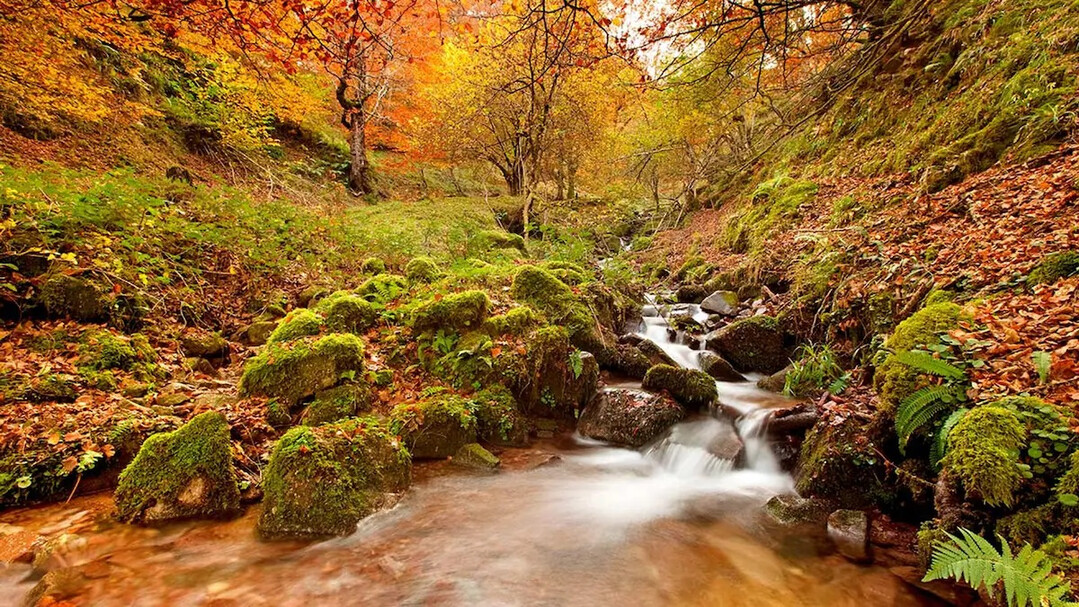
Valderredible is a hidden place located in the south of Cantabria, on the border with Burgos and Palencia, and is little known even to Cantabrians. Around the village of Bustillo del Monte in this area, there is a centuries-old oak forest steeped in history and legend. Some of the trees are so large and old that residents have given them names like 'The Grandfather' (El Abuelo), 'The Young One' (El Joven), and 'The Witch's Tree' (el de las Brujas). There is also a trekking course called the 'Oak Trail' (Ruta de los Robles). On the mountainside leading to the Ebro River, there is another oak tree called 'La Piruta' with a circumference of six meters. It is estimated that more than 60 oak trees over 500 years old remain.
Other villages in Valderredible that are good to visit in autumn include Loma Somera, which is rich in beech and oak forests, and San Martín de Elines, which has one of the best Romanesque churches in Cantabria.
5. Asón Pass (Los Collados del Asón)
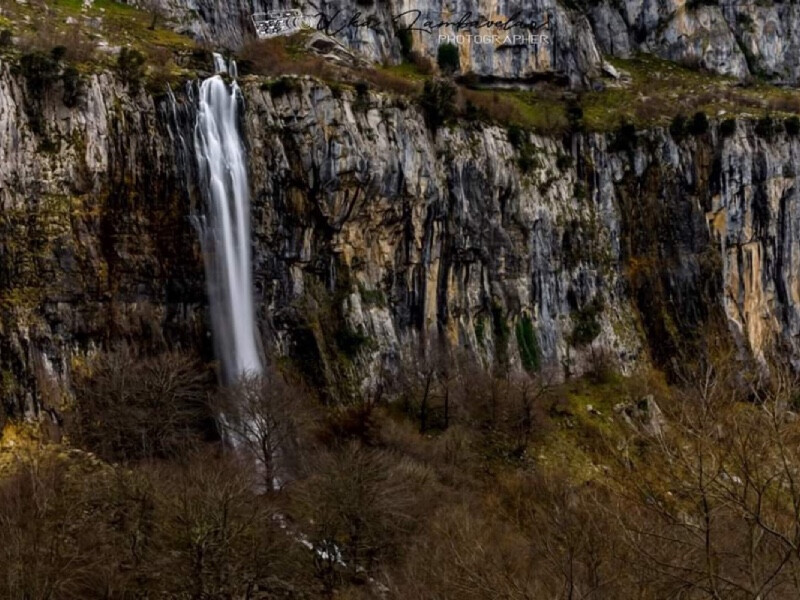
This area was designated a national park in 1999 to protect the unique terrain formed by glacial action. Following the road from La Gándara to Arredondo, you will reach Los Collados del Asón and can enjoy an outstanding view. From here, the 'Bustalveinte – Hondojón Glacier' trail (PR-66) begins, which is particularly good in autumn. This trail passes through the Llusías forest, the beech forest of Mount Busturejo, and the birch forest on the slopes of the Sierra Helguera.
The symbol of the Asón National Park is the source of the Asón River. The waterfall, where the river water plunges from a cliff more than 50 meters high, is one of the most beautiful in Spain and becomes a truly spectacular sight during the rainy season. The Asón River flows through the Soba Valley, at the end of which lies Ramales de la Victoria, a town with many aristocratic mansions and excellent accommodation.
[Copyright (c) Global Economic Times. All Rights Reserved.]