![[등록] 2026-09-01 15:48:31](/support/_updata/banner2/tl181982910_6749.png)


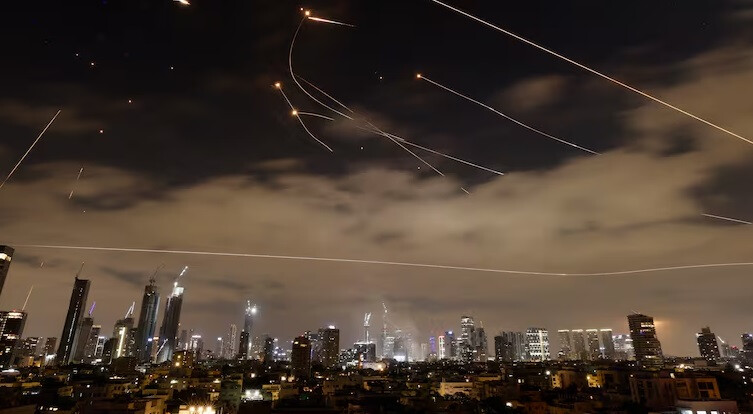
Recent developments in the Middle East, marked by escalating tensions between Israel and Iran, have drawn global attention. International analyst Jorge Codas Thompson has analyzed various scenarios that could arise from this conflict and their geopolitical implications, particularly expressing concern about the potential for a full-scale regional war. While the possibility of a direct ground war between the two nations remains low for now, experts consistently agree that a protracted war of attrition and unpredictable variables exist.
Potential for War of Attrition Instead of Direct Ground War
Codas analyzes that a direct ground invasion is realistically difficult given that Israel and Iran do not share a border. Instead, he believes that a conflict between the two nations is likely to unfold as a war of attrition centered on airstrikes and missile attacks. Israel would likely aim to precisely strike Iran's nuclear facilities and military infrastructure, while Iran would retaliate with missile attacks, inflicting damage on each other.
The assessment of Iran's military capabilities is also noteworthy. Codas points out that Iran is currently in a militarily weakened state and suggests that Iran might accept international calls for a ceasefire after launching a large-scale attack, trying to frame it as a "victory." He explains that this would merely be a tactical retreat disguised as an actual defeat. Furthermore, the fact that Iran's leadership recognizes its own people do not support a long-term war lends credence to this scenario. Economic hardship and social instability within Iran could make it difficult for the regime to sustain a prolonged military confrontation.
In addition, a long-term stalemate with sporadic attacks and retaliations without a clear resolution is also presented as a possible scenario. The conflict could persist indefinitely, with neither side achieving a complete victory and international mediation efforts failing to bear fruit.
Reduced Role for Hezbollah and Hamas
Codas's assessment of the roles of Hezbollah and Hamas, once considered Iran's proxies in the region, is rather skeptical. He analyzes that Hezbollah has sustained significant damage, greatly weakening its offensive capabilities, and while Hamas remains active within the Gaza Strip, it lacks operational capabilities elsewhere. This suggests that Iran would find it difficult to wage a large-scale proxy war through these groups, further limiting Iran's military options.
However, the possibility still exists for Iran to exert indirect pressure through other pro-Iranian militias operating in Iraq, Syria, and Yemen. These forces could escalate the conflict by carrying out acts of terrorism or sabotage targeting Israeli or American interests.
Risk of Full-Scale War and Energy Crisis
The most concerning scenario is the conflict escalating into a full-scale regional war. Codas warns that if Iran directly attacks U.S. interests, such as American military bases or embassies in the region, or oil facilities, the U.S. would be forced to intervene. This could have devastating consequences for Iran. The United States possesses powerful military capabilities, including the ability to destroy Iran's underground bunkers, while Iran is generally considered to lack comparable weapon systems. Direct U.S. involvement would trigger international repercussions far beyond the Middle East.
Another serious threat is the potential for Iran to blockade the Strait of Hormuz. Codas emphasizes that if Iran were to block this strait, through which approximately 35% of the world's seaborne oil passes, an immediate global economic shock would occur. Since there are no alternative sources to replace this vast amount of oil in the short term, oil prices would skyrocket, plunging the global economy into severe turmoil. Iran has previously threatened to blockade the Strait of Hormuz to pressure the international community, and an actual blockade would be considered an act threatening global security.
Iran's Limited Military Power and the Nuclear Variable
Iran's missile capabilities are also worth noting. Codas estimates that out of 5,000 ballistic missiles Iran possessed last year, only about 2,000-3,000 remain, and if launched at a rate of 100 per day, they would only last a few weeks. This suggests that Iran's military endurance might be shorter than anticipated. The obsolescence of Iran's military equipment and difficulties in acquiring parts due to Western sanctions are also cited as limitations on the Iranian military's capabilities.
However, the biggest unknown is Iran's nuclear development program. If Iran succeeds in developing nuclear weapons or more overtly demonstrates its intent to do so, this would be a variable that could completely change the situation. Israel considers Iran's nuclear armament a "red line" and maintains its stance of taking military action if necessary to prevent it. Iran's nuclear development would further strongly provoke intervention from Western countries like the U.S. and Europe, amplifying the risk of global nuclear proliferation beyond the Middle East.
Overall, the Israel-Iran conflict remains highly uncertain. Small-scale clashes could become protracted, or unpredictable variables could escalate it into a full-scale regional war. In the latter case, immense economic and human costs, including an energy crisis, would result, severely impacting global security and the economy. The international community must redouble its diplomatic efforts to prevent further escalation of this conflict.
[Copyright (c) Global Economic Times. All Rights Reserved.]