• 2025.12.11 (Thu)
  • All articles
  • LOGIN
  • JOIN
Global Economic Times
APEC2025KOREA가이드북
  • Synthesis
  • World
  • Business
  • Industry
  • ICT
  • Distribution Economy
  • Well+Being
  • Travel
  • Eco-News
  • Education
  • Korean Wave News
  • Opinion
  • Arts&Culture
  • Sports
  • People & Life
  • Column
    • Cho Kijo Column
    • Lee Yeon-sil Column
    • Ko Yong-chul Column
    • Cherry Garden Story
  • Photo News
  • New Book Guide
MENU
 
Home > World

The Transfer of Mexico's National Guard to the Ministry of National Defense Deepens the 'Militarization of Public Security' Controversy

Ana Fernanda Reporter / Updated : 2025-10-08 14:09:02
  • -
  • +
  • Print


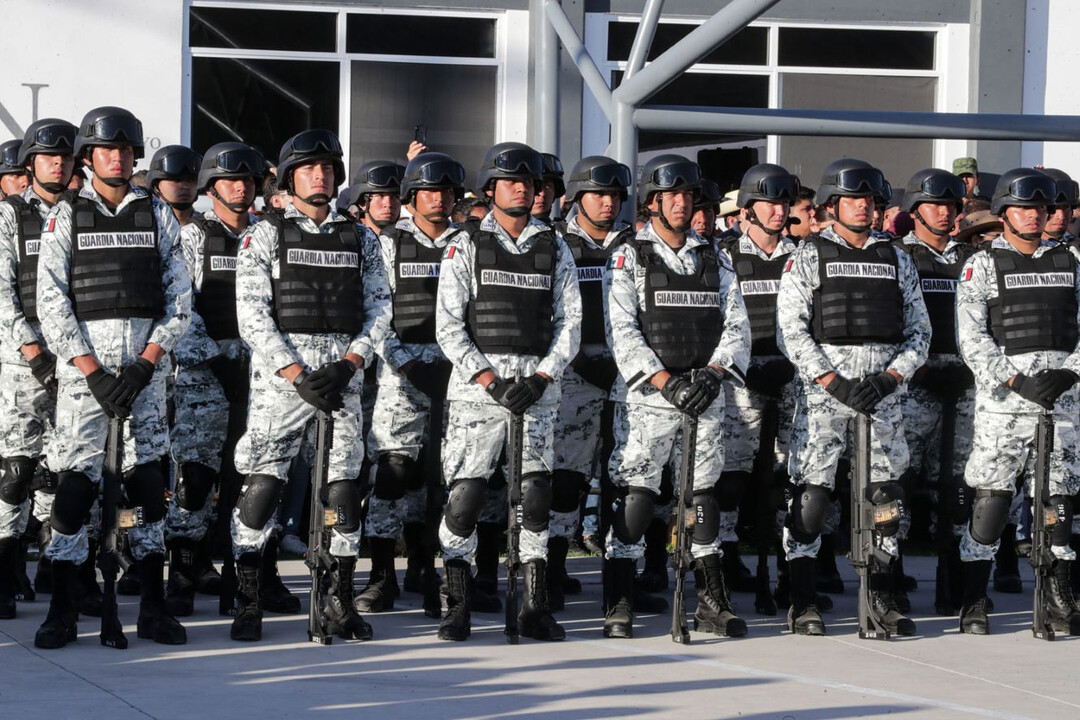
The Mexican government has executed a security reform that transfers the National Guard (NG), a key public security organization, to the Ministry of National Defense (SEDENA), further increasing the military's reliance in its security strategy. According to an article by Victoria Dittmar, with the National Guard Law amendment taking effect on July 1st, the organization was officially transferred from the civilian agency, the Secretariat of Security and Citizen Protection (SSPC), to the Ministry of National Defense, which is under military command.

This measure results in Mexico losing its nationwide civilian police force and gaining a fourth permanent military institution, following the Army, Air Force, and Navy. Analysts suggest this is the culmination of a long-term trend of expanding the military's role in the fight against crime.

Although the National Guard was conceived as a civilian organization upon its creation in 2019, it has already been operating under a military logic, integrating former Federal Police and Army/Navy battalions, and led by commanders with military backgrounds. This integration into the Ministry of National Defense formalizes its de facto military nature.

Experts anticipate that, despite the administrative change, there will be little operational shift for the National Guard, which has long maintained a military structure. However, as the National Guard continues to perform public security duties, the military is now obligated to adhere to standardized police reporting and initial response protocols. With the overlapping roles between the National Guard and other military organizations in terms of mission, the boundary between defense and public security duties is becoming blurred.

The government's preference for a military-centric strategy is underpinned by the public's high trust in the military for fighting crime. The military is also incentivized to actively engage in public security missions through institutional benefits like budget increases and personnel expansion. Specifically, the transfer of the National Guard to the Ministry of National Defense has resulted in the Ministry securing both manpower and budget.

The legislative changes introduced under President Claudia Sheinbaum's administration, by strengthening intelligence gathering and military deployment, suggest a return to the combat-centric approach of the former President Felipe Calderón era. However, this reform did not establish separate safeguards to prevent serious human rights violations such as excessive use of force, torture, and extrajudicial killings.

Since only the legal status and disciplinary system have changed, with no alteration to the unit's doctrine or training, the existing patterns of force usage are likely to continue. Furthermore, as transparency and accountability are extremely limited during this period, tracking the use of force by security agencies is expected to become even more difficult. The dominant analysis is that, in the long run, reliance on military force will be unlikely to bring sustainable results without being supported by broader public policy.

[Copyright (c) Global Economic Times. All Rights Reserved.]

  • #globaleconomictimes
  • #micorea
  • #mykorea
  • #Lifeplaza
  • #nammidonganews
  • #singaporenewsk
  • #Samsung
  • #Daewoo
  • #Hyosung
  • #A
Ana Fernanda Reporter

Popular articles

  • The Sudden Halt of Ayumi Hamasaki's Shanghai Concert: Unpacking the Rising Sino-Japanese Tensions

  • China Conducts Live-Fire Drills in Yellow Sea Amid Heightened Tensions with Japan

  • Japan Considers Raising Tourist Taxes and Visa Fees to Combat Overtourism

I like it
Share
  • Facebook
  • X
  • Kakaotalk
  • LINE
  • BAND
  • NAVER
  • https://www.globaleconomictimes.kr/article/1065589721134004 Copy URL copied.
Comments >

Comments 0

Weekly Hot Issue

  • The Tragedy on the High Seas: Royal Caribbean Sued Over Passenger Death After 33 Drinks and Fatal Restraint
  • Australia's Digital Iron Curtain: The Global Aftershocks of a World-First Social Media Ban
  • A Golden Noel: The Vance Family's First Christmas at the Naval Observatory
  • A New Era of Transparency: Federal Judges Order Release of Voluminous Epstein Case Files
  • Monopoly or Media Evolution? Netflix-Warner Bros. Deal Triggers Bipartisan Antitrust Fury
  • Jay-Z's Marcy Venture Partners Bets $500M on the Global Growth of K-Culture

Most Viewed

1
Korean War Ally, Reborn as an 'Economic Alliance' Across 70 Years: Chuncheon's 'Path of Reciprocity,' a Strategic
2
A Garden Where the City's Rhythm Stops: Dongdaemun's 'Cherry Garden', Cooking Consideration and Diversity
3
The Sudden Halt of Ayumi Hamasaki's Shanghai Concert: Unpacking the Rising Sino-Japanese Tensions
4
Alliance in a Dilemma: The Fallout of Trump's Advice to Takaichi Not to 'Provoke Taiwan' 
5
The Paradox of the 'Juvenile Offender' (Chokbeop Sonyeon): Impunity or Unfinished Rehabilitation?
광고문의
임시1
임시3
임시2

Hot Issue

Monopoly or Media Evolution? Netflix-Warner Bros. Deal Triggers Bipartisan Antitrust Fury

Australia's Digital Iron Curtain: The Global Aftershocks of a World-First Social Media Ban

Forging the Drone Warfighter: USAREUR-AF Launches Inaugural Competition in Germany, Stressing Integrated Lethality

Europe at the Crossroads: Environmental Safeguards Under Threat from 'Simplification' Drive

Let’s recycle the old blankets in Jeju Island’s closet instead of incinerating them.

Global Economic Times
korocamia@naver.com
CEO : LEE YEON-SIL
Publisher : KO YONG-CHUL
Registration number : Seoul, A55681
Registration Date : 2024-10-24
Youth Protection Manager: KO YONG-CHUL
Singapore Headquarters
5A Woodlands Road #11-34 The Tennery. S'677728
Korean Branch
Phone : +82(0)10 4724 5264
#304, 6 Nonhyeon-ro 111-gil, Gangnam-gu, Seoul
Copyright © Global Economic Times All Rights Reserved
  • 에이펙2025
  • APEC2025가이드북TV
  • 독도는우리땅
Search
Category
  • All articles
  • Synthesis
  • World
  • Business
  • Industry
  • ICT
  • Distribution Economy
  • Well+Being
  • Travel
  • Eco-News
  • Education
  • Korean Wave News
  • Opinion
  • Arts&Culture
  • Sports
  • People & Life
  • Column 
    • 전체
    • Cho Kijo Column
    • Lee Yeon-sil Column
    • Ko Yong-chul Column
    • Cherry Garden Story
  • Photo News
  • New Book Guide
  • Multicultural News
  • Jobs & Workers