![[등록] 2026-09-01 15:48:31](/support/_updata/banner2/tl181982910_6749.png)


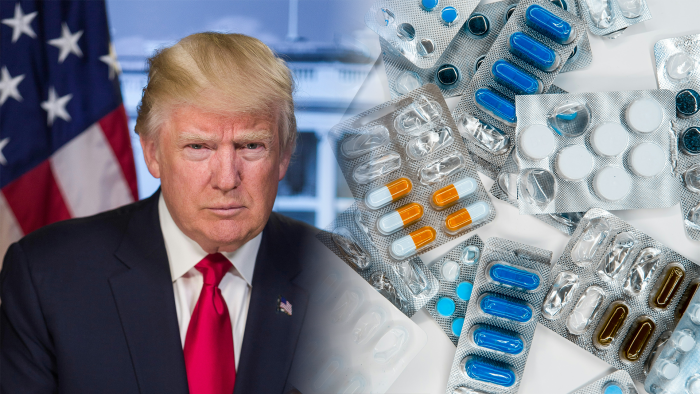
The U.S. government's push to implement a "Most Favored Nation (MFN)" policy for drug pricing is poised to have a substantial impact on the South Korean biopharmaceutical industry, according to a recent analysis. This policy, initially introduced by President Donald Trump, aims to lower U.S. prescription drug prices to the lowest levels found in other developed nations.
During a webinar hosted by the Korea Pharmaceutical and Bio-Pharma Manufacturers Association (KPBMA) on May 30th, Se-jin Lee, CEO of Arcadia, presented on the potential ramifications of the evolving U.S. drug pricing landscape for the Korean pharmaceutical sector. Lee warned that the MFN policy "could structurally affect Korean companies' revenue, new drug valuations, and overall global expansion strategies."
The MFN policy, as outlined in a presidential executive order signed by then-President Trump, seeks to compare U.S. drug prices with those in OECD countries whose per capita GDP is at least 60% of the U.S. The core objective is to reduce U.S. drug prices to the lowest observed price among these benchmark nations. This policy primarily targets innovative drugs that do not have biosimilars or generics. The U.S. Department of Health and Human Services (HHS) is expected to initially encourage voluntary price reductions from pharmaceutical companies, followed by mandatory price cuts if necessary.
Expected Impact on Korean Pharmaceutical Companies
If the MFN policy is fully implemented, the pricing of new drugs launched in the U.S. is expected to be set lower than in other countries like the EU or Canada. This could automatically drive down the prices of Korean pharmaceutical companies' drugs in the U.S. market.
New drug development companies are anticipated to be hit particularly hard. Lee predicted that if U.S. drug prices fall to European or Canadian levels, pharmaceutical companies will experience reduced projected revenues and a decline in the asset value of their new drug licenses. Companies involved in licensing out their drug candidates might receive less revenue than initially anticipated. Furthermore, global big pharma companies might decide to launch products exclusively in the U.S. or delay launches in other major markets to circumvent the MFN policy.
Conversely, biosimilar and generic companies are not expected to face direct immediate impacts, as the MFN policy specifically targets products without generic or biosimilar competition. However, their future profitability could still be pressured. If the prices of original drugs decrease, the reference prices for biosimilar products will also fall, potentially leading to reduced sales incentives.
"For new drug development companies, where U.S. sales account for an absolute majority of revenue, a drop in drug prices directly translates to a decrease in company value," Lee explained. "Considering patient accessibility and distribution structures, Korean companies with high-cost, high-risk pipelines could suffer a greater blow."
Broader Implications and Recommendations
Lee also highlighted the potential for supply imbalances due to increased price distortions between countries. If pharmaceutical companies prioritize certain countries for supply, it could lead to a global shortage of medicines in the long run.
While the executive order signed by President Donald Trump faces legal challenges and might not be fully implemented as is, Lee emphasized the significant impact if it were to be enacted into law by the U.S. Congress. "In such a scenario, the ripple effect would be immense," he stated. Lee stressed the urgent need for the Korean government to conduct proactive scenario analysis and develop a communication strategy with the U.S. to navigate these potential challenges effectively. The future of global pharmaceutical pricing and access hinges on how these policy discussions unfold.
[Copyright (c) Global Economic Times. All Rights Reserved.]