• 2026.05.08 (Fri)
  • All articles
  • LOGIN
  • JOIN
Global Economic Times
fashionrunwayshow2026
  • Synthesis
  • World
  • Business
  • Industry
  • ICT
  • Distribution Economy
  • Well+Being
  • Travel
  • Eco-News
  • Education
  • Korean Wave News
  • Opinion
  • Arts&Culture
  • Sports
  • People & Life
    • International Student Report
    • With Ambassador
  • Column
    • Cho Kijo Column
    • Cherry Garden Story
    • Ko Yong-chul Column
    • Kim Seul-Ong Column
    • Lee Yeon-sil Column
  • Photo News
  • New Book Guide
MENU
 
Home > Industry

Soybean Production in 2024 Expected to Increase Despite Lower Yields

ONLINE TEAM / Updated : 2024-11-02 15:21:55
  • -
  • +
  • Print


South Korea's soybean production for 2024 is projected to reach 145,300 to 152,300 tons, marking a 2.7% to 7.6% increase compared to the previous year's 141,500 tons.

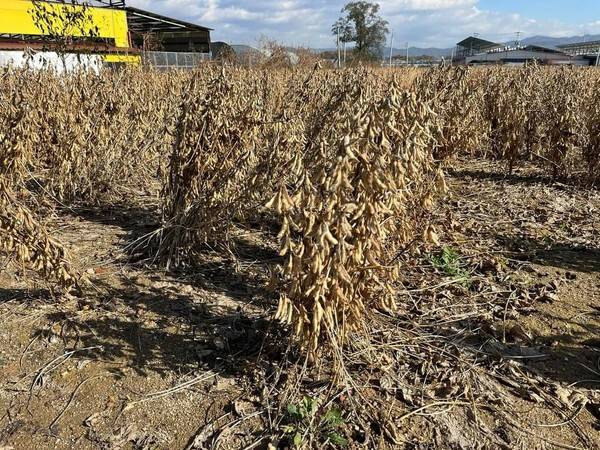
In its latest "November Soybean Outlook," the Korea Rural Economic Institute (KREI) forecast that this year's soybean yield would be 196 to 205 kilograms per 10 ares, a 1.9% to 6.2% decrease from last year's yield of 209 kilograms. The institute attributed this decline to poor crop conditions caused by high temperatures during the grain-filling stage (late August to mid-October).

Field soybeans were particularly affected. A survey conducted by the KREI from October 9 to 17 among soybean sample farms revealed that 56.7% of field soybean farmers reported lower yields compared to the previous year.

In contrast, 50.1% of paddy soybean farmers reported good crop conditions, while 32.3% reported poor conditions. This is seen as an improvement over the previous year when growth was affected by concentrated heavy rains in the early stages.

Despite the expected decline in yield, the projected increase in production is attributed to a significant expansion in cultivated area. The KREI estimates that the soybean cultivation area for this year will reach 74,155 hectares, a 9.6% increase from the previous year's 67,671 hectares. This is larger than the 71,947 to 73,009 hectares projected in the "July Soybean Outlook." The KREI expects the strategic crop direct payment system to increase paddy soybean cultivation by over 30% compared to the previous year.

Soybean prices maintained a firm trend from the harvest season (November 2023 to January 2024) but weakened in October due to the government's release of reserved soybeans. According to the Korea Agro-Fisheries & Food Trade Corporation (aT), the average wholesale price of soybeans during the short-term period (August-October) was 5,543 won per kilogram, representing a 1.1% increase compared to the previous harvest season and a 2.0% increase compared to the same period last year. Although the 2023 production increased by about 12,000 tons compared to the previous year, the market supply decreased by 2.0% year-on-year due to a 14,000-ton increase in government purchases.

The average wholesale price of soybeans from October 1 to 24 was 5,531 won per kilogram, down 0.2% from the September average. This is 0.7% higher than the average price for October of the previous year but 3.2% lower than the average for the same period.

[Copyright (c) Global Economic Times. All Rights Reserved.]

ONLINE TEAM
ONLINE TEAM
Reporter Page

Popular articles

  • MAFRA Unveils Success in Integrated Rural Care: Synergizing Social Farming and Medical Services

I like it
Share
  • Facebook
  • X
  • Kakaotalk
  • LINE
  • BAND
  • NAVER
  • https://www.globaleconomictimes.kr/article/1065594011827483 Copy URL copied.
Comments >

Comments 0

Weekly Hot Issue

  • Samsung Electronics Shifts Strategy in China: Moving from Hardware Sales to Platform-Based Business
  • Banking War 2.0: South Korean Banks Race to Transition into 'AI-First' Institutions
  • Tesla Model Y Becomes First to Pass Grueling New U.S. Autonomous Safety Tests
  • Celltrion’s Zymfentra Sees Explosive 300% Growth, Hits Record Quarterly Prescriptions in the U.S.
  • BMW Korea Ignites May with Exclusive 9-Model Online Limited Edition Lineup
  • Hyundai Mobis Completes Independent EV 'Heart' Lineup: A Major Leap Toward Global Leadership in Power Electric Systems

Most Viewed

1
Iran Imposes Transit Fees on Strait of Hormuz Amid Escalating Maritime Tensions
2
Korea and Vietnam Forge Strategic Partnership in Science, Technology, and Innovation
3
80% of Enterprises Hit by 'AI Agent Anomalies': SailPoint Calls for Integrated Identity Governance
4
Kurly Abandons 'All-Paper' Packaging Strategy Amid Rising Cost Pressures
5
Tradition Meets the Public: Chungju’s Gugak Busking
광고문의
임시1
임시3
임시2

Hot Issue

Tensions Flare in Strait of Hormuz: U.S.-Iran Clashes Threaten Fragile Truce

Tesla Model Y Becomes First to Pass Grueling New U.S. Autonomous Safety Tests

U.S. Trade Court Strikes Down Trump’s ‘Global 10% Tariff,’ Citing Executive Overreach

Hyundai Motor Group Bets $700 Million on Mexico Amid Trade Policy Volatility

Fashion Runway Show 2026

Global Economic Times
korocamia@naver.com
CEO : LEE YEON-SIL
Publisher : KO YONG-CHUL
Registration number : Seoul, A55681
Registration Date : 2024-10-24
Youth Protection Manager: KO YONG-CHUL
Singapore Headquarters
5A Woodlands Road #11-34 The Tennery. S'677728
Korean Branch
Phone : +82(0)10 4724 5264
#304, 6 Nonhyeon-ro 111-gil, Gangnam-gu, Seoul
Copyright © Global Economic Times All Rights Reserved
  • 에이펙2025
  • APEC2025가이드북TV
  • 반달곰 프로젝트
Search
Category
  • All articles
  • Synthesis
  • World
  • Business
  • Industry
  • ICT
  • Distribution Economy
  • Well+Being
  • Travel
  • Eco-News
  • Education
  • Korean Wave News
  • Opinion
  • Arts&Culture
  • Sports
  • People & Life 
    • 전체
    • International Student Report
    • With Ambassador
  • Column 
    • 전체
    • Cho Kijo Column
    • Cherry Garden Story
    • Ko Yong-chul Column
    • Kim Seul-Ong Column
    • Lee Yeon-sil Column
  • Photo News
  • New Book Guide
  • Multicultural News
  • Jobs & Workers