• 2025.12.18 (Thu)
  • All articles
  • LOGIN
  • JOIN
Global Economic Times
APEC2025KOREA가이드북
  • Synthesis
  • World
  • Business
  • Industry
  • ICT
  • Distribution Economy
  • Well+Being
  • Travel
  • Eco-News
  • Education
  • Korean Wave News
  • Opinion
  • Arts&Culture
  • Sports
  • People & Life
  • Column
    • Cho Kijo Column
    • Lee Yeon-sil Column
    • Ko Yong-chul Column
    • Cherry Garden Story
  • Photo News
  • New Book Guide
MENU
 
Home > Industry

South Korea Unveils Comprehensive Plan to Combat Climate Change Impact on Fisheries

ONLINE TEAM / Updated : 2024-12-05 15:52:16
  • -
  • +
  • Print


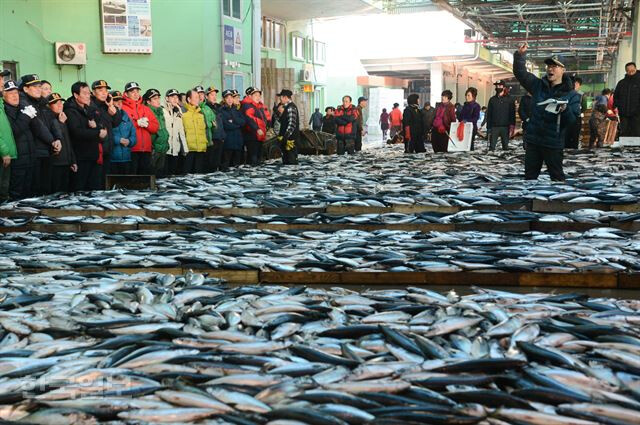
Seoul, South Korea – The South Korean Ministry of Oceans and Fisheries has unveiled a comprehensive plan aimed at mitigating the adverse effects of climate change on the nation's fisheries and aquaculture sectors. The plan includes a series of measures designed to protect marine resources and ensure the long-term sustainability of the fishing industry.

A key component of the plan is the expansion of the Total Allowable Catch (TAC) system to all fishing vessels by 2028. TAC sets annual catch limits for specific fish species in coastal waters, helping to prevent overfishing and conserve marine ecosystems. Currently, the TAC system is applied to 15 fish species and 17 fishing sectors.

To enhance flexibility and encourage sustainable fishing practices, the ministry will gradually introduce Individual Transferable Quotas (ITQs). ITQs allow fishermen to buy and sell their allocated catch quotas, providing them with greater economic incentives to manage their fishing activities efficiently.

Recognizing the challenges posed by climate change, the government will also introduce measures to facilitate the relocation of fishing operations and species diversification. This will allow fishermen to adapt to changing environmental conditions, such as shifts in fish populations due to rising sea temperatures.

Furthermore, the ministry plans to implement a bycatch management system to reduce the amount of unintended catch that is discarded at sea. Fishermen will be able to recover a portion of the value of bycatch, providing them with financial incentives to reduce waste and improve resource utilization.

By implementing these measures, the South Korean government aims to maintain annual fish production at 3.7 million tons and increase average household fishing income to 65 million won by 2030. The ministry also aims to keep the annual inflation rate for fishery products below 2%.

"The average surface temperature of our coastal waters has increased by approximately 1.44 degrees Celsius over the past 56 years, and this trend is expected to continue," said a ministry official. "Proactive measures are necessary to address these challenges and ensure the long-term sustainability of our fisheries sector."

In addition to these policy changes, the government will expand financial support programs for fishermen, including increased access to low-interest loans and loan repayment deferrals.

[Copyright (c) Global Economic Times. All Rights Reserved.]

  • #globaleconomictimes
  • #koyongchul
  • #cherrylee
  • #seoulkorea
  • #periodicoeconomico
  • #글로벌이코노믹타임즈
  • #GET
  • #GETtv
  • #liderdel
ONLINE TEAM
ONLINE TEAM
Reporter Page

Popular articles

  • Seoul Prosecution Joint Investigation Team Clears 'Drug Probe External Pressure' Allegations, Sparking Fierce Backlash from Police Superintendent

I like it
Share
  • Facebook
  • X
  • Kakaotalk
  • LINE
  • BAND
  • NAVER
  • https://www.globaleconomictimes.kr/article/1065595839832586 Copy URL copied.
Comments >

Comments 0

Weekly Hot Issue

  • Doosan Group Chosen as Preferred Bidder for SK Siltron in Multi-Billion Dollar Deal
  • Even Elite "Collective Intelligence" Fails: Seoul National University Students Miss the Mark on Exchange Rate Forecasts
  • The Ambassador’s Cup Taekwondo Championship Returns to Bulgaria, Celebrating Martial Arts and Diplomacy
  • Nobel Laureate Machado Departs Oslo; Remains in Good Spirits Despite Spinal Injury
  • Google Completes Gemini 3 Lineup with Launch of ‘Flash’ Model: High Speed Meets Uncompromised Intelligence
  • Germany Approves Massive $60 Billion Rearmament Package to Bolster Defense

Most Viewed

1
From Court to Content: French Tennis Star Océane Dodin Trades Racquet for OnlyFans, Eyes $5M in a Year
2
Choi Bun-do, Chairman of PTV Group, Assumes Presidency of the Korean Chamber of Commerce and Industry in South Central Vietnam
3
Translation: China-Russia Bombers Target Tokyo in First Joint Pacific Demonstration
4
Lee Dismisses Vice Minister Amid Allegations of Misconduct and Vetting Gaps
5
NVIDIA Lobby Succeeds? U.S. Bill Expected to Drop AI Chip Export Restrictions
광고문의
임시1
임시3
임시2

Hot Issue

UK to Rejoin EU’s Erasmus+ Program in 2027: A Major Milestone in Post-Brexit Relations

China’s SpaceSail Challenges Starlink’s Hegemony in Brazil’s Satellite Internet Market

U.S. Congress Passes 2026 NDAA: A Legislative Fortress Against Unilateral Troop Withdrawals

Meloni Blocks Key EU Initiatives: Italy’s "My Way" Policy Shadows Upcoming Summit

Let’s recycle the old blankets in Jeju Island’s closet instead of incinerating them.

Global Economic Times
korocamia@naver.com
CEO : LEE YEON-SIL
Publisher : KO YONG-CHUL
Registration number : Seoul, A55681
Registration Date : 2024-10-24
Youth Protection Manager: KO YONG-CHUL
Singapore Headquarters
5A Woodlands Road #11-34 The Tennery. S'677728
Korean Branch
Phone : +82(0)10 4724 5264
#304, 6 Nonhyeon-ro 111-gil, Gangnam-gu, Seoul
Copyright © Global Economic Times All Rights Reserved
  • 에이펙2025
  • APEC2025가이드북TV
  • 독도는우리땅
Search
Category
  • All articles
  • Synthesis
  • World
  • Business
  • Industry
  • ICT
  • Distribution Economy
  • Well+Being
  • Travel
  • Eco-News
  • Education
  • Korean Wave News
  • Opinion
  • Arts&Culture
  • Sports
  • People & Life
  • Column 
    • 전체
    • Cho Kijo Column
    • Lee Yeon-sil Column
    • Ko Yong-chul Column
    • Cherry Garden Story
  • Photo News
  • New Book Guide
  • Multicultural News
  • Jobs & Workers