
![[등록] 2026-09-01 15:48:31](/support/_updata/banner2/tl181982910_6749.png)


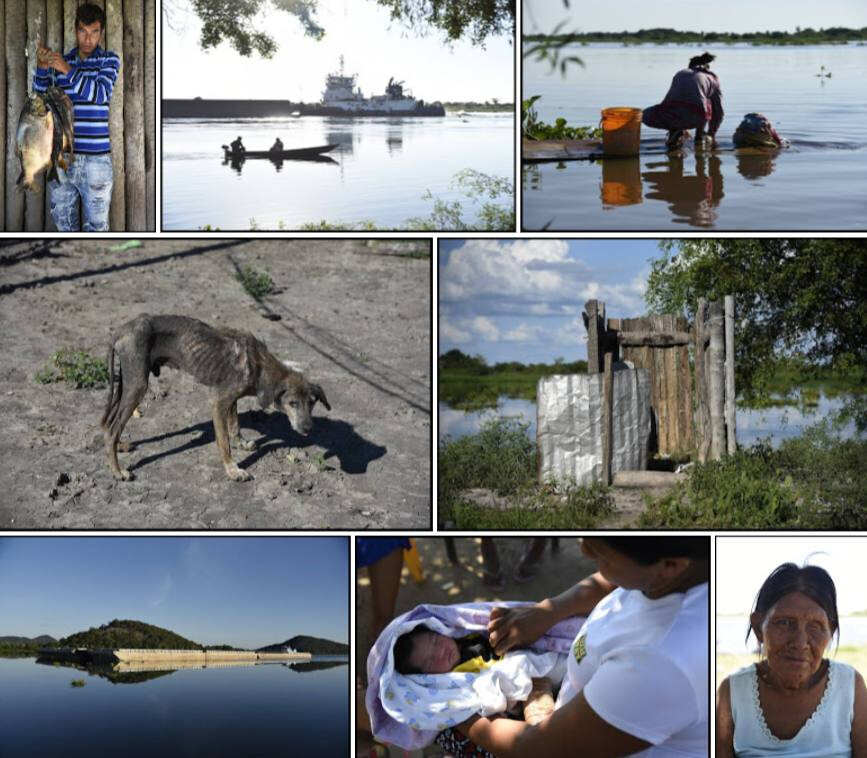
The Paraguayan Chaco region and its inhabitants are suffering from cyclical disasters. Droughts and wildfires, followed by torrential rains, isolate them. However, the worst disaster they face is the neglect of the central government, municipal authorities, and the governorship. Politicians only visit during election season to beg for votes, but once in power, they forget the Chaco's needs for roads, healthcare, education, the creation of quality jobs, and security.
The Chaco region was submerged by the heavy rains of the past week. Several communities in Alto Paraguay were once again isolated and cut off from access to food and medicine due to the poor condition of the roads, which have turned into muddy paths.
One such place is the Karandaity settlement, located in Fuerte Olimpo, where more than 40 families are isolated. According to residents, the only road connecting them to other communities has been completely destroyed, riddled with potholes and turned into a quagmire, leaving the settlement isolated. Siriaca Cabañas, a resident of the area, said that the only way to get around is on horseback. Furthermore, the inhabitants of this settlement are exposed to the constant appearance of venomous snakes and other harmful animals.
Residents complain that they have been marginalized by local and departmental authorities for decades, and that even when road repairs are carried out, they are of poor quality and quickly deteriorate with the next rain. In this settlement, children, women, and the elderly silently endure the hardships of isolation. They survive through small-scale livestock farming and farm work, and the children attend a school that operates in precarious, makeshift buildings.
One of the most affected areas is the Fuerte Olimpo district. The heavy rains caused flooding on the roads, trapping residents in their homes. In Bahía Negra, the situation is even more critical, with the Ishir Ybytoso indigenous community completely surrounded by water, with roads and homes flooded. The main access routes in Alto Paraguay have been damaged by the rapid accumulation of water, and the sections connecting Toro Pampa, Fuerte Olimpo, and Bahía Negra are flooded, making land access impossible.
The Chaco region suffered a terrible drought for almost 11 months. These rains undoubtedly helped alleviate the drought, finally allowing the replenishment of reservoirs and water tanks essential for the water supply. However, the unexpected torrential rains inevitably led to the collapse of road infrastructure, leaving hundreds of people isolated.
These road collapses and the resulting isolation are not solely due to weather phenomena. Rather, they occur because the state itself has abandoned these communities.
Every time a disaster occurs, there is an immediate response, and efforts are clearly made to provide food, medicine, and necessary assistance. However, once the disaster passes, all authorities and officials forget about the Chaco region and its difficulties. The same thing is happening right now, with all efforts focused on helping the flood victims.
The National Emergency Secretariat is carrying out operations to deliver essential kits to affected families and is using boats and helicopters to reach remote communities. However, no government has promoted serious public policies to permanently prevent the isolation of the Chaco communities.
The neglect of the inhabitants of this region is unacceptable, and their situation is unsustainable. They survive in precarious conditions, without access to medical care, educational opportunities for children and adolescents, clean water, electricity, or even basic sanitation. It is irresponsible for state institutions to only offer an improvised response, rushing to declare emergencies in the face of climatic disasters, which does not solve the underlying problems.
[Copyright (c) Global Economic Times. All Rights Reserved.]














