
![[등록] 2026-09-01 15:48:31](/support/_updata/banner2/tl181982910_6749.png)


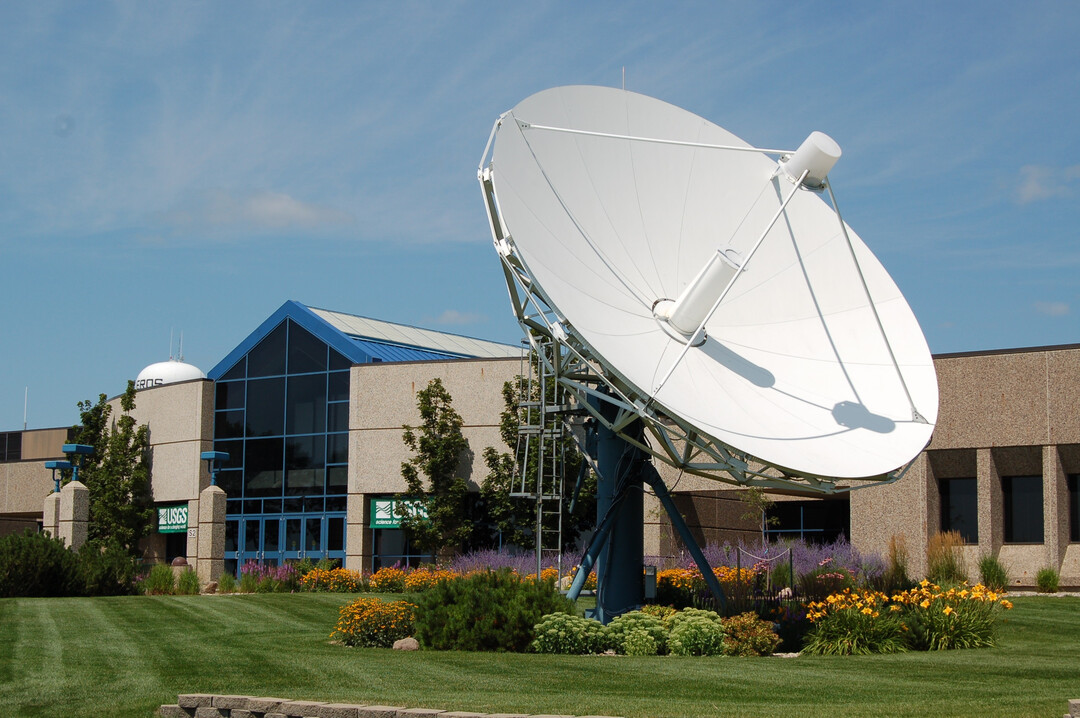
President Donald Trump's proposed satellite budget cuts are intensifying questions about the future of the Earth Resources Observation and Science (EROS) Center, a satellite data center located in South Dakota. In particular, the incident involving the renaming of the EROS Center's supercomputer to 'McKinley' highlights the symbolic and practical impact of the Trump administration's policies on scientific research institutions.
Landsat Program in Crisis, Escalating into an Existential Threat for EROS Center
According to President Donald Trump's discretionary budget request, NASA's Earth observation program budget is slated for an $1.1 billion cut. This includes cuts to the "gold-plated, $2 billion Landsat Next" mission, which accounts for roughly half of NASA's Earth observation budget. Landsat, since the launch of its first satellite in 1972, has maintained the longest continuous record of Earth observation data through nine iterations. NASA builds and launches Landsat satellites, while the U.S. Geological Survey (USGS) operates them and manages the data.
The USGS EROS Center, located northeast of Sioux Falls, South Dakota, has housed Landsat data, along with millions of other satellite images and modern and historical aerial images, since 1973. All this data is provided free of charge to users. Free Landsat data has also been used to calibrate commercial satellite data, and the USGS estimates that since it began sharing data for free in 2008, it has generated $25.6 billion in economic benefits from public investment.
The latest satellite, Landsat 9, entered low Earth orbit in 2021 and, along with its predecessor Landsat 8, collects new image data of the entire Earth's surface every eight days, including images in spectral bands invisible to the naked eye, such as infrared, and measurements of Earth's surface temperature. Landsat Next was scheduled for launch around 2030, aiming for improved resolution and faster image acquisition.
However, Trump's budget request demands that the Landsat Next mission be "restructured" and "NASA study more affordable ways to ensure continuity of Landsat imagery used by natural resource managers, states, and industry." This suggests that the future of the Landsat program is uncertain, and in the long term, the role of the EROS Center may also change.
USGS Budget Cuts, Potential Impact on EROS Research Programs
The budget request also proposed a $562 million cut to the USGS budget. This represents approximately one-third of the USGS's $1.6 billion budget. Trump's budget request specifies that these changes will "focus on achieving preeminence in energy and critical minerals by eliminating programs that subsidize universities, duplicate other federal research programs, and focus on social agendas (e.g., climate change)."
The EROS Center employs approximately 600 government and contract employees. Currently, the impact of federal workforce reduction efforts on the EROS Center is unclear. The latest staffing figures posted on the USGS website have not changed since March 2023. South Dakota Searchlight inquired with EROS and regional and national USGS media contacts regarding the number of employees who have left since January 25, the potential impact of the proposed USGS budget cuts on EROS science programs, and the impact of Landsat program changes on EROS, but received no response.
A NASA spokesperson told South Dakota Searchlight that they would be "better able to respond once we receive the full President's budget request in the coming weeks."
Political Reactions and the Case of the EROS Supercomputer 'McKinley'
US House Representative Dusty Johnson (R-South Dakota) noted that presidential budget requests are "aspirational" and "rarely implemented as written." A spokesperson for Johnson stated, "Dusty will continue to support Landsat's efforts in Congress." US Senator Mike Rounds (R-South Dakota) expressed a similar stance, saying, "The president's discretionary budget is exactly that — discretionary. It's simply outlining his priorities and his wish list, and ultimately it'll be up to Congress to appropriate and allocate federal funds."
A spokesperson for Republican Senate Majority Leader John Thune (South Dakota) did not respond to an email requesting comment on Landsat and EROS. Republican South Dakota Governor Kristi Noem recently stated during a visit to Sioux Falls that she had not heard about the proposed cuts to satellite programs or the USGS. Nevertheless, Governor Noem stated her belief that an open relationship with the Trump administration would help preserve South Dakota's priorities through budget negotiations.
President Donald Trump's actions have had at least one public, albeit not operational, impact on EROS. EROS houses a supercomputer that shares processing power across various Department of the Interior divisions. This system was originally named 'Denali', after Denali, the highest peak in the United States. However, following a Trump administration executive order, EROS's Denali system was renamed 'McKinley'.
Denali had long been the name of the mountain among the indigenous Athabascan people of Alaska, but the federal government had for about 100 years accepted the name "Mount McKinley," given by a gold prospector after then-presidential candidate William McKinley. Former President Barack Obama officially renamed the mountain Denali in 2015, aligning with the name adopted by the surrounding national park nearly 40 years prior.
Trump's executive order did not directly mention the USGS or the supercomputer but directed the Department of the Interior to "update its Geographic Names Information System (GNIS) to reflect the renaming and restoration of Mount McKinley." Nevertheless, the EROS supercomputer was renamed in response to this order. A poster in the EROS visitor area reads, "In accordance with President Trump's Executive Order No. 14172, 'Restoring Names that Honor American Greatness,' this supercomputer has been renamed McKinley."
This proposed budget cut and the case of the supercomputer renaming simultaneously illustrate the impact of the Trump administration's policy direction on scientific research and data utilization, as well as the ideological and symbolic aspects that emerge during the policymaking process. The future of the Landsat program and the EROS Center is expected to depend on the outcome of future budget negotiations in the US Congress.
[Copyright (c) Global Economic Times. All Rights Reserved.]














