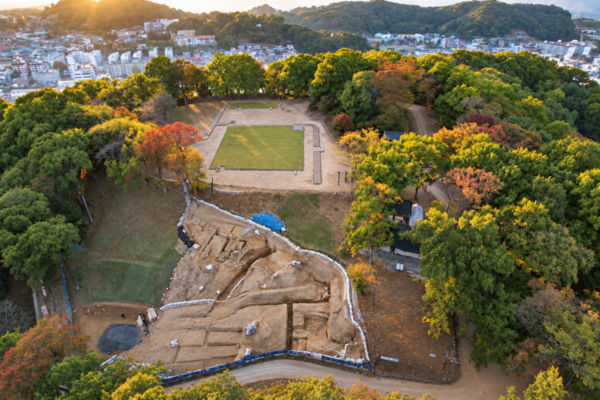
GONGJU, South Korea — South Korea's Heritage Administration, in collaboration with local governments and Gongju National University, has revealed groundbreaking archaeological findings from ongoing excavations at Gongsanseong Fortress in Gongju, revealing the structural layout of a royal Baekje palace.
The findings, presented during a joint academic report and on-site briefing, highlight the discovery of a "Mungwol" (gate-tower complex)—a first of its kind among ancient Baekje archaeological sites.
A Monumental Discovery: The Mungwol Gate Structure
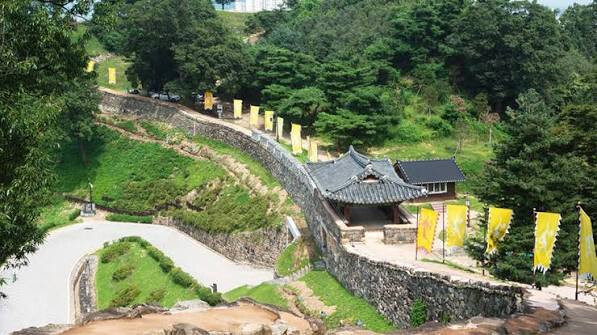
Gongsanseong Fortress served as a vital royal capital during the Ungjin period (475–538 CE) of the Baekje Kingdom, following the fall of the initial capital, Wiryeseong (modern-day Seoul).
The newly identified gate complex features a 10-meter-wide central roadway flanked by massive symmetric watchtower structures (measuring approximately 40 meters wide, 23 meters long, and up to 11 meters high). Archaeologists note that this imposing architectural design demonstrates how Baekje reinforced royal authority and governance during a period of geopolitical rebuilding, echoing the historic declaration of Gyeongwi-gangguk ("renewed strength as a powerful nation").
Key Archaeological Highlights
Palace Platform Foundation: Excavations uncovered a massive square platform measuring 104 meters north-to-south and 87 meters east-to-west, constructed by leveling and filling a 3-to-7-meter deep valley.
Corridor-Style Architecture: Long corridor-like structures (26–34 meters) and a central core building (7 rooms wide by 3 rooms deep) share striking architectural similarities with royal remains found in Buyeo and Iksan.
Reconstructed Armor and Equipment: The public showcase also featured meticulously researched replicas of ancient lacquer-coated armor (otchil-gapot) and horse armor (magap) originally excavated at the site in 2011, shedding light on Baekje's advanced military craftsmanship.
Heritage authorities plan to continue joint academic research and preservation efforts to further uncover the historical layers of Gongsanseong, reinforcing its status and value as a UNESCO World Heritage site.
[Copyright (c) Global Economic Times. All Rights Reserved.]