![[등록] 2026-09-01 15:48:31](/support/_updata/banner2/tl181982910_6749.png)


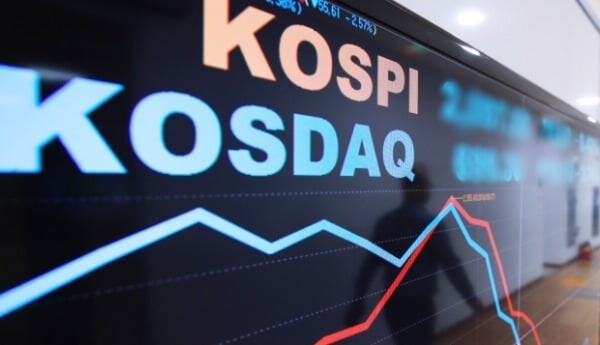
Despite some easing of concerns that have weighed on investor sentiment in the South Korean stock market, including earnings, tariffs, and political uncertainties, foreign investors have continued their net selling spree in the KOSPI this month. As of April 25th, they had offloaded approximately 9.79 trillion won ($7.1 billion USD) worth of shares in the Korea Composite Stock Price Index (KOSPI).
If this trend persists for the remaining three trading days of April, foreign investors are poised to record their ninth consecutive month of net selling, marking the second-largest monthly net outflow in the history of the KOSPI. The largest monthly net selling by foreign investors occurred in March 2020, immediately following the outbreak of the COVID-19 pandemic, amounting to 12.55 trillion won.
The current টানা selling streak also ranks as the second-longest on record. The longest period of consecutive net selling by foreign investors lasted for 11 months, from June 2007 to April 2008, during the global financial crisis.
This sustained outflow of foreign capital has significantly impacted foreign ownership in the KOSPI. The proportion of KOSPI's total market capitalization held by foreign investors has decreased from 35.65% at the end of July last year, just before the selling trend began, to 31.52% as of April 24th. This represents the lowest foreign ownership level since August 30, 2023.
During this period of persistent net selling, the cumulative net outflow of foreign funds from the KOSPI has reached a staggering 38.94 trillion won. A significant portion of this outflow, approximately 24.43 trillion won, has been concentrated in shares of Samsung Electronics, the bellwether of the South Korean stock market. This figure is nearly twelve times the net selling of Hyundai Motor (2.09 trillion won), which ranks second in terms of foreign net selling.
Consequently, the foreign ownership stake in Samsung Electronics has declined from 56.48% to 50.00%. Notably, foreign ownership in the tech giant even dipped below the 50% threshold in February of this year, a symbolic milestone reflecting the extent of the foreign exodus.
Despite this prolonged selling pressure, the local brokerage community has begun actively discussing investment strategies predicated on a potential rebound in foreign investor sentiment and a subsequent return of foreign capital to the KOSPI.
Lee Kyung-soo, a research analyst at Hana Securities, suggests that the recent strengthening of the Korean won is creating a more favorable environment for attracting foreign capital. He further advises that in a phase of foreign inflows, value stocks tend to perform most favorably.
Echoing this sentiment, Kim Yu-mi, an analyst at Kiwoom Securities, posits that the resumption of net buying by foreign investors is "a matter of time, not if." She emphasizes that foreign investors currently hold the key to market direction. Observing a shift in their trading patterns, with a move towards net buying in sectors they previously consistently sold, such as trading companies, capital goods, and shipbuilding, Kim anticipates that foreign investors are strategically positioning themselves in high-visibility, order-driven industrial segments during the current earnings season. This suggests a focus on companies with strong order backlogs and predictable future earnings.
Several factors could potentially trigger a reversal in the foreign selling trend and induce a return of foreign capital to the South Korean equity market.
Firstly, a sustained recovery in the global economy would likely boost investor confidence in emerging markets like South Korea. Improved global trade and economic activity would enhance the earnings prospects of Korean export-oriented companies, making them more attractive to foreign investors.
Secondly, a stabilization or weakening of the US dollar would reduce the currency hedging costs for foreign investors holding Korean assets, making investments more appealing. The recent strengthening of the Korean won, as noted by Hana Securities' Lee, is a positive signal in this regard.
Thirdly, a resolution of geopolitical tensions, particularly those involving North Korea and the broader East Asian region, would alleviate a significant source of risk that has historically deterred foreign investment in South Korea. Any signs of improved inter-Korean relations or a de-escalation of regional security concerns could lead to a reassessment of Korean assets by global investors.
Fourthly, concrete measures by the South Korean government to enhance corporate governance, improve shareholder returns, and reduce regulatory uncertainties could significantly boost foreign investor confidence and attract long-term capital. Initiatives aimed at increasing dividend payouts, streamlining business regulations, and ensuring greater transparency in corporate decision-making would be well-received by international investors.
Finally, strong earnings results from major Korean companies, particularly in key sectors like technology, automobiles, and manufacturing, could serve as a catalyst for renewed foreign buying interest. Positive earnings surprises and optimistic future guidance would underscore the fundamental strength of the Korean economy and its listed companies.
However, challenges remain. Persistent global inflation, aggressive monetary tightening by major central banks (including the US Federal Reserve), and renewed trade tensions could all dampen global investor sentiment and potentially prolong the foreign selling pressure on the KOSPI. Furthermore, domestic political uncertainties and potential regulatory headwinds could also weigh on foreign investment decisions.
The significant concentration of foreign selling in Samsung Electronics warrants closer examination. While profit-taking after a substantial rally could be a contributing factor, concerns about the outlook for the semiconductor industry, potential regulatory risks, or a portfolio rebalancing strategy by major foreign institutional investors could also be at play. The fact that foreign ownership in Samsung Electronics briefly dipped below 50% is a notable development that requires careful monitoring.
In conclusion, while the persistent net selling by foreign investors in the KOSPI is a cause for concern, particularly given its duration and magnitude, there are emerging signals and potential catalysts that could lead to a reversal of this trend. The recent strengthening of the Korean won and the observed shift in foreign buying interest towards specific industrial sectors offer glimmers of hope. However, a sustained return of foreign capital will likely depend on a confluence of factors, including a favorable global economic environment, a stable currency, reduced geopolitical risks, positive corporate earnings, and continued efforts to enhance the attractiveness of the South Korean market for international investors. Market participants will be closely watching upcoming economic data, corporate earnings announcements, and global developments for clues regarding the future direction of foreign investment flows in the KOSPI.
[Copyright (c) Global Economic Times. All Rights Reserved.]