
![[등록] 2026-09-01 15:48:31](/support/_updata/banner2/tl181982910_6749.png)


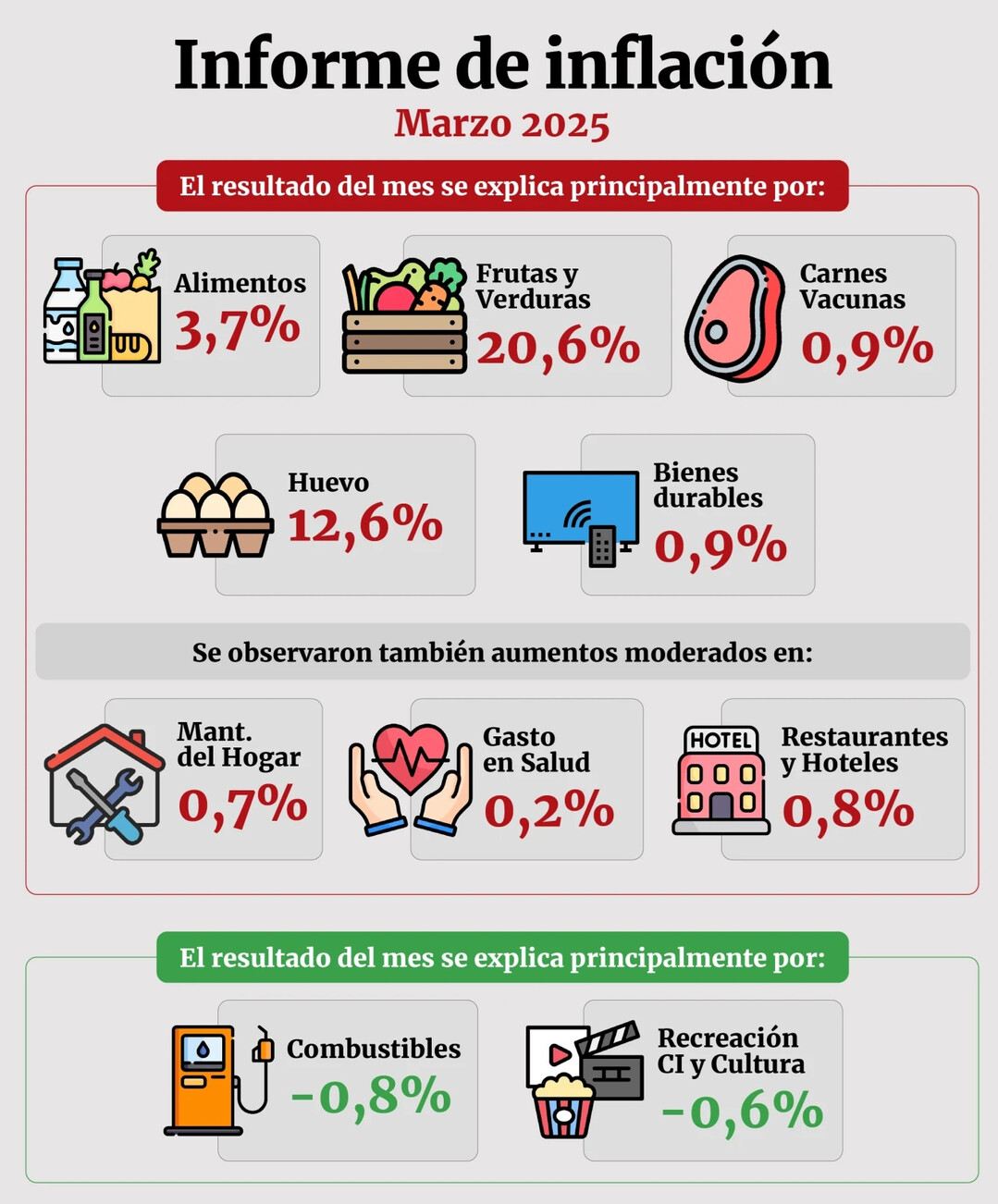
Asunción, Paraguay - Paraguay experienced its highest monthly inflation rate of the year in March 2025, with the Consumer Price Index (CPI) rising by 1.2%. This significant increase was primarily driven by soaring food prices, pushing the accumulated inflation for the year to 2.6% and the annual inflation rate to 4.4%. The report, released by the Central Bank of Paraguay (BCP), was presented by Chief Economist César Yunis, Head of Economic Statistics Gustavo Cohener, and Head of the Price Index Department Guillermo Ortiz. Despite the recent surge, the BCP projects that inflation will stabilize at around 3.7% by the end of the year.
Food Price Spike Fuels Inflation Amidst Climate Woes and Import Restrictions
The BCP report highlighted that the primary driver of March's inflation was the 3.7% increase in food prices. Notably, fruits and vegetables saw a dramatic 20.6% price hike, attributed to a combination of climate shocks leading to reduced domestic production and seasonal factors. Chief Economist Yunis explained, "Climate change has limited domestic production, and import restrictions on certain items by regulatory bodies like the Ministry of Agriculture and Livestock (Ministerio de Agricultura y Ganadería) have exacerbated supply shortages." This situation led to substantial price increases for staple agricultural products such as tomatoes and onions.
Dairy products also experienced upward price pressure. The prices of liquid milk and cheese (especially traditional Paraguayan cheese) rose by 1.4% each, influenced by increased seasonal demand, higher production costs, and adverse weather conditions affecting dairy farming. Beef prices also saw a 0.9% increase, with the livestock industry citing a decrease in the supply of cattle for slaughter. The price of eggs surged by 12.6% due to increased demand during Holy Week (Semana Santa), further contributing to the rise in food inflation.
Durable Goods and Imports Also See Price Increases
Beyond food, the prices of imported durable goods, including automobiles, household appliances, and furniture, saw a slight increase, contributing to the overall inflation. This rise is likely a consequence of ongoing global supply chain disruptions and fluctuations in exchange rates. Conversely, fuel prices, such as diesel and gasoline, and prices related to recreation saw a slight decrease, partially mitigating the overall inflation increase.
Expert Analysis and Outlook
The Central Bank of Paraguay maintains that the current inflationary pressures are temporary, driven by specific climate events and increased demand, suggesting a potential stabilization of prices in the latter half of the year. However, experts express concerns that persistent climate change impacts and import restriction policies could lead to prolonged food price instability. Economist Yunis cautioned, "If the government does not ease import restrictions and implement policies to boost agricultural productivity, achieving the inflation target may prove challenging."
Paraguay's economy is heavily reliant on agriculture, which accounts for approximately 20% of its GDP according to the World Bank. This dependence underscores the significant impact of agricultural production volatility, often influenced by climate, on the nation's inflation. Consequently, the government and the central bank are expected to consider further measures to ensure price stability and support the agricultural sector.
The elevated inflation in March is already increasing the cost of living for Paraguayan citizens, particularly impacting low-income households that spend a larger portion of their income on essential food items like fruits, vegetables, and eggs. The BCP plans to adjust its monetary policy and collaborate with the government to stabilize supply chains in an effort to meet its year-end inflation target of 3.7%.
[Copyright (c) Global Economic Times. All Rights Reserved.]














