SEOUL — In August 1945, as World War II neared its end, two American military planners in Washington were given half an hour to demarcate U.S. and Soviet occupation zones in Korea. Using a standard National Geographic map, they settled on the 38th parallel—an arbitrary boundary that ignored the peninsula's natural topography and infrastructure, yet permanently altered its modern history.
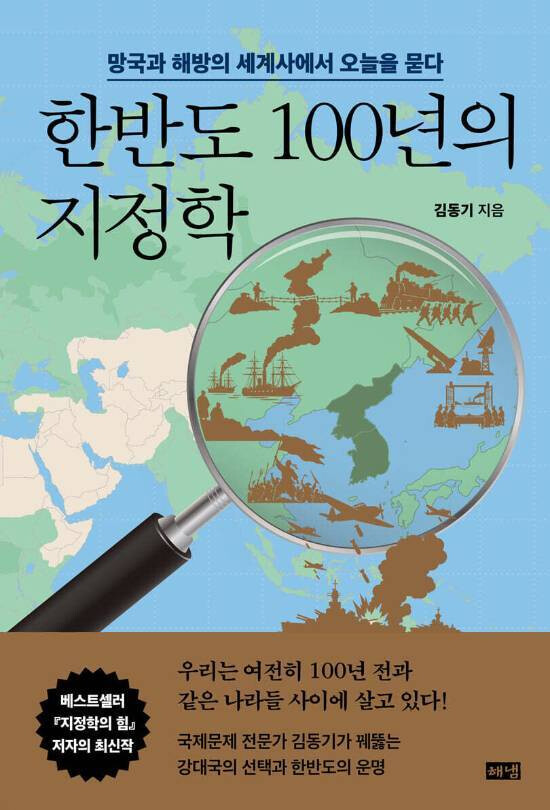
This pivotal moment serves as a focal point in 100 Years of Geopolitics on the Korean Peninsula (Hainaim), a new release by international affairs specialist Kim Dong-ki. Rather than viewing modern Korean history purely through a domestic lens, Kim investigates how external diplomatic maneuvering, global finance, and shifting alliances dictated the region's trajectory from the late 19th century through the Cold War.
Beyond the Battlefield
Kim argues that major turning points in East Asia were frequently decided far from the front lines. Analyzing the fall of the Korean Empire, the book highlights the critical role of Western financial markets and diplomatic treaties during the Sino-Japanese and Russo-Japanese wars. For instance, Japan's ability to secure foreign war bonds in London—despite steep interest rates—proved just as decisive in its 1905 victory over Russia as its naval power.
Similarly, the book contextualizes Korean independence struggles within broader global upheavals, noting how geopolitical shifts following World War I and the Russian Revolution indirectly bolstered armed resistance groups in Manchuria through the circulation of surplus European weaponry.
Postwar Calculations and Modern Parallels
The narrative also scrutinizes the realpolitik behind Korea's liberation and subsequent division. According to Kim, Allied pledges for Korean independence at the 1943 Cairo Conference, as well as the U.S. decision to exempt Emperor Hirohito from the Tokyo War Crimes Trials, were heavily calculated moves aimed at containing Soviet expansion in postwar Asia.
Connecting these historical patterns to contemporary challenges, Kim draws parallels between past great-power rivalries and today's intensifying U.S.-China strategic competition. To avoid remaining a passive arena for foreign interests, the author suggests that Korea must actively pursue inter-Korean tension reduction and regional dialogue, pointing to West Germany's Ostpolitik and post-WWII Franco-German reconciliation as viable models for building strategic autonomy.
Ultimately, 100 Years of Geopolitics on the Korean Peninsula challenges readers to reflect on a century of externally imposed fates—and to consider how Korea can take ownership of its geopolitical future over the next hundred years.
[Copyright (c) Global Economic Times. All Rights Reserved.]