![[등록] 2026-09-01 15:48:31](/support/_updata/banner2/tl181982910_6749.png)


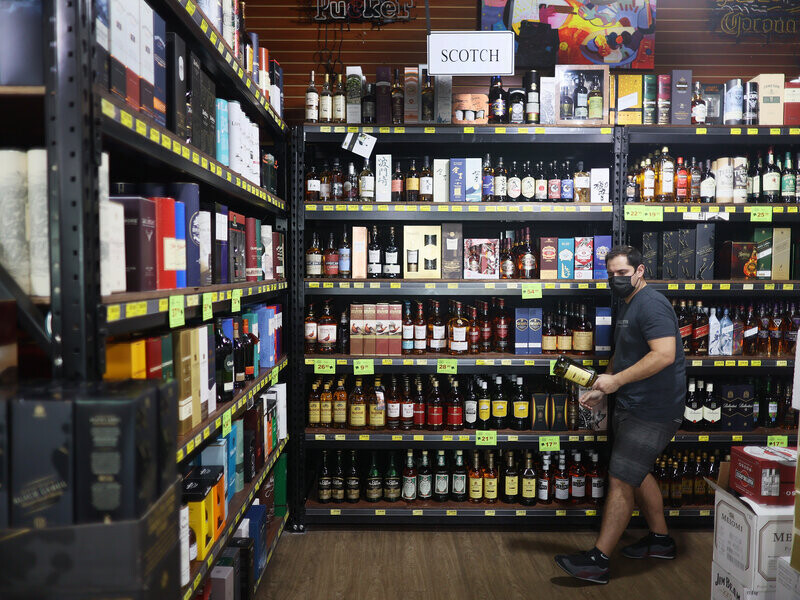
Rapid City, SD - On a Saturday night in downtown Rapid City, the clink of a cork being pulled from a bottle of Nero d'Avola echoed through BB’s Natural, a wine bar co-owned by Justin Warner. As the deep ruby liquid filled the wide bowl of the glass, he and his spouse and co-owner, Brooke, couldn't shake the anxieties surrounding the looming uncertainty of tariffs and their potential impact on their business.
"Everyone's trying to figure out how this is going to play out, but it's very unclear at this point," Brooke Warner said. She explained that their motivation for opening BB’s Natural was to introduce sustainably produced wines from around the globe, a selection often difficult to find in South Dakota.
Just last week, President Trump announced a 20% tariff on all goods imported from Europe, with various rates slated for other items. Shortly after an interview with SDPB, the president walked back that blanket approach but maintained a baseline tariff of 10% for most countries. Goods from China are facing a much steeper 125% levy. BB’s Natural stocks wines from Europe, as well as regions like Australia and South Africa.
"We're essentially a restaurant, and the margins are pretty thin," Brooke Warner added. President Trump has not ruled out further tariff impositions, even suggesting potential tariffs of up to 200% on European alcoholic beverages. The Warners have been hearing from their distributors that the situation is highly volatile.
Justin Warner worried that rising prices could limit their menu offerings. "When a South African wine is relatively inexpensive or in line with other wines, it's easy to say, 'Hey, let's try that.' But if all of a sudden that South African wine is significantly more expensive than an American wine, people just won't make that choice as readily. And then they miss out on an opportunity to learn about the world, and that's what makes us sad," he said.
Even the Black Hills and western South Dakota, a region relatively insulated from major market fluctuations, are unlikely to escape the ripple effects of a looming trade war. Tom Johnson, CEO of Elevate Rapid City, a chamber of commerce group focused on economic development in the Black Hills region, warned that tariffs at the level of President Trump's initial "Liberation Day" announcement, if sustained for more than three months, could put local jobs at risk and drive up prices.
"We've run a lot of data, and we think around 2,000 jobs in Pennington County and the Rapid City area could be potentially at risk. Regionally in the Black Hills, that number is probably closer to 2,500. And that depends on the duration of these tariffs," Johnson said. He anticipates the construction industry and the agricultural economy will be most significantly impacted.
The increased costs associated with long-term tariffs could also hinder the Box Elder area expansion around Ellsworth Air Force Base in anticipation of the B-21 bomber deployment, Johnson added. "Long term, this is going to lead to increased costs for base construction, increased housing prices. Long term, it's going to cause interest rates to rise and inflation to rise, making it harder for more people to afford a home."
However, others view President Trump's trade war as an opportunity to protect American markets through disadvantages on specific imports. Chuck Willard, President of the South Dakota Sheep Growers Association, argued that trade with New Zealand and Australia has had a devastating impact on the American sheep industry. "From a protection standpoint, which is one of the reasons for tariffs, we've struggled. Our U.S. cow herd is at its lowest level in 71 years," he stated.
According to the U.S. Department of Agriculture, the United States imports over a billion more pounds of beef than it exports. Willard suggested that a reshuffling of the beef market could create an opening for the implementation of country-of-origin labeling.
"Every poll in the United States shows that consumers across the board want to know where their beef and lamb comes from. Producers do too. I can't understand why we don't have it. My personal opinion is because the packers have control and they make billions of dollars by not labeling. And of course, they're going to fight it," he asserted.
South Dakota's lone Republican Congressman, Dusty Johnson, said that while he doesn't favor tariffs as a long-term solution, he believes the United States has an opportunity to leverage them for better trade deals. "We need to use these tariffs not as a reduction in trade, but as an opportunity to sell more of South Dakota's best beef, corn, dairy, and soybeans around the world," he emphasized.
Back at BB’s Natural in Rapid City, the Warners are carefully calculating their next steps. "When we opened a wine bar, I never imagined that we would be looking at a blanket 20% price increase," Brooke Warner lamented. "Businesses don't pivot that quickly. It feels like getting hit by a financial bus." But for at least the next 90 days, they will have to navigate the reality of a 10% global tariff.
[Copyright (c) Global Economic Times. All Rights Reserved.]