

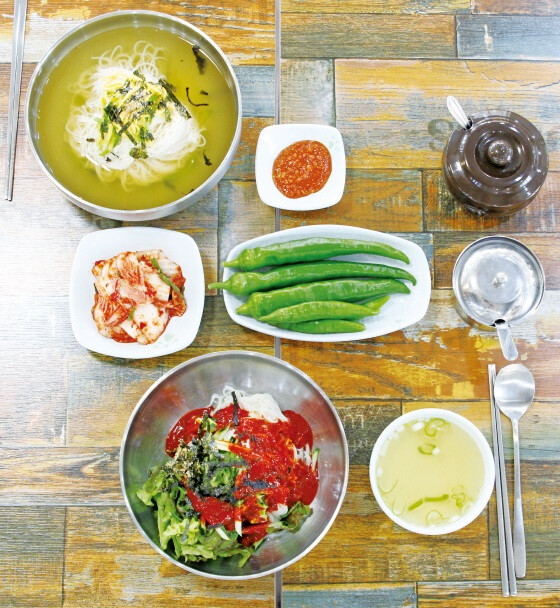
GYEONGJU, SOUTH KOREA — The clatter of chopsticks and the murmur of satisfied diners now fill a space in Gyeongju, marking the grand opening of the Gyeongju Ahwa Traditional Noodles direct branch. This new establishment, which officially opened its doors this past June, is more than just a restaurant; it’s a living testament to a 50-year-old culinary legacy, blending the rich, deep flavors of a meticulously crafted broth with the famously chewy and resilient noodles that have defined the Ahwa name for generations.
At the helm of this new venture is Kim Young-chul, a 48-year-old visionary who has dedicated his life to preserving his family’s heritage. The story of Gyeongju Ahwa Traditional Noodles begins with Kim’s late father, Kim Bang-gu, who founded the business in 1968. After suffering a debilitating injury while working in a coal mine in Gangwon-do, the elder Kim sought a new path. He learned the art of noodle-making from various masters, and a half-century ago, he returned to his hometown in Ahwa-ri, Gyeongju, to start his own noodle business.
Young-chul, the fourth son of the founder, faced strong opposition from his father when he decided to take over the family business two decades ago. “My father was very against it,” Kim recalls. “I had a stable job in Seoul, but I quit the very next day and came down to Gyeongju to start making noodles. I believed, and still firmly believe, that this work has long-term value.” His decision proved to be a pivotal one, breathing new life into a cherished tradition.
The Secret to the Perfect Noodle
The most common praise heard from those who have tried Ahwa noodles is their incredible chewiness and their remarkable ability to resist getting soggy, even after sitting in broth for a while. Kim attributes this to the traditional methods passed down through his family.
“The perfection of traditional noodles lies in the dough and the aging process,” he explains. He emphasizes that the secret is in adapting to the environment. “Noodle production is greatly influenced by the surrounding conditions. The methods for kneading, aging, and drying the dough vary depending on the season and the weather. This knowledge is something we’ve gained through generations of experience.” He adds that the true quality of a noodle can be felt by pulling on a strand or chewing a dried one. “It’s something you learn to do by feel alone.”
The Heart of the Broth: A Labor of Love
For Kim, the heart of a perfect Janchi-guksu (feast noodles) is the broth. “I believe the broth accounts for more than 80% of the flavor of Janchi-guksu,” he states. “No matter how chewy or delicious the noodles are, they are meaningless if the broth is not good.”
The new direct branch is a testament to this philosophy. Kim spent months perfecting the broth before the opening. “Before we opened the restaurant, we conducted two months of taste tests specifically for the broth,” he says. “I invited various people to get their opinions and to refine the direction of our broth.” The result of this painstaking process is a clear and clean broth, made with anchovies and a variety of vegetables, leaving a refreshingly satisfying aftertaste.
A Sweet and Spicy Masterpiece: The Bibim-guksu
Beyond the classic Janchi-guksu, the restaurant also offers a Bibim-guksu (spicy mixed noodles) featuring a unique sweet and spicy sauce crafted by Kim himself. He also sought feedback on the sauce before the opening, though he admits it’s a constant work in progress. “I tried to create a sauce that would satisfy everyone, but it wasn’t easy,” he says. “Most people say it’s delicious, but there are a few who don’t. I’m always striving to improve it to suit the palates of all our customers.”
In addition to the main noodle dishes, the restaurant offers side dishes like chive pancakes. Another delightful perk for diners is the option to get a large-sized portion (gopbaegi) of either the Janchi-guksu or the Bibim-guksu at no extra charge.
Whether it’s a hot summer day calling for a cool, refreshing bowl or a chilly day needing the warmth of a comforting broth, the Gyeongju Ahwa Traditional Noodles direct branch offers a taste of tradition and a commitment to quality. It’s a place where the legacy of a father and the dedication of a son come together to create a simple yet profound dining experience.
[Copyright (c) Global Economic Times. All Rights Reserved.]