![[등록] 2026-09-01 15:48:31](/support/_updata/banner2/tl181982910_6749.png)


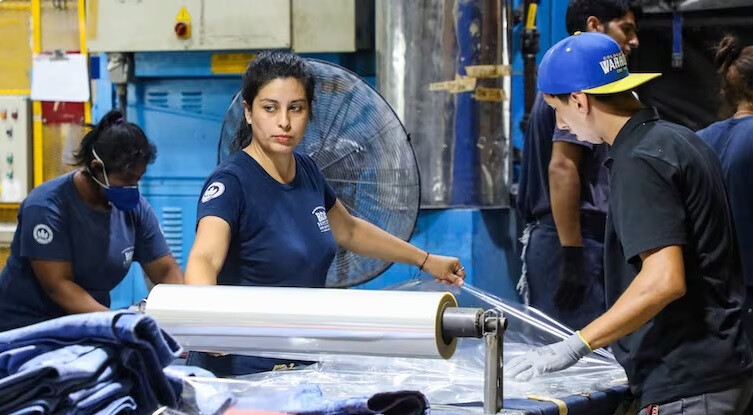
Paraguay's Maquila industry is maintaining record-breaking growth, emerging as a key driver of the national economy. As of May this year, maquila sector exports have exceeded $478 million, an increase of approximately $52 million compared to the same period last year. Automotive parts, apparel and textiles, and aluminum products are notably leading exports, suggesting Paraguay's growing importance in the global supply chain. The maquila industry has also positively impacted the job market, creating around 30,000 new jobs in 2024 alone.
Increased Exports, Job Creation, and Added Value
The Undersecretariat of Industry of Paraguay stated that the maquila industry continues its upward trend in exports, job creation, and value addition, solidifying its position as a core engine of the national economy. As of the end of May 2025, maquila sector exports reached $478 million, marking a remarkable 12% growth year-on-year. In May alone, exports hit $90 million, demonstrating the sector's dynamism.
Leading Export Products and Market Diversification
As of this year, automotive parts account for an overwhelming 34% of the maquila industry's main export products, securing the top spot. This indicates Paraguay's strengthening role as a parts supply base for major automotive manufacturers in neighboring South American countries like Brazil and Argentina. Apparel and textiles followed with 18%, and aluminum products and their manufactures with 15%. Exports of foodstuffs, plastics, and their manufactures are also active, showing that the maquila regime is enhancing the competitiveness of various products in strategic sectors. This suggests that Paraguay is moving beyond an agrarian-centric economic structure to solidify its manufacturing base.
The primary market for maquila products is the Mercosur member countries, with 81% of total exports heading to this region. Brazil is the largest export destination, accounting for an overwhelming 64%, followed by Argentina with 15%. Exports to various other countries, including the United States, Netherlands, Chile, Bolivia, and Uruguay, are also occurring. This is interpreted as a positive sign of reducing dependence on specific markets and diversifying market reach.
Positive Trade Balance and High Added Value
The maquila sector's trade balance remains positive. As of the end of May, exports were 66% higher than imports ($288 million), recording a substantial trade surplus. This reflects the high value added generated in domestic production in Paraguay. While the maquila regime involves importing raw materials from abroad, processing them, and re-exporting finished products, it signifies that a significant level of processing and assembly is taking place locally in Paraguay. This high value creation contributes to increasing Paraguay's economic self-reliance and advancing its industrial structure.
Characteristics of the Maquila Regime and its Impact on Paraguay's Economy
The Maquila Regime (Régimen de Maquila) is a special production and export system introduced by the Paraguayan government to attract foreign investment and foster domestic industry. The core of this system is to grant tax benefits to foreign companies that establish production facilities in Paraguay, import raw materials or intermediate goods duty-free, process or assemble them, and then re-export the finished products. Key benefits include: △a single tax rate of 1% (exempting income tax, VAT, corporate tax, etc.), △exemption from import duties and domestic taxes, △exemption from capital goods import duties, and △freedom to repatriate profits.
These attractive benefits make Paraguay an appealing investment destination for foreign companies. This is especially true when combined with the advantages of low labor costs and excellent geographical access to the Mercosur market, creating synergy. The maquila industry directly impacts Paraguay's employment market. The creation of 30,000 new jobs in 2024 is a significant number, contributing particularly to lowering youth unemployment and fostering skilled labor through technical training. In Paraguay, where the manufacturing base was weak, the maquila industry offers opportunities for technology transfer and industrial know-how accumulation, laying the groundwork for long-term industrial development.
Furthermore, the maquila industry plays a crucial role in diversifying Paraguay's export structure. Paraguay's economy, traditionally heavily reliant on agricultural products and primary commodities, is now increasing its manufacturing share through maquila, strengthening its competitiveness in the international market. This helps mitigate economic shocks from global raw material price fluctuations and builds a more stable growth foundation.
Success Stories and Investment Attraction Strategies
The success of Paraguay's maquila industry can be seen through several prominent examples. For instance, companies like Yasuni Autopartes serve as vital pillars of the South American automotive industry supply chain, supplying parts to major automotive manufacturers in Brazil and Argentina. Apparel and textile companies such as Tierra Gaucha produce high-quality garments for export to overseas markets, leveraging their skilled workforce. These companies have successfully utilized Paraguay's maquila regime to enhance production efficiency and secure global competitiveness.
The Paraguayan government is actively promoting the maquila regime and attracting foreign investment. It is improving the investment environment by organizing overseas investment briefings, providing customized investment consultations, and streamlining administrative procedures. There is particular interest in attracting investments from Asian countries, including China, South Korea, and Japan, supporting companies from these nations to use Paraguay as a stepping stone for entering the South American market.
Challenges and Efforts for Sustainable Growth
Despite the maquila industry's successful performance, some challenges remain. First, technological advancement. Currently, the maquila industry is primarily focused on assembly and simple processing. For long-term growth, increased investment in research and development (R&D) and the adoption of high value-added technologies are necessary. Second, securing skilled labor. As the industry expands, vocational training programs must be strengthened to continuously cultivate the specialized workforce required by the industry. Third, environmental issues. Strict environmental regulations and the adoption of sustainable production methods are essential to minimize potential pollution from manufacturing expansion.
The Paraguayan government recognizes these challenges and is pursuing policies for the sustainable development of the maquila industry. Examples include incentives for companies adopting eco-friendly production technologies, enhanced linkages with vocational training schools, and support measures for small and medium-sized enterprises to utilize the maquila regime.
Conclusion and Future Outlook
Paraguay's maquila industry is clearly in a "healthy state" and has established itself as a significant engine of national economic growth. Record exports, steady job creation, and high value-added generation demonstrate the regime's successful operation. With continued efforts by the Paraguayan government to attract investment and maquila companies' endeavors to enhance technological capabilities, Paraguay's maquila industry is expected to further solidify its position as a global manufacturing hub, extending beyond South America. This will contribute to further diversifying Paraguay's economic structure, increasing its resilience to external shocks, and ultimately having a positive impact on the quality of life for its citizens.
[Copyright (c) Global Economic Times. All Rights Reserved.]