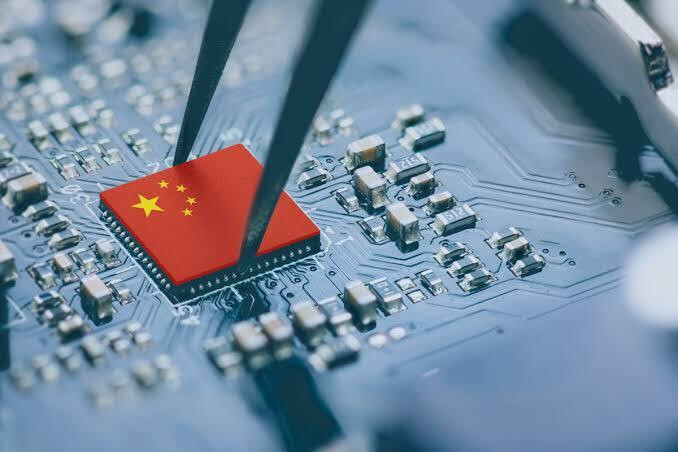
China’s rapidly expanding humanoid robotics sector is accelerating efforts to develop domestic semiconductors as the United States weighs expanding its export controls to cover chips used in robotics and drones.
While Chinese robotics manufacturers have leveraged cost advantages and local component supply chains to scale production, they remain heavily reliant on U.S. tech giant Nvidia for the core processors and software that serve as the "brains" of their machines.
According to sources cited by Reuters, U.S. government agencies—including the White House National Security Council and the Federal Communications Commission—alongside members of Congress, are reviewing whether to restrict exports of Nvidia’s Jetson series. These modules process real-time sensor and camera data to help robots navigate and interact with their environments. Beyond hardware, at least 14 major Chinese firms—including Unitree, XPeng, AgiBot (Zhiyuan Robotics), and Fourier Intelligence—utilize Nvidia’s Isaac software platform to train robots in virtual environments, according to the Jamestown Foundation.
Industry insiders note that replacing Nvidia's technology presents a steep technical hurdle. A former Unitree engineer told Reuters that domestic alternatives currently lack the computing power required to run complex AI functions effectively.
To mitigate the risk of supply chain disruptions and reduce reliance on costly foreign components, Chinese firms are aggressively pursuing chip self-sufficiency. UBTech Chairman Zhou Jian previously noted that expensive imported chips account for roughly one-third of hardware procurement costs.
In response, several major players are forming joint ventures and backing local chip startups:
UBTech & Moore Threads: Xixuan Chuangzhi, a chip joint venture established by UBTech and Chinese GPU maker Moore Threads in May, recently secured 500 million yuan (approx. $70 million) in seed funding. The venture aims to mass-produce an all-in-one robotics chip by 2028 to rival Nvidia’s high-performance Jetson Thor.
AgiBot: The robotics firm has invested in Xinjiuxian, a chip startup founded by researchers from Tsinghua University, to co-develop specialized robotics processors.
Despite the influx of capital, analysts warn that breaking free from Nvidia’s ecosystem will take years. Beyond matching raw hardware performance, Chinese developers must build compatible software platforms to support widespread commercial deployment—all while scaling sales in a nascent humanoid market to recoup massive research and development costs.
[Copyright (c) Global Economic Times. All Rights Reserved.]