![[등록] 2026-09-01 15:48:31](/support/_updata/banner2/tl181982910_6749.png)


[GLOBAL ECONOMIC TIMES] In November, the government's ambitious plan to supply mega-housing will be announced one after another. A detailed blueprint for housing supply in the metropolitan area is about to be revealed, including the candidate sites for new greenbelt housing sites for approximately 50,000 households, and the outline of the first new town reconstruction district for up to 40,000 households. However, for smooth project progress, greenbelt land compensation and relocation measures are issues that need to be solved.
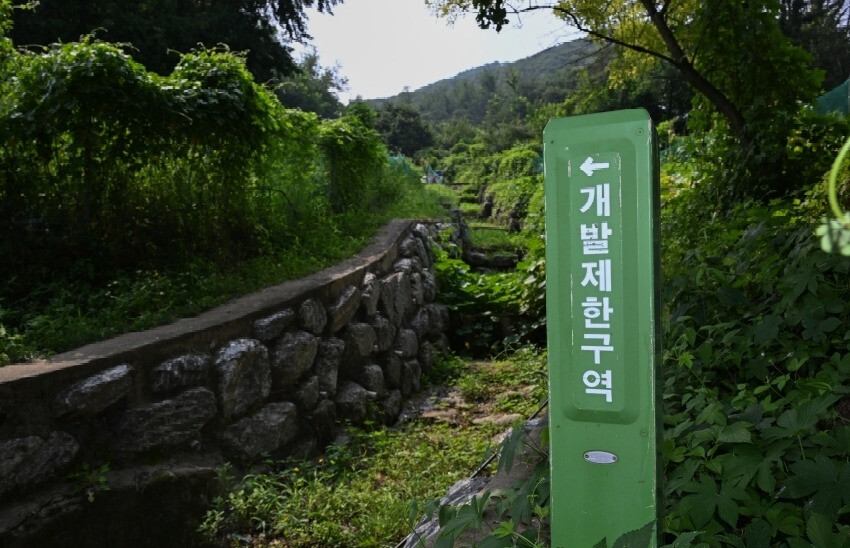
According to the industry on the 28th, the Ministry of Land, Infrastructure and Transport plans to announce detailed supply measures for about 90,000 households next month through lifting green belts and designating advanced districts. The government previously announced in the '8/8 Supply Plan' that it would build a total of 80,000 households, including 50,000 households this year and 30,000 next year, by opening the green belt in Seoul and adjacent areas. First, candidate sites for green belt release where 50,000 households will be built will be revealed in November. The Ministry of Land, Infrastructure and Transport has grouped the entire greenbelt in Seoul into a land transaction permit zone. In the case of Gyeonggi, some areas have been designated as permission zones.
The market expects that the green belt in the Gangnam area of Seoul (Songpa-gu, Gangnam-gu, Seocho-gu) will be designated as a new residential site as a candidate site for 50,000 households. It is expected that about 10,000 of the 50,000 households will be supplied.
In Gyeonggi Province, the Gamil and Gambuk-dong areas in Hanam are viewed as potential candidates for delisting. This is because it was the only permitted area in the game. The Gambuk-dong area was previously designated as a nesting area, but has since been removed. An industry official said, “The Gamil-Gambuk-dong area is a large residential complex that can house up to 40,000 households,” and added, “It is virtually a ‘4th generation new city’ as it is a large residential complex.” If this area is selected as a candidate for a new housing site, another large residential complex will be created in an area adjacent to Seoul.
In addition to the unveiling of the new greenbelt housing site, the first new city Seondo district will also be revealed. According to the Ministry of Land, Infrastructure and Transport, about 60% of apartment complexes in the first new city area participated in the Sundo District contest, which ended last September. In the case of Bundang, 47 out of 67 special maintenance areas subject to the contest participated, accounting for 70%. Previously, the government announced that it would designate a total of 26,000 households as Seondo districts, including 8,000 households in Bundang, 6,000 households in Ilsan, and 4,000 households each in Pyeongchon, Jungdong, and Sanbon. In addition, 1 to 2 districts can be added to each new city (within 50% of the standard volume), allowing up to 39,000 households to be designated.
Kim Je-kyung, head of Tumi Real Estate Consulting, said, "A large-scale supply plan event for about 90,000 households is about to be announced one after another. However, in order to proceed as planned by the government, there are many issues that need to be resolved, such as immigration measures and compensation for housing land." In the case of green belts, the proportion of private land is in the 60-70% range. There is a high possibility that relocation measures and additional contributions will hinder the reconstruction of the new city. As a relocation measure, permanent rental housing in the new city is planned to be rebuilt and utilized, but the reality is that residents are reluctant to do this as well.
Meanwhile, the impact of major supply measures on the market is also of interest. Ko Jun-seok, a professor at Yonsei University's Sangnam Business School, said, "It may provide psychological stability, but the lifting of the green belt in the Gangnam area or the reconstruction of a new city are a long way off before people can move in. Ultimately, the intensity of loan regulations is expected to be a major variable in housing prices."
[Copyright (c) Global Economic Times. All Rights Reserved.]