![[등록] 2026-09-01 15:48:31](/support/_updata/banner2/tl181982910_6749.png)


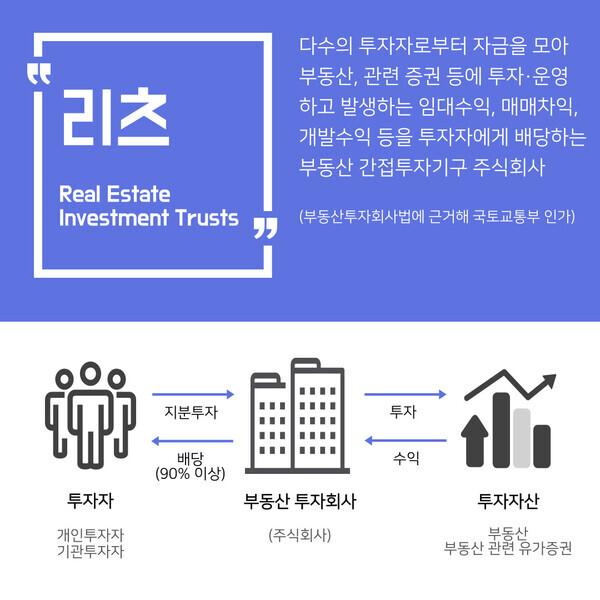
A recent legislative move in South Korea has ignited both optimism and apprehension within the Gyeonggi Province real estate market. The passage of an amendment to the Real Estate Investment Company Act by the National Assembly's Land, Infrastructure and Transport Committee on April 16th paves the way for a significant expansion in the operational scope of Real Estate Investment Trusts (REITs). This landmark decision allows private construction firms and asset management companies to directly engage in urban development projects through REITs, a departure from their traditional role as mere investment vehicles.
REITs, structured as investment companies that pool funds from numerous investors to acquire and manage income-generating real estate, distributing rental revenues and capital gains as dividends, have witnessed substantial growth in South Korea. According to data from the Ministry of Land, Infrastructure and Transport, the domestic REITs market surpassed a staggering KRW 100 trillion in asset value by December of the previous year, underscoring its burgeoning influence on the national real estate landscape.
The REITs industry has responded with immediate enthusiasm to the regulatory overhaul. The Korea REITs Association issued a formal statement lauding the amendment as a "watershed moment and a powerful catalyst for the advancement of the REITs industry." This sentiment is echoed by the construction sector, which anticipates a much-needed injection of vitality into a market grappling with a prolonged downturn. An industry insider from a major construction firm commented, "Many construction companies have historically relied on REITs as a crucial mechanism for securing liquidity during periods of economic hardship. This expanded implementation and the accompanying deregulation are expected to provide a significant respite."
However, this wave of optimism is tempered by serious concerns regarding the potential for increased real estate speculation and a diminished focus on public welfare. Critics argue that the inherent structure of REITs makes them susceptible to exploitation as instruments for speculative gains, potentially exacerbating existing issues of housing affordability and market volatility.
A critical point of contention lies in the predominantly private nature of the South Korean REITs market. As of the latest available data, while 408 REITs are currently operational nationwide, a mere 24 are publicly listed on domestic stock exchanges. This stark disparity highlights the dominance of privately placed REITs, which also command an overwhelming share of the total assets under management. Out of the total KRW 106.5 trillion in REIT assets, publicly offered REITs account for a meager 21%, or KRW 23.12 trillion. This prevalence of private REITs raises concerns about transparency and accountability.
Adding to these anxieties are specific provisions within the newly passed amendment. The relaxation of disclosure and reporting obligations, coupled with the easing of the cap on single shareholder ownership from 50%, has fueled fears of heightened opacity within the REITs sector. Critics argue that these measures could create an environment conducive to unchecked influence by major shareholders and potentially obscure the true nature of REIT operations.
Professor Lim Jae-man, a real estate expert at Sejong University, voiced strong reservations, stating, "One of the fundamental flaws of the Korean REITs market is the prevalence of privately placed funds and a governance structure that allows dominant shareholders to act unilaterally. In such a context, the logical course of action would be to strengthen, rather than weaken, disclosure requirements and ownership restrictions." He further cautioned, "While REITs are often perceived as a safer alternative to project financing, failing to address these structural vulnerabilities could transform REITs into conduits for excessive and potentially destabilizing competition within the real estate development landscape."
The commitment of profit-driven REITs to projects of public benefit also remains a significant question mark. Current evidence suggests that public rental housing projects developed through REITs in Gyeonggi Province tend to exhibit higher rental costs compared to other forms of subsidized housing. This discrepancy stems from the inherent profit-seeking nature of REITs, which necessitates the realization of substantial returns from real estate development. Several ongoing public REIT initiatives spearheaded by various local governments have already encountered similar challenges, raising doubts about the alignment of REITs' financial objectives with broader public policy goals.
Professor Lee Chang-moo, an urban planning expert at Hanyang University, offered a critical perspective on the government's approach. "For the public sector to directly compete in the fiercely competitive private development arena is a flawed calculation," he asserted. "If the Korea Land and Housing Corporation (LH) or the central government is compelled to supply land at significantly below-market prices or offer substantial incentives to accommodate the profit-driven structure of REITs, the financial burden will ultimately be transferred to the public through other mechanisms."
The deregulation of REITs in Gyeonggi Province represents a pivotal moment for the regional real estate market. While the prospect of increased private capital inflow offers a potential solution to stagnant development and liquidity constraints, the accompanying risks of heightened speculation and a potential erosion of public interest cannot be ignored. The effectiveness and long-term consequences of this regulatory shift will hinge on the government's ability to implement robust safeguards and ensure that the pursuit of private profit does not come at the expense of broader societal needs and equitable development. The coming months will be crucial in observing how this evolving landscape shapes the future of real estate in Gyeonggi Province.
[Copyright (c) Global Economic Times. All Rights Reserved.]