• 2025.12.11 (Thu)
  • All articles
  • LOGIN
  • JOIN
Global Economic Times
APEC2025KOREA가이드북
  • Synthesis
  • World
  • Business
  • Industry
  • ICT
  • Distribution Economy
  • Well+Being
  • Travel
  • Eco-News
  • Education
  • Korean Wave News
  • Opinion
  • Arts&Culture
  • Sports
  • People & Life
  • Column
    • Cho Kijo Column
    • Lee Yeon-sil Column
    • Ko Yong-chul Column
    • Cherry Garden Story
  • Photo News
  • New Book Guide
MENU
 
Home > World

Taiwan Vows All-Out Effort to Boost 'Asymmetric Warfare Capabilities' Amid Pressure for Defense Spending Hike

Yim Kwangsoo Correspondent / Updated : 2025-10-09 19:38:07
  • -
  • +
  • Print

A nominee for a high-ranking position in the U.S. Department of Defense has strongly raised the necessity for Taiwan to increase its defense spending and urged efforts to secure asymmetric warfare capabilities. Amid escalating threats from China, Taiwan is accelerating military reforms and has declared a goal to raise its defense budget to 5% of its Gross Domestic Product (GDP) by 2030.

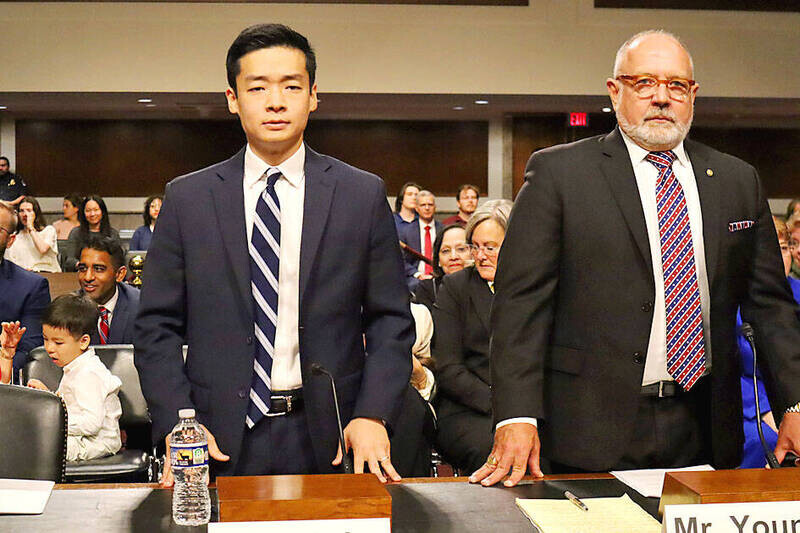
John Noh, nominee for U.S. Assistant Secretary of Defense for Indo-Pacific Security Affairs, made a firm statement on the need for Taiwan to increase its defense spending during his confirmation hearing before the U.S. Senate Armed Services Committee on Tuesday (local time). He strongly expressed support for President Donald Trump's earlier remark that Taiwan should spend up to 10% of its GDP on defense.

While assessing Taiwan's current move to increase defense spending as "all promising," Noh emphasized, "Taiwan must do its part to spend more and acquire the most appropriate kind of asymmetric capabilities for an invasion scenario." This reflects the consistent U.S. pressure for the island nation, facing the existential threat of the Chinese People's Liberation Army, to equip itself with stronger self-defense capabilities to counter the overwhelming Chinese forces.

Taiwan Sets Goal of 5% of GDP for Defense Spending by 2030 

Taiwan's defense budget proposal for next year is at the level of 3.32% of GDP, but President Lai Ching-te stated in August that the goal is to increase defense spending to 5% of GDP by 2030.

In response, Taiwan's Minister of National Defense, Kuo Yu-tang (顧立雄), explained to reporters at the Legislative Yuan yesterday (local time) that defense spending is determined by the level of the enemy's threat. He confirmed, "As the President has pledged, the core defense spending will steadily increase to reach the final 5% the President promised." However, he added, "The overall fiscal situation and the requirements for force augmentation must also be considered."

Focus on Asymmetric Capabilities and Countering 'Grey Zone' Activities 

In line with U.S. demands, the Taiwanese military is restructuring its forces to conduct 'asymmetric warfare'. This is a strategy of exploiting the enemy's weaknesses while avoiding their strengths, focusing on the development of more mobile and lethal weapons such as missiles, as well as lower-cost systems like drones that can be used for surveillance and attack missions.

Defense Minister Kuo stated that the focus of national defense is on asymmetric capabilities, strengthening resilience, expanding reserve forces, and responding to China's 'grey zone' activities (pressure acts just short of actual combat). Taiwan is currently implementing its military reforms through practical training, promoting a special budget of NT$113.2 billion (about 4.7 trillion Korean won) for strengthening military communication systems, upgrading facilities and infrastructure, and enhancing maritime defense capabilities. Taiwan's efforts to enhance its capabilities are expected to raise its deterrent against a Chinese invasion while acting as a major variable for regional stability.

[Copyright (c) Global Economic Times. All Rights Reserved.]

  • #globaleconomictimes
  • #micorea
  • #mykorea
  • #Lifeplaza
  • #nammidonganews
  • #singaporenewsk
  • #Samsung
  • #Daewoo
  • #Hyosung
  • #A
Yim Kwangsoo Correspondent

Popular articles

  • North Korea Publicly Executes ‘Big-Hand’ Business Couple Over ‘Arrogance’ and Anti-State Charges

  • Hanmi Science Takes Aim at Global Market, Unveiling Three Surgical Hemostats in Germany

  • Kim Whanki's Abstraction Fetches $8.4 Million in New York, Securing Second Highest Price for Korean Art

I like it
Share
  • Facebook
  • X
  • Kakaotalk
  • LINE
  • BAND
  • NAVER
  • https://www.globaleconomictimes.kr/article/1065609446658638 Copy URL copied.
Comments >

Comments 0

Weekly Hot Issue

  • The Tragedy on the High Seas: Royal Caribbean Sued Over Passenger Death After 33 Drinks and Fatal Restraint
  • Australia's Digital Iron Curtain: The Global Aftershocks of a World-First Social Media Ban
  • A Golden Noel: The Vance Family's First Christmas at the Naval Observatory
  • A New Era of Transparency: Federal Judges Order Release of Voluminous Epstein Case Files
  • Monopoly or Media Evolution? Netflix-Warner Bros. Deal Triggers Bipartisan Antitrust Fury
  • Jay-Z's Marcy Venture Partners Bets $500M on the Global Growth of K-Culture

Most Viewed

1
Korean War Ally, Reborn as an 'Economic Alliance' Across 70 Years: Chuncheon's 'Path of Reciprocity,' a Strategic
2
A Garden Where the City's Rhythm Stops: Dongdaemun's 'Cherry Garden', Cooking Consideration and Diversity
3
The Sudden Halt of Ayumi Hamasaki's Shanghai Concert: Unpacking the Rising Sino-Japanese Tensions
4
The Paradox of the 'Juvenile Offender' (Chokbeop Sonyeon): Impunity or Unfinished Rehabilitation?
5
Alliance in a Dilemma: The Fallout of Trump's Advice to Takaichi Not to 'Provoke Taiwan' 
광고문의
임시1
임시3
임시2

Hot Issue

Monopoly or Media Evolution? Netflix-Warner Bros. Deal Triggers Bipartisan Antitrust Fury

Australia's Digital Iron Curtain: The Global Aftershocks of a World-First Social Media Ban

Forging the Drone Warfighter: USAREUR-AF Launches Inaugural Competition in Germany, Stressing Integrated Lethality

Europe at the Crossroads: Environmental Safeguards Under Threat from 'Simplification' Drive

Let’s recycle the old blankets in Jeju Island’s closet instead of incinerating them.

Global Economic Times
korocamia@naver.com
CEO : LEE YEON-SIL
Publisher : KO YONG-CHUL
Registration number : Seoul, A55681
Registration Date : 2024-10-24
Youth Protection Manager: KO YONG-CHUL
Singapore Headquarters
5A Woodlands Road #11-34 The Tennery. S'677728
Korean Branch
Phone : +82(0)10 4724 5264
#304, 6 Nonhyeon-ro 111-gil, Gangnam-gu, Seoul
Copyright © Global Economic Times All Rights Reserved
  • 에이펙2025
  • APEC2025가이드북TV
  • 독도는우리땅
Search
Category
  • All articles
  • Synthesis
  • World
  • Business
  • Industry
  • ICT
  • Distribution Economy
  • Well+Being
  • Travel
  • Eco-News
  • Education
  • Korean Wave News
  • Opinion
  • Arts&Culture
  • Sports
  • People & Life
  • Column 
    • 전체
    • Cho Kijo Column
    • Lee Yeon-sil Column
    • Ko Yong-chul Column
    • Cherry Garden Story
  • Photo News
  • New Book Guide
  • Multicultural News
  • Jobs & Workers