• 2026.11.11 (Wed)
  • All articles
  • LOGIN
  • JOIN
Global Economic Times
[등록] 2026-09-01 15:48:31
  • Synthesis
  • World
  • Business
  • Industry
  • ICT
  • Distribution Economy
  • Well+Being
    • Pet Life
    • Halal Horizon
  • Travel
  • Eco-News
  • Education
  • Korean Wave News
  • Opinion
  • Arts&Culture
  • Sports
  • People & Life
    • International Student Report
    • With Ambassador
  • Column
    • Cho Kijo Column
    • Cherry Garden Story
    • Ko Yong-chul Column
    • Kim Bong-seon's Photo Column
    • Kim Seul-Ong Column
    • Lee Yeon-sil Column
  • Photo News
  • New Book Guide
MENU
 
Home > Opinion

Navigating the 'Two Americas': South Korea Faces Diplomatic Test Amid Washington’s Divided Power

KO YONG-CHUL Reporter / Updated : 2026-11-11 19:39:02
  • -
  • +
  • Print

SEOUL — As Washington enters a new political phase following a bruising midterm election cycle, South Korea is facing an increasingly complex diplomatic landscape characterized by sharp partisan division. Described by political analysts as dealing with "two Americas," Seoul must delicately balance its massive industrial commitments in the United States against a backdrop of institutional friction between a resolute White House and a newly empowered congressional opposition.

Following the midterm setbacks, the administration of U.S. President Donald Trump has signaled no intent to moderate its core policy trajectory. The recent nomination of Stephen Miller—a hardline architect of restrictive immigration policies and a prominent figure in the "Make America Great Again" (MAGA) movement—as White House Deputy Chief of Staff has deepened partisan fault lines. House Democratic Leader Hakeem Jeffries sharply criticized the appointment, declaring that figures like Miller run counter to democratic governance.

Despite bipartisan alignment on bolstering domestic manufacturing and job creation, profound operational differences remain between the parties. With President Trump retaining sweeping executive authorities regarding trade and security, the intersection of congressional oversight and unilateral executive action introduces heightened economic and geopolitical uncertainty.

Strategic Investments and Security Hurdles

The mounting friction directly impacts key bilateral initiatives agreed upon during last year’s landmark trade negotiations, which saw South Korea pledge $350 billion in U.S. investments in exchange for a tariff reduction from 25% to 15%.

A central pillar of this package is the $150 billion designated for the "Make American Shipbuilding Great Again" (MASGA) initiative. Seoul has sought to leverage these maritime investments to secure advanced defense capabilities, including nuclear-powered submarines and expanded authority for uranium enrichment and spent fuel reprocessing. However, realizing these security goals requires renegotiating the bilateral nuclear cooperation agreement—a diplomatic hurdle complicated by the Democratic Party's staunch advocacy for global non-proliferation and sluggish progress in formal consultations.

Commercial investments are also facing unexpected headwinds at the state level. In Texas, the newly elected Democratic governor has signaled intentions to pause new data center construction pending stricter resident-protection regulations. This political shift casts commercial uncertainty over core projects, including a Texas gas-combined cycle power plant and the yet-to-be-finalized plans for eight nuclear reactors under the second tranche of South Korean U.S. investments.

Broadening the Diplomatic Frontier

To safeguard national interests, foreign policy experts emphasize that Seoul must diversify its diplomatic outreach beyond the executive branch. Engaging federal lawmakers, state-level governors, and local community leaders will be critical to navigating the shifting political terrain.

Furthermore, Korean policymakers stress the importance of effectively communicating the mutual benefits of these economic ties—specifically highlighting how South Korea's trade surplus is actively reinvested into local U.S. economies to generate jobs and revitalize aging infrastructure.

Concurrently, Seoul must frame its strategic defense ambitions—such as nuclear submarine acquisition and uranium management—not merely as national security requests, but as vital assets that alleviate Washington's defense burdens and strengthen joint deterrence against regional adversaries like China. As uncertainty deepens across the Pacific, South Korea's diplomatic dexterity will face its most rigorous test to date.

[Copyright (c) Global Economic Times. All Rights Reserved.]

  • #Cherry Garden
  • #HalalFood
  • #Halal
  • #Petlife
  • #Halalhorizone
  • #Hormuz Impasse
  • #globaleconomictimes
  • #micorea
  • #mykor
KO YONG-CHUL Reporter
Reporter Page

Popular articles

  • US Pushes to Deploy Special Task Force to the Korean Peninsula—Is It Also Targeting China?

  • HMM Relocates Headquarters to Busan: A New Era for South Korea's Flagship Carrier

  • Samsung Electronics Unveils 'AI Memory' Technologies and Yongin Cluster Roadmap at SEDEX 2026

I like it
Share
  • Facebook
  • X
  • Kakaotalk
  • LINE
  • BAND
  • NAVER
  • https://www.globaleconomictimes.kr/article/1065609465116136 Copy URL copied.
Comments >

Comments 0

Weekly Hot Issue

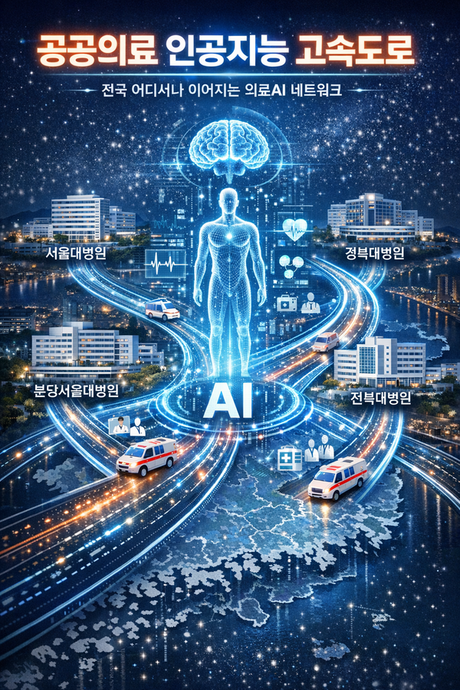
  • Public Hospitals Open 'Medical AI Highway'… Patient Referral Document Time Cut from 10 Minutes to 10 Seconds
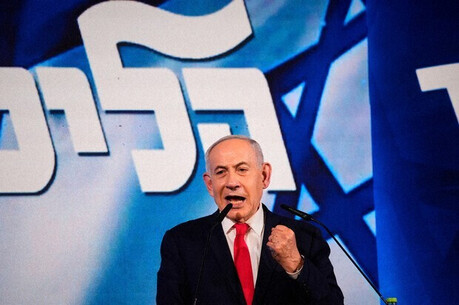
  • Behind Closed Doors: Netanyahu Secretly Reaches Out to Arab Party Amid Coalition Crisis
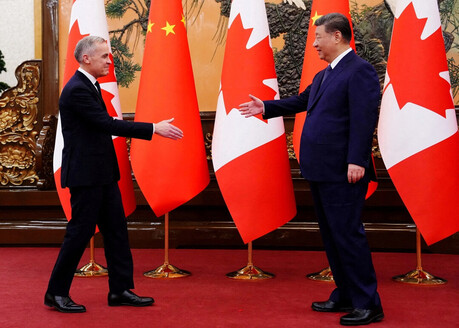
  • Canada's Prime Minister Prepares for High-Stakes Talks with Xi, Pledges to Confront Beijing Over Alleged Election Meddling
  • Paul McCartney Reaches Billionaire Status, Ranking as the World's Third Wealthiest Vocalist
  • Figure Skater Hae-in Lee Moves Forward with Legal Action Over Cyberbullying and False Claims
  • KFA Fines and Suspends Match Official Over Inappropriate Remarks Toward Star Player Ji So-yun

Most Viewed

1
South Korea and Ethiopia Sign Trilateral MOU to Introduce Liquid-Based Cytology (LBC) Technology for Cervical Cancer Diagnosis
2
US Army Conducts Rare Temporary Burial Drills to Prepare for Worst-Case Large-Scale War Scenarios
3
From Kim Whanki to Pokémon Cards... Seoul Auction Opens the Floodgates
4
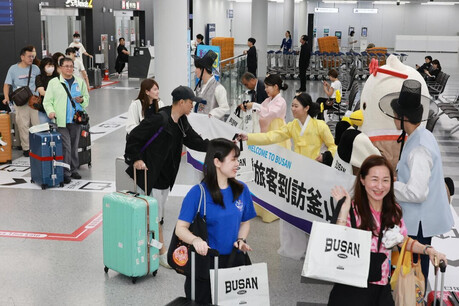
World Citizens are Flying Directly to Busan... The Era of 4 Million Foreigners is Just Around the Corner
5
Eating 100g of Baechu Kimchi Daily Linked to Lower High-Cholesterol Risks
체리가든 스토리
nutri huevos
로타리
동포저널

Hot Issue

LG Electronics and Skyscanner Partner to Bring Smart Travel Planning to Living Rooms

Regional Tourism in South Korea Struggles as Infrastructure Lags Behind Inbound Airport Growth

Miky Lee Honored with Asian Hall of Fame’s Centennial Medal for Pioneering Global K-Culture

Fashion Runway Show 2026

Let’s recycle the old blankets in Jeju Island’s closet instead of incinerating them.

Global Economic Times
korocamia@naver.com
CEO : LEE YEON-SIL
Publisher : KO YONG-CHUL
Registration number : Seoul, A55681
Registration Date : 2024-10-24
Youth Protection Manager: KO YONG-CHUL
Singapore Headquarters
5A Woodlands Road #11-34 The Tennery. S'677728
Korean Branch
Phone : +82(0)10 4724 5264
#304, 6 Nonhyeon-ro 111-gil, Gangnam-gu, Seoul
Copyright © Global Economic Times All Rights Reserved
  • News K
  • 반달곰 프로젝트
  • 광고문의
Search
Category
  • All articles
  • Synthesis
  • World
  • Business
  • Industry
  • ICT
  • Distribution Economy
  • Well+Being 
    • 전체
    • Pet Life
    • Halal Horizon
  • Travel
  • Eco-News
  • Education
  • Korean Wave News
  • Opinion
  • Arts&Culture
  • Sports
  • People & Life 
    • 전체
    • International Student Report
    • With Ambassador
  • Column 
    • 전체
    • Cho Kijo Column
    • Cherry Garden Story
    • Ko Yong-chul Column
    • Kim Bong-seon's Photo Column
    • Kim Seul-Ong Column
    • Lee Yeon-sil Column
  • Photo News
  • New Book Guide
  • Overseas Koreans
  • Multicultural News