![[등록] 2026-09-01 15:48:31](/support/_updata/banner2/tl181982910_6749.png)


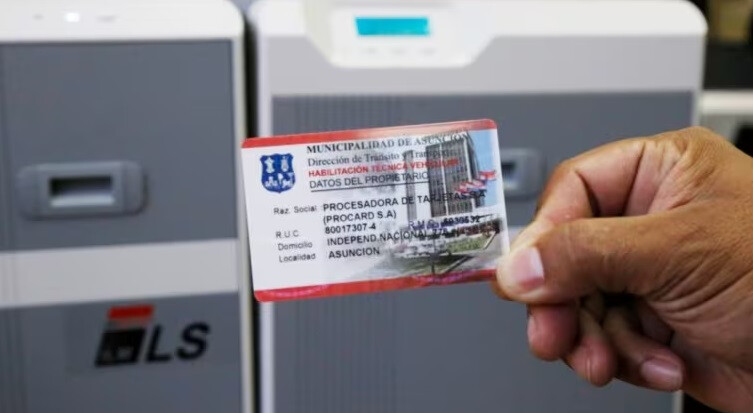
Paraguayan President Santiago Peña has officially enacted Law No. 7.459, a bill unifying the calculation standards for vehicle registration tax (Patente Vehicular) nationwide. This law aims to reduce taxpayer confusion and enhance tax equity by standardizing the vehicle registration tax imposition criteria, which previously varied across local governments. Notably, this law is significant as it applies the same standards to the entire Paraguayan territory, including the capital city of Asunción, which was initially excluded from the scope of application.
This law, which took effect following a presidential decree announced on April 15th (local time), stipulates that the vehicle registration tax will be uniformly calculated at 0.3% of the taxable base amount determined by the National Road Safety Agency (ANTSV, Agencia Nacional de Tránsito y Seguridad Vial). This is expected to increase predictability for taxpayers and reduce unnecessary administrative waste by clearly and transparently setting the vehicle registration tax rates, which had previously been arbitrarily imposed according to the ordinances of each city government.
One of the key provisions of the law is the tax reduction clause based on the depreciation of vehicle value. The taxable base amount will be depreciated by 5% annually after vehicle registration, resulting in a tax reduction of up to 50% of the initial taxable base amount by the tenth year of registration. Subsequently, this 50% amount will be applied as a permanent base amount. This depreciation system is evaluated to contribute to establishing a more rational tax system by reflecting the actual changes in vehicle value.
Furthermore, the law mandates the establishment of a ‘Single Vehicle Registration System (RUHR, Registro Único de Habilitación de Rodados)’. The RUHR will play a role in providing an annual list of official vehicle taxable base amounts, thereby supporting all local governments to impose unified taxes based on this standard. This is projected to play a crucial role in ensuring the objectivity and fairness of tax bases and resolving tax imbalance issues among local governments.
This law was finally passed by the Paraguayan National Congress on April 3rd after in-depth discussions. This was due to a broad consensus within the Congress on the need to resolve the inconveniences experienced by citizens due to the inconsistency in vehicle registration tax imposition standards and to establish a more fair and transparent tax system. In particular, while the capital city of Asunción had raised equity concerns by being excluded from the scope of the previous law, the enactment of this revised law, which applies a unified standard to all regions nationwide, has put an end to these controversies and realized tax justice.
President Peña stated that through the enactment of this law, “all Paraguayan citizens will be able to live under a more predictable and fair tax system,” and expressed his expectation that it will “greatly contribute to increasing the equity of the vehicle registration tax burden and enhancing administrative efficiency.” The government also plans to focus on enhancing the effectiveness of this law through the prompt establishment and stable operation of the RUHR system.
The enactment of this unified vehicle registration tax law is considered a significant step forward in improving Paraguay's tax system. Through the introduction of a nationally unified tax standard and depreciation system, as well as the establishment of the RUHR system, Paraguayan citizens are expected to experience a more transparent and predictable tax environment. This is anticipated to positively impact not only the protection of taxpayer rights but also the efficiency of national fiscal management.
[Copyright (c) Global Economic Times. All Rights Reserved.]