![[등록] 2026-09-01 15:48:31](/support/_updata/banner2/tl181982910_6749.png)


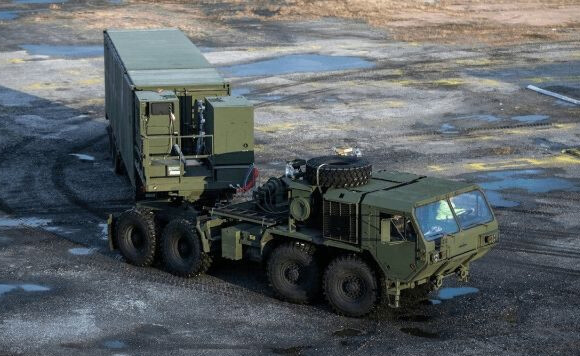
MANILA, Philippines – The Philippines is actively reviewing the adoption of the U.S.-made Typhon mid-range missile system as part of its defense modernization efforts. This move is seen as a significant development that could bring about major changes in the security landscape of Southeast Asia.
Philippines' Defense Modernization and Review of Typhon System Adoption
The Philippines has continuously pursued strengthening its defense capabilities in response to the rapidly changing regional security environment. In particular, the South China Sea territorial disputes and China's military expansion have been major factors escalating the Philippines' security concerns. Against this backdrop, the Philippines has shown great interest in acquiring long-range precision strike capabilities, with the U.S.-made Typhon system emerging as a key component.
According to officials from the Philippine Department of National Defense and foreign policy authorities, the Philippines possesses sufficient financial resources to acquire the Typhon system. However, the acquisition of such a strategically important weapon system requires a multi-stage approval process involving various government bodies, including defense and foreign policy authorities. This indicates the profound impact this decision will have on the Philippines' foreign policy and security strategy.
Characteristics and Strategic Importance of the Typhon Missile System
The Typhon missile system, developed by the United States, is a mobile ground-based platform capable of launching various precision-guided missiles, including the Tomahawk cruise missile. The system's most notable features are its versatility, mobility, and rapid deployment capability.
Versatility: Unlike traditional medium-range ballistic missiles, Typhon can launch various types of missiles, including not only Tomahawk cruise missiles but also SM-6 missiles. The SM-6, originally developed for naval defense, also possesses ground-attack capabilities, further expanding the Typhon system's strike range. This provides the Philippines with the flexibility to respond to various threat scenarios it may face.
Mobility: The Typhon system can be mounted on vehicles and moved, reducing its vulnerability to enemy detection and attack compared to fixed bases. This is advantageous for maintaining effective defense and offensive postures across the Philippines' vast archipelago.
Rapid Deployment Capability: Thanks to its modular design, the Typhon system can be quickly deployed and redeployed. This enables rapid response in crisis situations and contributes to enhancing deterrence.
In April 2024, the U.S. military garnered attention by temporarily deploying a Typhon battery on Luzon, the largest island in the Philippines. These batteries demonstrated the capability to strike targets in the East China Sea, South China Sea, and along the Chinese coastline, highlighting the Philippines' importance in the U.S. Indo-Pacific strategy. Such deployments were part of joint U.S.-Philippine military exercises under the 'Enhanced Defense Cooperation Agreement (EDCA)' and sent a strong strategic signal amid escalating regional tensions.
Regional Ripple Effects: Strengthening Philippine Defense and Changing Regional Dynamics
If the Philippines ultimately acquires the Typhon system, it would become one of the first U.S. allies in Asia to operate or deploy the Typhon system. This would not only dramatically enhance the Philippines' long-range strike capabilities but also significantly alter the regional security dynamics. Specifically, it could strengthen the Philippines' defensive posture in the disputed South China Sea region and potentially increase its leverage against Chinese naval and air activities.
This can be interpreted as the Philippines demonstrating its intention to play a more active security role in the region, beyond merely strengthening its defenses. It also reflects the Philippines' desire to further deepen its strategic alliance with the United States.
A New Horizon for Missile Development After the INF Treaty Withdrawal
The Typhon system belongs to a new family of ground-based missile platforms developed by the United States after its withdrawal from the Intermediate-Range Nuclear Forces (INF) Treaty in 2019. The INF Treaty prohibited the production and deployment of ground-launched ballistic and cruise missiles with ranges between 500 and 5,500 km. However, the U.S. withdrawal allowed for the development of new missile systems free from the treaty's constraints. The Typhon system is a prime example of this change, featuring a modular design that allows it to launch various missiles, including types previously restricted by the treaty.
A Symbol of Enhanced Alliance and Self-Defense Capability
As regional security concerns continue to grow, the Philippines' consideration of the Typhon system signals a broader shift towards strengthening military self-defense capabilities and deepening its strategic relationship with the United States. This can be interpreted as the Philippines not merely adopting a defensive posture against external threats but also demonstrating its commitment to contributing to regional stability as an active security actor. The introduction of the Typhon system is expected to elevate the Philippines' defense capabilities and act as a new variable in the security environment of the Indo-Pacific region, including the South China Sea. International attention is focused on how cooperation between the Philippines and the United States will impact regional security in the future.
[Copyright (c) Global Economic Times. All Rights Reserved.]