![[등록] 2026-09-01 15:48:31](/support/_updata/banner2/tl181982910_6749.png)


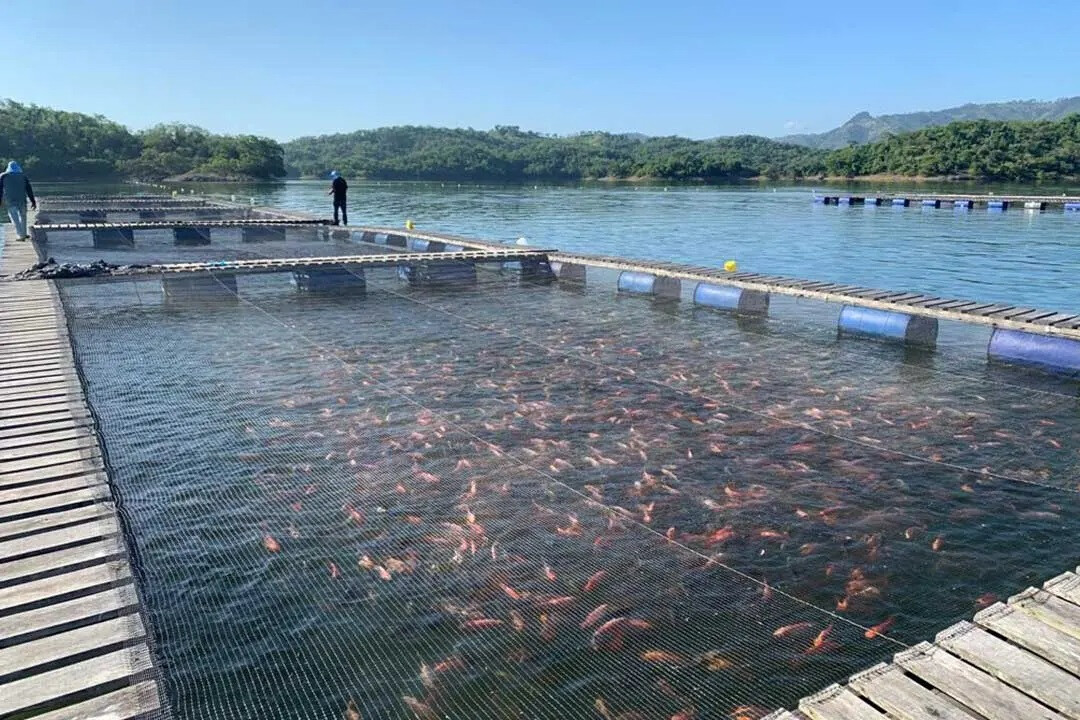
Paraguay's aquaculture industry is showing steady annual growth of 5% to 10%, and producers are actively considering initial investments to construct fish farms. According to Jaqueline Farias, president of the Lower Monday Producers Association (Aprom), the initial cost for constructing a fish farm of approximately 1,000 square meters is estimated at around 20 million Guaraníes (PYG).
Aprom is a major organization accounting for 75% of Paraguay's national aquaculture production and conducts various educational and support activities for producers nationwide. President Farias added, "We also work closely with several associations of small producers who raise fish for self-consumption." She was elected president of Aprom in September 2023.
Currently, Paraguay's commercial fish production reaches 1,500 tons per month, and President Farias stated that an additional 80% growth is expected, driven by projects promoting aquaculture within schools and increasing consumption trends. Aprom holds an annual Paraguayan Producers and Fish Farmers Conference, and currently, tilapia accounts for 70% of total commercial sales, followed by pacu, hundiá, and carp, according to the association.
Regarding the aforementioned investment, President Farias estimated that the initial investment cost for constructing structures and excavated fish farms would be approximately 20 million Guaraníes per 1,000 square meters. Furthermore, she estimated that producing 1,000 kg of tilapia would cost between 8 million and 10 million Guaraníes, and the tilapia farming cycle could take about 5 to 6 months until harvest and return on investment.
When asked about the future prospects of the aquaculture sector, President Farias replied that the potential for growth and expansion is very high, as domestic production capacity does not even reach 5% of its potential. She emphasized, "Aquaculture can be a viable option for both small producers seeking to make a living and producers hoping to increase their income." She also added, "The development of aquaculture can contribute to the sustainability of aquatic ecosystems by alleviating fishing pressure on native fish species in rivers."
Aquaculture in Paraguay is primarily focused on freshwater farming, with the main farmed species being tilapia and pacu, as mentioned in the article, as well as catfish and dorado. The Paraguayan government actively supports the development of aquaculture as part of its agricultural modernization and food security enhancement policies, providing various forms of assistance to producers, including technical training and financial support.
In recent years, fish consumption in Paraguay has been steadily increasing, attributed to growing health awareness and the improved price competitiveness of farmed fish. Tilapia, in particular, is popular among consumers due to its delicious taste, nutritional value, and relatively low price.
The growth potential of Paraguay's aquaculture can also be seen through the expansion of export markets to neighboring countries. Fish consumption in adjacent countries such as Brazil and Argentina is much higher than in Paraguay, and Paraguayan farmed fish with competitive quality have the potential to gain a foothold in the export market.
However, several challenges need to be addressed for the continued growth of Paraguay's aquaculture industry. Firstly, investment in research and development to modernize aquaculture technology and improve productivity needs to be expanded. Secondly, it is urgent to establish a systematic management system for environmental pollution issues that may arise during the aquaculture process. Thirdly, policies to strengthen the competitiveness of small producers, such as the activation of cooperatives and support for marketing channels, need to be reinforced.
If these challenges are addressed and the efforts of the government and producers continue, Paraguay's aquaculture industry can become an important growth engine for the national economy, beyond just being a food source. In particular, Paraguay, adjacent to the Amazon rainforest, has the potential to promote environmentally friendly aquaculture development based on its abundant water resources, which is expected to contribute to simultaneously achieving the dual goals of sustainable food production and environmental protection.
[Copyright (c) Global Economic Times. All Rights Reserved.]