![[등록] 2026-09-01 15:48:31](/support/_updata/banner2/tl181982910_6749.png)


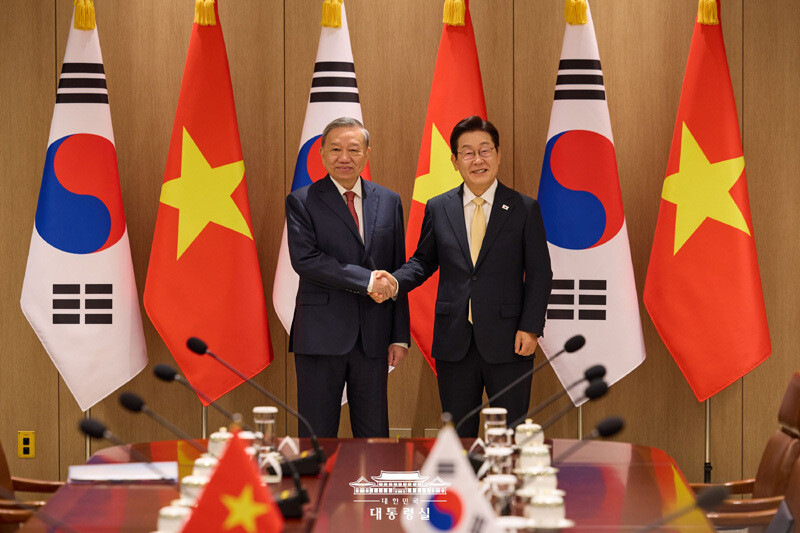
HANOI – In a landmark move to redefine bilateral relations through high-tech diplomacy, the Republic of Korea and Vietnam have officially committed to a massive expansion of cooperation in cutting-edge sectors, including Artificial Intelligence (AI), semiconductors, and aerospace.
The announcement came on April 24, 2026, during the Korea-Vietnam Science and Technology Innovation Forum held at the Vietnam-Korea Institute of Science and Technology (VKIST). The event was a centerpiece of President Lee Jae-myung’s state visit to Vietnam, signaling a shift from traditional manufacturing-based cooperation toward a future-oriented "Strategic Tech Alliance."
A Vision for Global Innovation
The forum served as a platform to unveil the "Korea-Vietnam Science and Technology Innovation Cooperation Master Plan." This comprehensive roadmap aims to create a "packaged" cooperation system that organically links joint research, talent cultivation, infrastructure support, and the commercialization of results.
Bae Kyung-hoon, Deputy Prime Minister and Minister of Science and ICT, emphasized the synergy between the two nations. "By combining Korea's world-class advanced technology with Vietnam's immense growth potential, we are not just cooperating; we are co-creating a global innovation engine," Bae stated during his keynote address.
Key Pillars of the Master Plan
The partnership is built upon several strategic pillars designed to ensure long-term sustainability:
Core Technology Development: Deepening cooperation in AI, semiconductors, secondary batteries (EV batteries), biotechnology, and renewable energy.
Talent Pipeline: Establishing a robust exchange program to train the next generation of scientists, ranging from vocational technicians to Ph.D.-level researchers.
VKIST as a Regional Hub: Strengthening the Vietnam-Korea Institute of Science and Technology (VKIST) as the central node for bilateral research, with plans to expand this network across Vietnam’s provinces.
Regulatory and Practical Support: Implementing "Regulatory Sandboxes" and demonstration centers to facilitate the transfer of Korean technology into the Vietnamese market and vice-versa.
High-Level Engagement and Strategic Agreements
The forum saw an impressive gathering of leadership from both sides. The Korean delegation included Bae Kyung-hoon (Deputy Prime Minister), Ha Jung-woo (Senior Secretary for AI Future Planning), and Oh Sang-rok (President of KIST). The Vietnamese side was represented by Huynh Thanh Dat (Minister of Science and Technology) and Bui The Duy (President of Vietnam National University, Hanoi), alongside 150 representatives from government, industry, and academia.
A significant outcome of the day was the signing of 10 distinct Memorandums of Understanding (MOUs) between private corporations, public research institutes, and government agencies. these agreements specifically target high-stakes fields such as:
Artificial Intelligence: Collaborative AI ethics and development frameworks.
Space Technology: Shared satellite data and exploration initiatives.
Quantum Computing: Fundamental research exchanges to prepare for the post-digital era.
Impact on the Global Supply Chain
Industry experts suggest that this "Tech-Solidarity" is a strategic move to secure more resilient supply chains in Southeast Asia. By helping Vietnam upgrade its technological infrastructure, Korea ensures a more sophisticated and capable partner in its regional production network.
For Vietnam, the partnership provides a fast track to its goal of becoming a high-income, technologically advanced economy by 2045. The focus on "human-centric" technology—training local experts rather than just exporting equipment—marks a new chapter in how Korea engages with its ASEAN partners.
As the forum concluded, officials from both nations reaffirmed that this master plan is not merely a bilateral agreement but a blueprint for how mid-power nations can collaborate to lead the Fourth Industrial Revolution.
[Copyright (c) Global Economic Times. All Rights Reserved.]