• 2025.12.11 (Thu)
  • All articles
  • LOGIN
  • JOIN
Global Economic Times
APEC2025KOREA가이드북
  • Synthesis
  • World
  • Business
  • Industry
  • ICT
  • Distribution Economy
  • Well+Being
  • Travel
  • Eco-News
  • Education
  • Korean Wave News
  • Opinion
  • Arts&Culture
  • Sports
  • People & Life
  • Column
    • Cho Kijo Column
    • Lee Yeon-sil Column
    • Ko Yong-chul Column
    • Cherry Garden Story
  • Photo News
  • New Book Guide
MENU
 
Home > World

Saltwater Solution to Wildfires Raises Environmental Concerns

Sharon Yoon Correspondent / Updated : 2025-01-15 05:12:47
  • -
  • +
  • Print


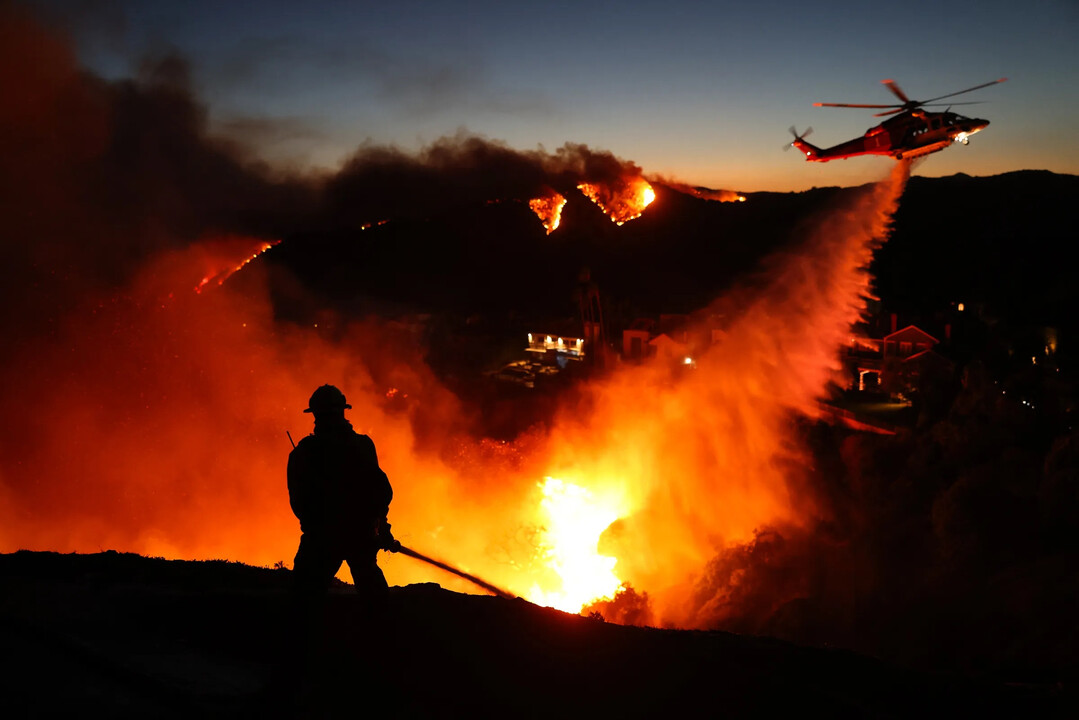
Los Angeles, CA – As a massive wildfire continues to rage in Los Angeles, firefighters have resorted to an unconventional measure to combat the blaze: using saltwater from the Pacific Ocean. While this may seem like a desperate but effective solution, experts warn that the environmental impact of using saltwater to extinguish wildfires could be severe.   

The Los Angeles Fire Department has been employing a fleet of Super Scooper aircraft to scoop up seawater and drop it on the flames. These specialized planes can collect up to 6,000 liters of water in just 12 seconds and can refill their tanks while flying, making them an efficient tool for fighting wildfires. However, the use of saltwater introduces a new set of problems.   

Environmental scientists caution that the high salinity of seawater can have devastating effects on the local ecosystem. The salt in the water kills soil microorganisms, making it difficult for vegetation to regenerate in the affected areas. The United Nations' Food and Agriculture Organization (FAO) has warned that excessive salt in the soil can hinder plant growth by making it difficult for roots to absorb water.   

Furthermore, the use of saltwater can accelerate the corrosion of firefighting equipment. The salt in the seawater can corrode metal components such as hoses, pumps, and tanks, leading to costly repairs and replacements. Ping Furlan, a chemistry professor at the United States Merchant Marine Academy, noted that most firefighting equipment is made of steel, which is highly susceptible to corrosion when exposed to saltwater.   

While the Super Scooper aircraft are designed to withstand the corrosive effects of saltwater, other firefighting equipment, such as those used on the ground, may not be as well-protected. This could lead to equipment failures and reduce the effectiveness of firefighting efforts.

As the wildfire continues to burn, firefighters face a difficult choice between containing the blaze and minimizing environmental damage. While the use of saltwater may be necessary in the short term, experts warn that the long-term consequences could be significant.

[Copyright (c) Global Economic Times. All Rights Reserved.]

  • #globaleconomictimes
  • #seoulkorea
  • #periodicoeconomico
  • #글로벌이코노믹타임즈
  • #GET
  • #GETtv
  • #대한민국
  • #중기청
  • #재외동포청
  • #외교부
  • #micorea
  • #my
Sharon Yoon Correspondent

Popular articles

  • White House Spokesperson Caroline Leavitt on Her 32-Year Age Gap Marriage: 'Couldn't Find a Man as Mature as My Husband'

  • Unexpected Détente: Mamdani and Trump Find Common Ground in 'Win-Win' White House Meeting

  • Subaru Surges to Top Spot in Consumer Reports Annual Auto Brand Rankings; Korean Brands See Mixed Results

I like it
Share
  • Facebook
  • X
  • Kakaotalk
  • LINE
  • BAND
  • NAVER
  • https://www.globaleconomictimes.kr/article/1065557483228322 Copy URL copied.
Comments >

Comments 0

Weekly Hot Issue

  • ZTE Faces Massive US Fine Over Alleged Foreign Bribery; Potential Settlement Could Exceed $2 Billion
  • Mexico Hikes Tariffs on 'Strategic Goods' from South Korea, China, and Other Non-FTA Nations
  • From Air to Plastic: A Female Scientist's Carbon Neutral Revolution
  • Rising Resentment: Uncensored Voices Expose China's Surveillance State
  • US Proposes Mandatory Social Media Disclosure for ESTA and Visa Applicants, Citing Enhanced Security
  • Concert Halls Struggle to Silence 'Phone Nuisance' Amidst Growing Concerns Over Performance Etiquette

Most Viewed

1
Korean War Ally, Reborn as an 'Economic Alliance' Across 70 Years: Chuncheon's 'Path of Reciprocity,' a Strategic
2
A Garden Where the City's Rhythm Stops: Dongdaemun's 'Cherry Garden', Cooking Consideration and Diversity
3
The Sudden Halt of Ayumi Hamasaki's Shanghai Concert: Unpacking the Rising Sino-Japanese Tensions
4
Alliance in a Dilemma: The Fallout of Trump's Advice to Takaichi Not to 'Provoke Taiwan' 
5
The Paradox of the 'Juvenile Offender' (Chokbeop Sonyeon): Impunity or Unfinished Rehabilitation?
광고문의
임시1
임시3
임시2

Hot Issue

Mexico Hikes Tariffs on 'Strategic Goods' from South Korea, China, and Other Non-FTA Nations

Tech Tensions Flare: DeepSeek Allegedly Smuggles Banned NVIDIA Blackwell Chips for New AI Model

Netflix Stock Plummets 10% on Credit Downgrade Fears Following Blockbuster Warner Bros. Acquisition

LG Innotek Develops Eco-Friendly Next-Gen Smart IC Substrate, Reducing Carbon Emissions by Half

Let’s recycle the old blankets in Jeju Island’s closet instead of incinerating them.

Global Economic Times
korocamia@naver.com
CEO : LEE YEON-SIL
Publisher : KO YONG-CHUL
Registration number : Seoul, A55681
Registration Date : 2024-10-24
Youth Protection Manager: KO YONG-CHUL
Singapore Headquarters
5A Woodlands Road #11-34 The Tennery. S'677728
Korean Branch
Phone : +82(0)10 4724 5264
#304, 6 Nonhyeon-ro 111-gil, Gangnam-gu, Seoul
Copyright © Global Economic Times All Rights Reserved
  • 에이펙2025
  • APEC2025가이드북TV
  • 독도는우리땅
Search
Category
  • All articles
  • Synthesis
  • World
  • Business
  • Industry
  • ICT
  • Distribution Economy
  • Well+Being
  • Travel
  • Eco-News
  • Education
  • Korean Wave News
  • Opinion
  • Arts&Culture
  • Sports
  • People & Life
  • Column 
    • 전체
    • Cho Kijo Column
    • Lee Yeon-sil Column
    • Ko Yong-chul Column
    • Cherry Garden Story
  • Photo News
  • New Book Guide
  • Multicultural News
  • Jobs & Workers