![[등록] 2026-09-01 15:48:31](/support/_updata/banner2/tl181982910_6749.png)


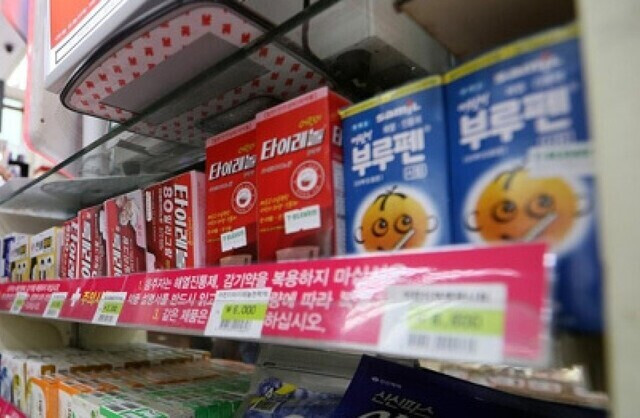
SEOUL — Amid ongoing discussions to expand the categories and sales outlets of safety non-prescription drugs (over-the-counter drugs sold outside pharmacies), the Korean Pharmaceutical Association (KPA, President Kwon Young-hee) has strongly urged that seller accountability must be reinforced first.
While pharmacies can face criminal liability in addition to administrative dispositions for violating the Pharmaceutical Affairs Act, convenience stores selling safety drugs are subject only to minor administrative measures such as registration cancellation or fines, sparking criticism over an unequal "responsibility gap."
Given that consumers purchase these medications directly at convenience stores without professional consultation, the KPA argues that the management responsibilities and compliance obligations of sellers must be applied much more strictly.
Consequently, the association maintains that expanding product lines and sales locations while keeping safety management responsibilities lax is counterintuitive, insisting that the seller accountability system must be overhauled first.
Pharmacies Face Criminal Liability, Convenience Stores Face Administrative Fines
According to the KPA, safety drug vendors are 24/7 convenience stores registered with local government heads. They are required to sell only one packaging unit per product per transaction, display their registration certificate, and post usage precautions. Stores that violate these rules three or more times within a year risk having their registrations revoked, alongside fines of up to 1 million won depending on the violation.
In contrast, pharmacies face potential criminal penalties alongside administrative actions for violations of the Pharmaceutical Affairs Act.
The KPA emphasized that while pharmacists manage medications and provide patient counseling in pharmacies, consumers select drugs directly without expert guidance in convenience stores. The association contends that environments lacking professional supervision require stricter management accountability and compliance duties for sellers.
Data submitted by the Ministry of Health and Welfare to lawmaker Nam In-soon in 2025 showed that an average of 49.8 establishments were penalized annually for sales standard violations between 2020 and 2024. Furthermore, 288 cases of sales qualification returns or registration cancellations were recorded from 2020 through August 2025.
Civic Group Inspections Reveal 94-97% Violation Rates for Four Consecutive Years
On the 6th, the Ministry of Health and Welfare announced that between 2021 and July 2026, it inspected approximately 40,000 retail stores nationwide across 80,298 total visits, resulting in 480 disciplinary actions for violations of the Pharmaceutical Affairs Act.
Among the ministry's findings, failure to report business suspension or closure accounted for 76% of all disciplinary actions, followed by breaches of the 24-hour operation standard and single-transaction quantity limits. Notably, violations of the single-transaction quantity limit have shown signs of a recent resurgence.
On-site investigations by civic organizations revealed even more widespread non-compliance.
According to annual surveys conducted by Future Consumers Action since 2022, the proportion of audited safety drug retailers violating at least one compliance rule ranged between 94% and 97% for four consecutive years.
The 2025 survey similarly uncovered widespread major violations, including 68.8% failing to display registration certificates, 55.1% selling two or more units of the same item, and 50.1% failing to post precautions.
Particularly concerning, purchase quantity limits were ignored in over half of the stores. Even with point-of-sale (POS) system restrictions in place, some stores bypassed the limit by splitting payments into separate transactions.
Management failures extended beyond purchase quantities. Instances were identified where stores sold general pharmaceuticals outside the designated list or displayed safety drugs mixed alongside groceries, industrial goods, and quasi-drugs. Meanwhile, stores fully stocked with all designated safety drug items accounted for a mere 0.6% in 2025.
"Responsibility Before Expansion": Calls to Strengthen Retailer Management
In response, the KPA put forward four institutional reform proposals to strengthen the accountability of safety drug vendors.
First, the association argued that the effectiveness of sanctions against compliance violations must be fortified. It called for a reexamination of the "three strikes in one year" registration cancellation threshold and current fine levels, alongside the introduction of tiered penalties such as temporary business suspensions.
Second, education targets must be expanded to include actual frontline workers. The association emphasized that training should extend beyond store owners to staff members handling actual retail duties, transitioning from a one-off session to mandatory annual education.
Third, local government inspections should be made mandatory, and their results publicly disclosed, alongside heightened monitoring and supervision of violating establishments.
Above all, the KPA reiterated that the safety management system must be overhauled before expanding items and sales venues. It argues that discussions on expansion should only follow the consolidation of seller accountability systems and a tangible improvement in compliance rates on the ground.
The Ministry of Health and Welfare also stated last September that it would prioritize on-site inspections and the refinement of compliance guidelines.
"Pushing to increase product categories and sales outlets when we cannot even properly manage violations under the current system is equivalent to putting public safety on the back burner," the KPA stated. "Strengthening seller accountability and realigning the field safety management system must take precedence over any discussions of expansion."
[Copyright (c) Global Economic Times. All Rights Reserved.]