![[등록] 2026-09-01 15:48:31](/support/_updata/banner2/tl181982910_6749.png)


(C) The Investor
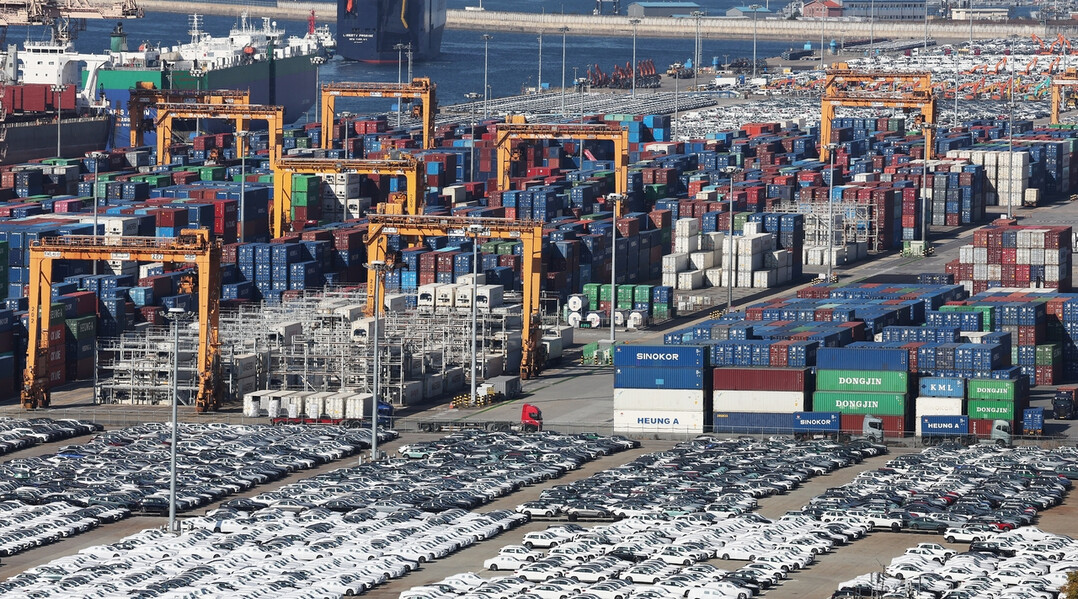
PYEONGTAEK, South Korea — South Korea has officially entered the elite ranks of the world’s top exporters, surpassing the $700 billion annual export mark for the first time in its history. On December 29, the Ministry of Trade, Industry and Energy, along with the Korea Customs Service, announced that the nation’s cumulative annual export volume reached an estimated $700 billion.
This achievement comes seven years after the country hit the $600 billion mark in 2018. With this milestone, South Korea becomes the sixth nation in the world to surpass $700 billion in exports, joining the ranks of global economic powerhouses such as the United States, Germany, China, Japan, and the Netherlands.
A Historic Journey from Poverty to Powerhouse
The journey to $700 billion is a monumental feat for a nation that emerged from Japanese colonial rule in 1945 and was devastated by the Korean War (1950-1953). Once a recipient of international aid, South Korea leveraged exports as its primary engine for growth. Starting with a modest $100 million in exports in 1964, the nation reached $10 billion in 1977.
Initially dependent on light industries like wigs and textiles, Korea progressively shifted its portfolio to heavy and high-tech industries. Today, the nation’s export engine is powered by a diversified array of sectors, including semiconductors, automobiles, petroleum products, shipbuilding, steel, wireless communications, displays, secondary batteries, and biotechnology.
The "New Normal" and Global Headwinds
Despite the record-breaking figures, the road ahead is fraught with challenges. The rapid growth seen in the early 2000s—where exports grew by $100 billion every two to three years—has slowed significantly. It took seven years to move from $600 billion to $700 billion, reflecting a "New Normal" of low global growth and the fracturing of free trade due to the U.S.-China hegemony battle.
The rise of China as a manufacturing competitor rather than just a customer, coupled with U.S. protectionist tariffs and the relocation of domestic manufacturing to Vietnam and India, has placed South Korea under immense pressure.
The Strategic Value of Korean Manufacturing
However, South Korea’s manufacturing prowess remains indispensable to the global supply chain. In the era of Artificial Intelligence (AI), the world relies heavily on South Korean semiconductors. High Bandwidth Memory (HBM) produced by Samsung Electronics and SK Hynix is a critical component for AI infrastructure, making Korea an essential partner for global tech giants.
Beyond chips, the nation’s security and energy sectors provide strong support. HD Hyundai and Hanwha Ocean lead in global shipbuilding and naval defense, while LG Energy Solution, SK On, and Samsung SDI remain pillars of the secondary battery market.
The Path to $1 Trillion: Political Will vs. Corporate Vitality
The next ultimate goal is the $1 trillion export club. Currently, only China, the U.S., and Germany have surpassed $1 trillion in goods exports. At the current pace, South Korea is projected to reach this milestone by 2046. To accelerate this timeline, experts argue that Korea must not only maintain its lead in traditional sectors but also aggressively expand into defense, nuclear energy, and biopharmaceuticals.
A significant internal hurdle remains: the domestic business environment. Critics argue that increasing regulations and political interference in corporate decisions could stifle growth. A recent controversy involves the "Yongin Semiconductor Cluster," with some political factions suggesting it be moved to Saemangeum for "balanced regional development."
Conclusion: Letting Business Lead
To reach the $1 trillion era, the priority must be corporate competitiveness. History shows that industries thrive when located in hubs that offer the best logistical and human infrastructure. Forcing semiconductor plants to relocate for political reasons is as counterproductive as building a shipyard in the mountains.
As South Korea transitions from the year 2025 into 2026, the message to policymakers is clear: for the nation to run like a "Red Hare" (a legendary swift horse) toward greater prosperity, the government must foster an environment where businesses can lead. Only then will the era of $1 trillion in exports become a reality sooner rather than later.
[Copyright (c) Global Economic Times. All Rights Reserved.]