![[등록] 2026-09-01 15:48:31](/support/_updata/banner2/tl181982910_6749.png)


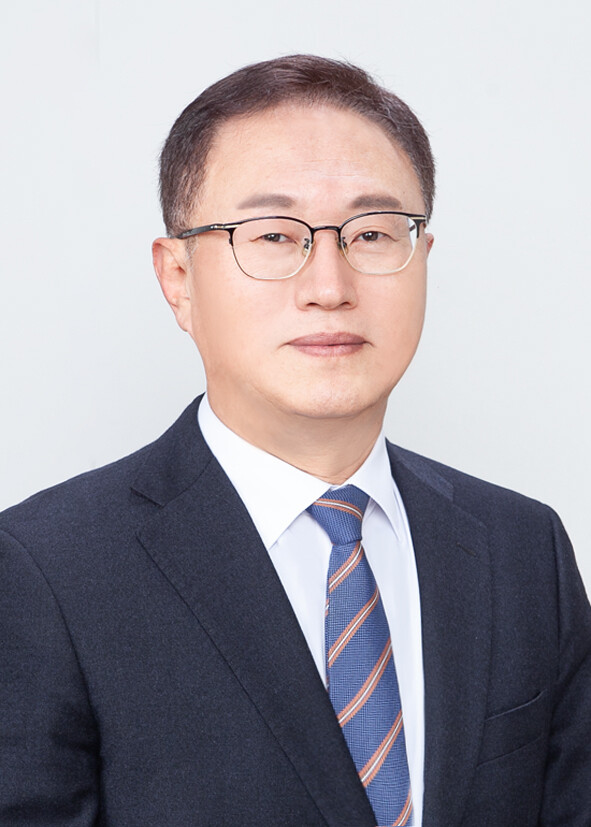
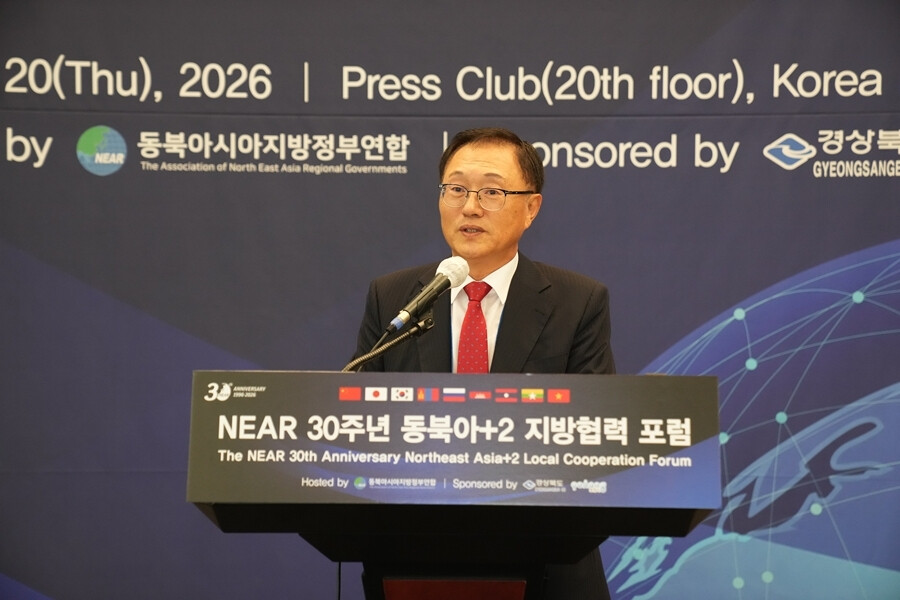
Lim Byung-jin, Secretary-General of the Association of Northeast Asia Regional Governments (NEAR)
I. First, could you briefly introduce what NEAR is and what it was created for?
The Association of Northeast Asian Regional Governments, or NEAR, is an international organization for local cooperation. It serves as a multilateral cooperation platform established for the purpose of promoting peace and common prosperity in the Northeast Asian region through exchanges and cooperation among regional governments.
Founded in Gyeongju in 1996 under the initiative of Gyeongsangbuk-do by 29 regional governments from 4 countries (South Korea, China, Japan, and Russia), NEAR has grown into the largest multilateral local diplomacy platform in Northeast Asia. Currently, a total of 96 regional governments from 10 countries have joined, comprising 82 full members from 6 Northeast Asian countries, 1 special member (Pohang City), 8 associate members from 4 countries, and 4 observers.
NEAR consists of the NEAR President elected every two years, sectoral committees, and the Secretariat. The President is elected at the General Assembly with a two-year term and is responsible for hosting the General Assembly and the Senior Officials Meeting. The current President is the Head of the Republic of Buryatia, Russia. The presidency of the General Assembly rotates among South Korea, China, and Russia.
Sectoral committees serve as practical exchange and cooperation platforms among member regional governments. Currently, 18 sectoral committees have been formed—covering economy, education, culture, environment, tourism, e-commerce, and the digital economy—with 4 to 5 committees meeting annually to activate the platform. The costs for hosting these committees are borne by the coordinator member governments.
The Secretariat is located in Pohang, Gyeongsangbuk-do, and is staffed by 17 personnel, including the Secretary-General, alongside 5 public officials dispatched from China, Russia, Mongolia, and Gyeongsangbuk-do, as well as country-specific expert advisors. Because Gyeongsangbuk-do covers the entire operating cost of the Secretariat, the Secretary-General is not elected at the General Assembly, but rather recommended by the Governor of Gyeongsangbuk-do and appointed by the President.
The primary missions of the Secretariat include supporting the presidential body in hosting the General Assembly, Senior Officials Meetings, and sectoral committees; handling communication with member governments, public relations, and website management; and conducting NEAR activities such as member government workshops, international forums, public official training programs, and youth leader forums to strengthen solidarity among member governments, promote Gyeongsangbuk-do’s policies, and support international cooperation.
II. Northeast Asia is a region of close neighbors yet complex historical, political, and economic relations. In such a place, what do you think is the biggest reason why solidarity among regional governments is necessary?
Unlike Europe, ASEAN, or the Middle East, the Northeast Asian region lacks inter-state confederation organizations or multilateral consultation bodies, and it is a region where conflicts among nations constantly exist due to issues such as history, ideology, and territory.
In such a region, exchanges and cooperation between regional governments become even more important. While state-level diplomacy determines the direction and general principles of cooperation between countries, its concrete implementation is carried out by regional governments, businesses, and citizens.
In particular, diplomacy between regional governments has the strength of excluding politics and pursuing common prosperity through exchanges and cooperation on problems commonly faced by local governments, directly linked to residents' daily lives, such as culture, environment, education, economy, tourism, and disaster response.
Furthermore, in a region like Northeast Asia where inter-state conflicts persist, cooperation between regional governments can also play a buffering role, mitigating inter-state conflicts or preventing them from escalating to extremes.
Therefore, solidarity among regional governments in Northeast Asia goes beyond simply holding many exchange events; its greatest significance lies in maintaining trust and communication channels even when relations between states are difficult, and continuing practical cooperation in fields directly connected to the lives of residents.
III. What do you think are the unique strengths of regional government diplomacy and its differences from central government diplomacy?
First, diplomacy between regional governments excludes politics and pursues common prosperity through exchanges and cooperation on problems commonly faced by local governments in practical fields directly connected to residents' lives, such as culture, environment, education, and economy.
State-level diplomacy determines the direction and general principles of bilateral cooperation, while its concrete implementation is carried out by regional governments, businesses, and civic groups. In this case, local diplomacy takes on an instrumental character of supporting state diplomacy or seeking concrete solutions to common problems faced by regional governments. NEAR is systematically promoting this through its 18 subordinate sectoral committees.
Second, in a region like Northeast Asia where inter-state conflicts persist, local cooperation and local diplomacy can play a buffering role in mitigating inter-state conflicts or preventing them from escalating to extremes.
Local diplomacy is not entirely unaffected by inter-state conflicts or political situations. However, even when bilateral exchanges between South Korea and China were nearly suspended due to the THAAD issue, bilateral exchanges through the NEAR platform continued without interruption. Even when South Korea-Russia and Japan-Russia relations deteriorated recently due to the war in Ukraine, exchanges between South Korean, Japanese, and Russian regional governments within the NEAR platform persisted. The NEAR platform possesses a unique utility in that it provides a space where local-level exchanges can be sustained even when conflicts among Northeast Asian nations have deteriorated.
However, due to recent rapid changes in the international order and the resurgence of sphere-of-influence politics based on geopolitics, multilateralism has weakened, giving rise to some concerning phenomena. The deterioration of China-Japan and South-North Korean relations has led to hardline stances by central governments, which has created certain obstacles to regional government exchanges within the NEAR platform. Japan is not being invited to NEAR events held in China, and Japan is absent from NEAR events held in Russia. In addition, while North Korea previously participated in NEAR events held in China and Russia either as a member regional government or through its consulate, it has recently ceased participation altogether.
Nevertheless, overall, NEAR's external reach is expanding into Central Asia and ASEAN, and the platform is becoming more active, thereby increasing member governments' trust in NEAR. Recently, the central governments of China and Russia have also heightened their evaluation and interest in NEAR, so I believe these issues will be resolved over time. NEAR intends to leverage these strengths to contribute to coexistence and common prosperity in the Northeast Asian region.
IV. Even if Northeast Asian regional governments want to cooperate with each other, what are the realistic walls that are difficult to overcome? And what role should regional government associations play in breaking down those walls?
Local diplomacy is not entirely free from the influence of inter-state conflicts or political situations.
In particular, the recent rapid changes in the international order and the resurgence of sphere-of-influence politics based on geopolitics have weakened multilateralism, and the deterioration of state-to-state relations—such as China-Japan and South-North Korean relations—is impacting exchanges between regional governments.
Another realistic problem is the financial burden borne by regional governments. Since many regional governments are currently facing financial pressures, it is difficult to drive sustained participation through mere meetings and exchange events as in the past. Member governments participating in events need concrete and practical outcomes that they can genuinely feel are helpful.
In such circumstances, the most important role of a regional government association like NEAR is to maintain a multilateral cooperation space where regional governments can continue to meet even when inter-state relations are difficult.
At the same time, rather than merely providing opportunities to meet, we must share successful policy practices and connect regional governments with regional governments, businesses with businesses, and universities with research institutes so that they lead to actual cooperation.
Ultimately, the role of the regional government association is to maintain connectivity so that exchanges are not cut off by political conflicts, while generating tangible outcomes that member governments can gain by participating in the NEAR platform.
V. International cooperation is sometimes not just about visible results, but about 'sustaining relationships' itself being a result. What is the true achievement of international cooperation in your view?
In international cooperation, tangible and concrete outcomes such as the signing of MOUs or business-to-business contracts are extremely important. For NEAR to continue developing in the future, I believe it must create more concrete and practical outcomes that member governments can be satisfied with.
However, in a region where inter-state conflicts are sharp like Northeast Asia, rather than focusing solely on tangible results, connection—even loose connection, that is, sustaining the relationship itself—is also a very important achievement.
Over the past 30 years, NEAR has proceeded with multilateral exchanges and cooperation among regional governments without interruption, even in situations where inter-state conflicts recurred due to issues of history, ideology, and territory. Throughout that process, member governments have continuously met, shared each other's policies and experiences, and maintained relationships enabling dialogue even in difficult situations.
It is not difficult to exchange when inter-state relations are good. Rather, what is important is maintaining the trust and network that allow meeting even when inter-state relations become difficult, and immediately expanding cooperation once relations improve. If a relationship is sustained, when circumstances improve, it can move toward a good relationship without massive costs.
Therefore, the true achievement of international cooperation is not short-term numbers or event counts, but rather building a relationship based on long-accumulated trust where dialogue and cooperation can resume under any circumstances.
VI. Among the agendas that Northeast Asian regional governments should ponder together right now, what is the issue that must be promoted most centrally?
Currently, Northeast Asian regional governments face very similar common problems, not only global agendas like AI, climate change, and the environment, but also population decline, aging, regional extinction, and youth issues.
In particular, I believe population decline and youth issues are matters that Northeast Asian regional governments need to ponder and tackle together moving forward.
When young people leave their regions and the population declines, the local economy shrinks, ultimately weakening the sustainability of the regional government itself. This is not a problem restricted to any single country or regional government; it is a shared challenge experienced by many regional governments across Northeast Asia.
NEAR is also driving youth policies and youth exchanges through initiatives such as the Youth Exchange Sectoral Committee between Krasnoyarsk Krai in Russia and Shimane Prefecture in Japan, as well as the Youth Leaders Forum operated by the Secretariat. Building on these experiences, at this year's inaugural World Gyeongju Forum, NEAR will invite youth policy officials and students from member governments in South Korea, China, Japan, Mongolia, and Russia to hold the NEAR Youth Policy Forum.
Moving beyond simple meetings and exchanges among youth at international events, we need to develop this into more practical cooperation where they can share success stories of regional youth policies, and where young people can study, work, start businesses, and pursue joint projects in other member regions.
VII. Exchanges among regional governments are taking place in various fields such as youth, tourism, environment, culture, and industry. Is there a field where you hope NEAR will be evaluated as having created a 'new model'?
Rather than a specific single field, I want to create a new form of practical cooperation model that combines regional government policy cooperation with the participation of the private sector, including businesses and research institutes.
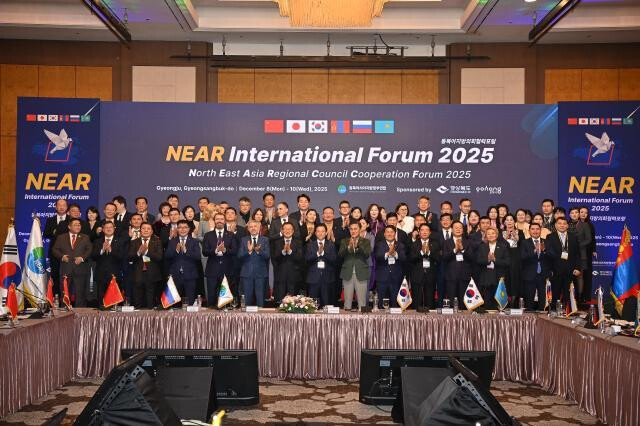
While NEAR has traditionally operated centered around exchanges among metropolitan/provincial regional governments, recently we have been expanding its scope to local councils, businesses, universities, research institutes, and hospitals. In the case of local councils, we paid attention to the fact that compared to multilateral exchanges between regional governments, opportunities for multilateral exchanges among local councils are virtually non-existent. Recognizing that local councils' influence on regional government budgets and policies is growing, in order to enhance their understanding and support for NEAR activities, we hosted the 「2025 NEAR Local Council Cooperation International Forum」 last year. We invited representatives from 21 local councils and municipalities affiliated with NEAR across 6 countries—South Korea, China, Japan, Mongolia, Russia, and Kazakhstan—as well as the diplomatic corps in Korea, allowing local council leaders to meet together, and the actual response from participants was very positive.
Another aspect we view as important is creating opportunities for bilateral exchanges within multilateral exchanges. Although NEAR General Assemblies and Senior Officials Meetings are multilateral events involving multiple countries and regional governments, member governments utilize these occasions to conduct separate 1-1 meetings and consultations. In fact, recently, Gyeongsangbuk-do and Liaoning Province in China, Ulsan City and Henan Province in China signed friendly cooperative agreements, and the Republic of Buryatia and Töv Province in Mongolia established friendly ties on the occasion of the NEAR Senior Officials Meeting. In other words, connecting multilateral cooperative settings so that new bilateral cooperative relations are formed is also an important role of NEAR.
Moving forward, we intend to further expand the participation of businesses and research institutes here. Recently, member governments are demanding tangible, visible outcomes like business matching or MOU signings rather than stopping at simple policy exchanges. Accordingly, economic-related sectoral committees—such as energy, traditional medicine, tourism, marine fisheries, and the digital economy—are actively encouraging the participation of not only regional government representatives, but also enterprises and research institutes. In the Liaoning Province Digital Economy Sectoral Committee, South Korean companies held consultations with Chinese companies, and in the Buryatia Republic Traditional Medicine Sectoral Committee, research institutes, hospitals, and pharmaceutical companies participated together, resulting in 15 MOUs signed.
Ultimately, the model NEAR wants to build in the future is not an international conference attended solely by regional governments, but a regional cooperation platform where regional governments, local councils, businesses, universities, and research institutes participate together, bridging multilateral events with 1-1 exchanges and actual business projects.
I hope NEAR will receive the evaluation of having created a "new local diplomacy model that connects multilateral exchanges with practical bilateral cooperation and economic-civilian cooperation."
[Copyright (c) Global Economic Times. All Rights Reserved.]