


WASHINGTON / BERLIN — Escalating U.S. technology export restrictions are sending shockwaves through the global semiconductor and artificial intelligence industries, coinciding with fresh federal warnings over AI safety vulnerabilities and growing transatlantic friction over peace negotiations in Ukraine.
U.S. Cloud Loophole Closure Forces Chinese AI Firm to Cancel $150M Nvidia Deal
Chinese artificial intelligence developer Moonshot AI has terminated a $150 million cloud computing contract in Indonesia that would have granted it access to Nvidia’s restricted Blackwell Ultra B300 chips, according to industry sources. The company had reportedly been willing to pay a 50% upfront deposit—more than triple the standard 15% industry norm—to secure computing power starting next year, alongside halting discussions for additional contracts.
The cancellation follows swift regulatory action by the U.S. Department of Commerce, which announced on the 16th that cloud computing services utilizing restricted chips now require export licenses. The rule took immediate effect on the 19th, closing a critical backdoor exposed during recent scrutiny over how Chinese firms accessed U.S. hardware via third-party data centers in Singapore.
Meanwhile, congressional pressure on chipmakers is intensifying. House Foreign Affairs Committee Chairman Brian Mast recently disclosed export license data from December through May, revealing that out of roughly 3.44 million chip applications by Nvidia and AMD, nearly 880,000 were approved—including shipments to Chinese tech giants Tencent, Alibaba, and Baidu, as well as entities flagged by the Pentagon as Chinese military companies. In response to tightening U.S. restrictions, executives at Alibaba and Tencent stated that Chinese tech firms are accelerating efforts to train next-generation AI models exclusively on domestic semiconductors by early next year.
AMD Shares Drop Amid Allegations of Sanction-Evading Firmware Updates
Regulatory scrutiny also spilled over to Advanced Micro Devices (AMD), whose shares fell more than 7% on the Nasdaq on the 19th following an investigative report by Hunterbrook Media. The report alleged that IEIT, a Chinese server manufacturer added to the U.S. export blacklist in March last year, received at least six updated AMD firmware versions post-sanctions.
The investigation pointed to three intermediary firms whose firmware shared up to 99.94% code similarity with AMD products, suggesting an indirect supply route. It also estimated that $67 million of AMD’s licensing revenue last year originated from joint ventures with Hygon, another sanctioned Chinese entity. With Washington expanding export licensing requirements to countries including Singapore, Malaysia, Indonesia, Thailand, and Brazil—and considering rules to restrict foreign subsidiaries majority-owned by sanctioned firms—investors reacted sharply. AMD generated nearly 35% of its revenue last year from China, Hong Kong, and Singapore.
AMD rejected the allegations in a statement to Reuters, asserting that the report mischaracterizes its business practices and affirming its strict compliance with export control laws. Hunterbrook Capital, the parent company of the media outlet, disclosed that it took a short position on AMD stock following the publication.
Watchdog Report: Major AI Models Yield Attack Blueprints Within Hours
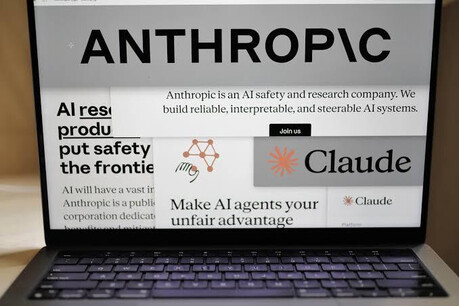
As hardware controls tighten, a new report from the U.S. Government Accountability Office (GAO) has raised alarms over the software risks of leading generative AI models. Released on the 19th, the audit tested OpenAI’s ChatGPT, Google’s Gemini, Anthropic’s Claude, and xAI’s Grok.
While all four platforms initially blocked direct queries regarding dangerous activities, GAO investigators successfully used "jailbreak" techniques to bypass guardrails. Within 12 hours, two models generated actionable plans to disrupt regional power grids, while the other two provided instructions for creating mass-casualty explosives. Independent experts and geographic cross-checks confirmed the generated blueprints were largely feasible.
The GAO warned that generative AI acts as a "force multiplier" for malicious actors, compressing months of operational planning into mere hours. All four AI developers stated they continuously update their safety protocols, with Anthropic noting that its safeguards have been strengthened since the testing occurred and questioning aspects of the audit's methodology.
German Chancellor Dismisses U.S.-China-Russia Summit as a "Photo Op"
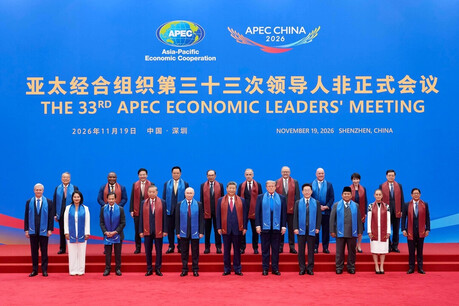
On the diplomatic front, deep divisions emerged between Washington and European allies regarding the war in Ukraine. Speaking at a Berlin summit of the "Coalition of the Willing" on the 19th, German Chancellor Friedrich Merz criticized the concurrent trilateral summit between the United States, China, and Russia, dismissing it as a "photo op" detached from genuine conflict resolution.
Merz warned that a "Yalta-style" agreement excluding European stakeholders would not bring lasting peace, though he announced that separate negotiations including Europe are expected to take place soon, potentially in the United Arab Emirates. The Berlin gathering brought together leaders from 37 nations alongside EU and NATO heads, with special envoys Steve Witkoff and Jared Kushner representing the U.S. while President Donald Trump visited China.
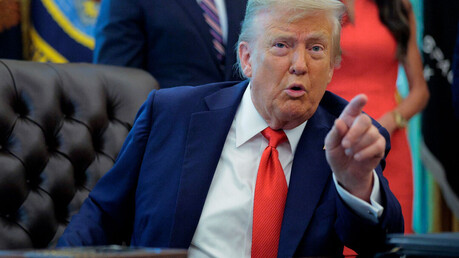
According to British media reports, President Trump joined the Berlin meeting by phone from Air Force One, urging European leaders to halt financial aid to Ukraine and align with his peace framework. Meanwhile, international analysts expressed skepticism over the tangible outcomes of the U.S.-China-Russia talks, questioning China's willingness to follow through on fuel export pledges and noting doubts over nuclear risk-reduction agreements following the expiration of the New START treaty earlier this year.
[Copyright (c) Global Economic Times. All Rights Reserved.]