• 2026.05.08 (Fri)
  • All articles
  • LOGIN
  • JOIN
Global Economic Times
fashionrunwayshow2026
  • Synthesis
  • World
  • Business
  • Industry
  • ICT
  • Distribution Economy
  • Well+Being
  • Travel
  • Eco-News
  • Education
  • Korean Wave News
  • Opinion
  • Arts&Culture
  • Sports
  • People & Life
    • International Student Report
    • With Ambassador
  • Column
    • Cho Kijo Column
    • Cherry Garden Story
    • Ko Yong-chul Column
    • Kim Seul-Ong Column
    • Lee Yeon-sil Column
  • Photo News
  • New Book Guide
MENU
 
Home > ICT

Thinking Twice: KAIST Unveils Brain-Inspired AI That Predicts Its Own Mistakes

Hwang Sujin Reporter / Updated : 2026-03-02 06:43:28
  • -
  • +
  • Print


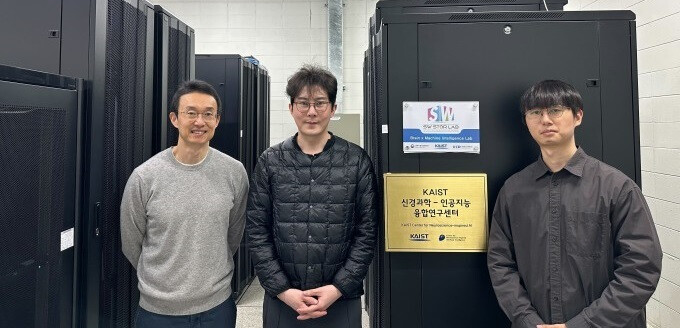
DAEJEON, South Korea — Researchers at the Korea Advanced Institute of Science and Technology (KAIST) have achieved a significant breakthrough in artificial intelligence by mimicking the human brain's ability to "think twice." Led by Professor Sang Wan Lee of the Department of Brain and Cognitive Sciences, the team has developed a new deep learning technology based on the biological principle of Predictive Coding (PC).

This research, which marks a departure from standard AI training methods, was recently presented at the International Conference on Learning Representations (ICLR) 2026.

 
The Breakthrough: From Backpropagation to Meta-Prediction
For decades, the gold standard for training AI has been Backpropagation. While effective, backpropagation requires the entire neural network to be updated simultaneously, often leading to massive energy consumption and technical "bottlenecks" where errors disappear or accumulate disproportionately in deep networks.

The KAIST team looked toward the human brain for a solution. Our brains process information via predictive coding—constantly comparing internal expectations with reality and updating only the differences (errors). To bring this to AI, the team introduced "Meta-Prediction."

"The core of this research isn't just mimicking the structure of the brain, but ensuring the AI follows the brain's fundamental learning principles," said Professor Sang Wan Lee. "We have opened the door for AI that learns as efficiently as a human."
Key Innovations of the Research
The study identifies and solves the "vanishing gradient" issues common in traditional predictive coding models. By enabling the AI to predict how its own prediction errors will change in the future, the researchers ensured stable learning even in extremely deep neural networks.

Superior Accuracy: In 29 out of 30 comparative experiments, the new method outperformed standard backpropagation.
Decentralized Learning: Unlike traditional AI, which requires global updates, this model allows for localized, distributed learning—much like how different regions of the brain operate independently yet cohesively.
High Efficiency: The model proves that large-scale AI can be trained effectively without the massive computational overhead of current systems.

Future Applications: From Robots to Edge AI
The implications for this technology are vast. Because the system is more energy-efficient and adaptable, it is expected to revolutionize several high-tech sectors:

Neuromorphic Computing: Developing hardware that functions like biological neurons.
Robotics: Creating AI that can adapt to unpredictable environments in real-time.
Edge AI: Allowing sophisticated AI to run on small devices (like smartphones or IoT sensors) without relying on massive data centers.
 
Global Recognition and Support
The paper, titled with Dr. Myung-hoon Ha as the lead author, gained international attention after being published online on January 26, 2026, ahead of the ICLR conference. The project was a collaborative effort supported by the Ministry of Science and ICT, the Samsung Electronics SAIT NPRC program, and the Microsoft Research Global Research Support project.

This advancement signals a shift in the AI race—moving away from simply "bigger" models toward "smarter, more biological" architectures that can truly learn from their mistakes.

[Copyright (c) Global Economic Times. All Rights Reserved.]

  • #Korea
  • #Seoul
  • #Hallyu
  • #USA
  • #Economy
  • #Busoness
  • #Global
  • #World
  • #Consumer
  • #Export
  • #Import
  • #Hanguel
  • #Travel
  • #Tour
  • #Food
Hwang Sujin Reporter

Popular articles

  • BYD Hits 10,000-Unit Milestone in South Korea Within One Year, Eyes Exclusive "10,000 Club" Entry

  • South Korean Financial Groups Surpass ₩4,000 Trillion in Total Assets; Net Profit Hits ₩26.7 Trillion Amid Stock Market Rally

  • Generative AI Use Triples Among Seoul Citizens, but Digital Divide Persists for Seniors

I like it
Share
  • Facebook
  • X
  • Kakaotalk
  • LINE
  • BAND
  • NAVER
  • https://www.globaleconomictimes.kr/article/1065562899951958 Copy URL copied.
Comments >

Comments 0

Weekly Hot Issue

  • South Korea’s KOSPI Surges to 7th in Global Market Cap, Overtaking Canada and UK
  • Global Pay Parity Demands Shaking Tech Giants: Samsung and SK Hynix Face Rising Labor Unrest in China
  • the 28th Overseas Koreans Literary Awards
  • Ambassador Hyuk-sang Sohn attended the "2026 Educational Community Sports Day" held at the Korean School of Paraguay on Friday, May 1.
  • Official Presentation of Credentials in Paraguay
  • U.S. World Cup "Host City Boom" Fizzles: Hotel Bookings Slump One Month Before Kickoff

Most Viewed

1
Korea and Vietnam Forge Strategic Partnership in Science, Technology, and Innovation
2
80% of Enterprises Hit by 'AI Agent Anomalies': SailPoint Calls for Integrated Identity Governance
3
Iran Imposes Transit Fees on Strait of Hormuz Amid Escalating Maritime Tensions
4
Tradition Meets the Public: Chungju’s Gugak Busking
5
Kurly Abandons 'All-Paper' Packaging Strategy Amid Rising Cost Pressures
광고문의
임시1
임시3
임시2

Hot Issue

Hyundai Motor Group Bets $700 Million on Mexico Amid Trade Policy Volatility

Honda Halts $15B Canada EV Plant Plans Amid Strategic Pivot to Hybrids

Digital Ghosts: The Rise of AI Ex-Partner Replicas and the Ethics of "Technological Mourning"

Kakao Hits Record Q1 Performance: Operating Profit Surges 66% as Focus Shifts to "Agentic AI"

Fashion Runway Show 2026

Global Economic Times
korocamia@naver.com
CEO : LEE YEON-SIL
Publisher : KO YONG-CHUL
Registration number : Seoul, A55681
Registration Date : 2024-10-24
Youth Protection Manager: KO YONG-CHUL
Singapore Headquarters
5A Woodlands Road #11-34 The Tennery. S'677728
Korean Branch
Phone : +82(0)10 4724 5264
#304, 6 Nonhyeon-ro 111-gil, Gangnam-gu, Seoul
Copyright © Global Economic Times All Rights Reserved
  • 에이펙2025
  • APEC2025가이드북TV
  • 반달곰 프로젝트
Search
Category
  • All articles
  • Synthesis
  • World
  • Business
  • Industry
  • ICT
  • Distribution Economy
  • Well+Being
  • Travel
  • Eco-News
  • Education
  • Korean Wave News
  • Opinion
  • Arts&Culture
  • Sports
  • People & Life 
    • 전체
    • International Student Report
    • With Ambassador
  • Column 
    • 전체
    • Cho Kijo Column
    • Cherry Garden Story
    • Ko Yong-chul Column
    • Kim Seul-Ong Column
    • Lee Yeon-sil Column
  • Photo News
  • New Book Guide
  • Multicultural News
  • Jobs & Workers