• 2026.08.12 (Wed)
  • All articles
  • LOGIN
  • JOIN
Global Economic Times
fashionrunwayshow2026
  • Synthesis
  • World
  • Business
  • Industry
  • ICT
  • Distribution Economy
  • Well+Being
  • Travel
  • Eco-News
  • Education
  • Korean Wave News
  • Opinion
  • Arts&Culture
  • Sports
  • People & Life
    • International Student Report
    • With Ambassador
  • Column
    • Cho Kijo Column
    • Cherry Garden Story
    • Ko Yong-chul Column
    • Kim Seul-Ong Column
    • Lee Yeon-sil Column
  • Photo News
  • New Book Guide
MENU
 
Home > Distribution Economy

South Korean Self-Employed Face Mounting Debt Amid Economic Slump

Desk / Updated : 2025-04-28 06:43:17
  • -
  • +
  • Print

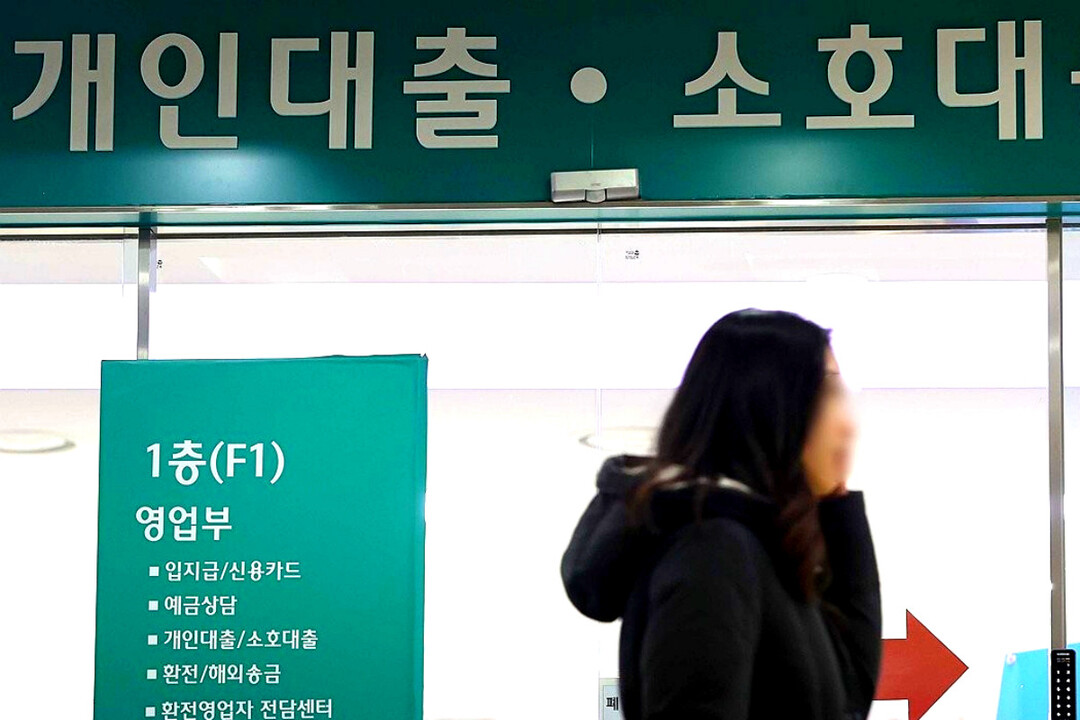
SEOUL - South Korea's self-employed sector is facing a growing financial strain, with debt levels soaring to over three times their average annual income, according to data released by the Bank of Korea. The figures, disclosed by National Assembly member Cha Kyu-geun, highlight a deepening crisis, particularly for low-income business owners grappling with a sluggish domestic economy.

The Loan-to-Income (LTI) ratio for self-employed individuals reached a concerning 344.5% at the end of the fourth quarter of last year. This signifies a substantial debt burden compared to their non-self-employed counterparts, whose LTI stood at 220% during the same period. The overall LTI for the self-employed had been on a gradual decline for seven consecutive quarters after peaking in late 2022, but it alarmingly reversed course in the final quarter of 2024, marking the first increase in two years. Analysts attribute this resurgence to a sharper rise in borrowing than in income for the self-employed, a direct consequence of weak domestic demand.

The number of self-employed individuals with outstanding loans from financial institutions totaled 3.115 million at the end of last year, holding a collective debt of 1,064.2 trillion won. While the number of borrowers slightly decreased by 16,000 year-on-year, the total loan balance swelled by 11 trillion won, indicating a heavier debt load per individual.

A stark disparity emerges when examining income brackets. High-income (top 30%) and mid-income (30-70%) self-employed individuals managed to reduce their outstanding loan balances. In contrast, the debt burden for low-income (bottom 30%) self-employed individuals saw a significant increase, rising from 133.1 trillion won to 135.3 trillion won in the fourth quarter. This trend underscores the precarious situation of lower-earning business owners who are increasingly reliant on borrowing to navigate the ongoing economic headwinds.

Furthermore, the quality of borrowing has deteriorated. There's a growing reliance among the self-employed on non-bank financial institutions, including private lenders, which often come with higher interest rates and less favorable terms. While bank loan balances for the self-employed slightly decreased, non-bank loan balances saw an increase, signaling a shift towards potentially riskier borrowing avenues.

Representative Cha Kyu-geun voiced strong concerns over the insufficient and delayed government support. "Although a budget for supporting self-employed individuals was included in the supplementary budget proposal, the timing is late and the scale is woefully inadequate," he stated. He urged the government to implement "extraordinary measures" to rescue the struggling self-employed sector.

The escalating debt crisis among South Korea's self-employed serves as a critical indicator of the broader economic challenges facing the nation. Without decisive and timely intervention, the financial vulnerabilities of this significant segment of the economy could have far-reaching consequences for overall economic stability and growth.

[Copyright (c) Global Economic Times. All Rights Reserved.]

  • #NATO
  • #OTAN
  • #OECD
  • #G20
  • #globaleconomictimes
  • #Korea
  • #UNPEACEKOR
  • #micorea
  • #mykorea
  • #newsk
  • #UN
  • #UNESCO
  • #nammidongane
Desk
Desk

Popular articles

  • South Korea to Tighten Rules on Single-Stock Leveraged Products; Minimum Deposit Raised to 30 Million Won

  • Rising Tide of 'AI Nationalism' and 'National Dividend': All Eyes on U.S. Political Moves

  • BTS Partners with the British Museum to Illuminate Korean Heritage Through 'Arirang' Gallery Trail

I like it
Share
  • Facebook
  • X
  • Kakaotalk
  • LINE
  • BAND
  • NAVER
  • https://www.globaleconomictimes.kr/article/1065562968916093 Copy URL copied.
Comments >

Comments 0

Weekly Hot Issue

  • Riot Games Hosts Largest-Ever TFT Festival at The Hyundai Seoul to Launch 'Sylvan Secrets' Set
  • MINISTRY OF EMPLOYMENT AND LABOR DIRECTS IMMEDIATE EXPANSION OF REST FACILITIES AT GIMPO AIRPORT AFTER UNANNOUNCED HEATWAVE INSPECTION
  • XAVIS Secures Contract to Supply Advanced X-Ray Inspection Systems to European Lines of Global Food Sauce Brand
  • Emma Expands Collaboration with Interior Design Experts to Present Sleep Space Solutions
  • Trump Criticizes U.S. Congressional AI Regulations as Threat to Tech Industry
  • Memory Chips Become Dominant Force in Global Semiconductor Industry, Expected to Account for 60% of Total Market This Year

Most Viewed

1
Planting Hope: Ethiopia’s Green Legacy and the Power of National Transformation
2
Japan Estimated to Have Spent ¥6–7 Trillion in Fresh Yen-Buying Intervention as US Joint Action Hints Emerge
3
The 16th Ethiopia-gil World Festival & Meskel Festival
4
South Korea’s July Exports Hit Record $98.9 Billion as Semiconductor Supercycle Powers Surge
5
Lube Base Oil Emerges as Export Lifesaver for South Korean Refiners Amid Middle East Conflict
광고문의
임시1
임시3
임시2

Hot Issue

MINISTRY OF EMPLOYMENT AND LABOR DIRECTS IMMEDIATE EXPANSION OF REST FACILITIES AT GIMPO AIRPORT AFTER UNANNOUNCED HEATWAVE INSPECTION

Riot Games Hosts Largest-Ever TFT Festival at The Hyundai Seoul to Launch 'Sylvan Secrets' Set

Nable Communications Secures 5G Private Network Upgrade Deal with LG Uplus

Ansan City Pay-as-You-Throw Trash Bag Abandoned in Japan Sparks Controversy in Kamikochi

Fashion Runway Show 2026

Global Economic Times
korocamia@naver.com
CEO : LEE YEON-SIL
Publisher : KO YONG-CHUL
Registration number : Seoul, A55681
Registration Date : 2024-10-24
Youth Protection Manager: KO YONG-CHUL
Singapore Headquarters
5A Woodlands Road #11-34 The Tennery. S'677728
Korean Branch
Phone : +82(0)10 4724 5264
#304, 6 Nonhyeon-ro 111-gil, Gangnam-gu, Seoul
Copyright © Global Economic Times All Rights Reserved
  • 향기네무료급식
  • BCB부천방송
  • 반달곰 프로젝트
Search
Category
  • All articles
  • Synthesis
  • World
  • Business
  • Industry
  • ICT
  • Distribution Economy
  • Well+Being
  • Travel
  • Eco-News
  • Education
  • Korean Wave News
  • Opinion
  • Arts&Culture
  • Sports
  • People & Life 
    • 전체
    • International Student Report
    • With Ambassador
  • Column 
    • 전체
    • Cho Kijo Column
    • Cherry Garden Story
    • Ko Yong-chul Column
    • Kim Seul-Ong Column
    • Lee Yeon-sil Column
  • Photo News
  • New Book Guide
  • Multicultural News
  • Jobs & Workers