• 2026.11.11 (Wed)
  • All articles
  • LOGIN
  • JOIN
Global Economic Times
[등록] 2026-09-01 15:48:31
  • Synthesis
  • World
  • Business
  • Industry
  • ICT
  • Distribution Economy
  • Well+Being
    • Pet Life
    • Halal Horizon
  • Travel
  • Eco-News
  • Education
  • Korean Wave News
  • Opinion
  • Arts&Culture
  • Sports
  • People & Life
    • International Student Report
    • With Ambassador
  • Column
    • Cho Kijo Column
    • Cherry Garden Story
    • Ko Yong-chul Column
    • Kim Bong-seon's Photo Column
    • Kim Seul-Ong Column
    • Lee Yeon-sil Column
  • Photo News
  • New Book Guide
MENU
 
Home > Education

Enhancing Teacher Professionalism: KICE Develops Simulation-Based Competency Diagnosis System

Kim Young Min Reporter / Updated : 2026-10-08 06:50:24
  • -
  • +
  • Print


SEOUL — South Korean educational authorities are moving away from traditional paper-and-pencil tests and subjective self-assessments to evaluate educators. The Korean Institute for Curriculum and Evaluation (KICE) has unveiled a new direction for a simulation-based teacher competency diagnosis system designed to support professional growth rather than rank educators.

Detailed in the 44th issue of its Research and Policy Brief, titled "Establishing a Simulation-Based Teacher Competency Diagnosis System to Enhance Teaching and Assessment Competencies," the initiative addresses the limitations of conventional evaluation methods. According to KICE, existing self-reporting and written exams struggle to capture how teachers actually perceive and judge student reactions and classroom dynamics in real time.

A Comprehensive Framework for Teaching

KICE has structured teaching and assessment competencies into a circular, interconnected four-stage framework:

-Instructional Design: Encompasses learner analysis, curriculum restructuring, and the design of teaching and learning strategies.
-Instructional Execution: Focuses on classroom interaction, lesson management, and the utilization of digital tools.
-Student Assessment: Involves assessment design, tool development, grading, and feedback.
-Reflection: Covers self-reflection on teaching and assessment activities alongside ongoing self-development.

Moving Beyond Traditional Evaluations

Traditional evaluation methods have long faced structural constraints. Self-assessments are prone to subjective bias and inflated scores, while written exams measure theoretical knowledge rather than practical application. Furthermore, direct classroom observations are often limited to isolated events like open-class demonstrations.

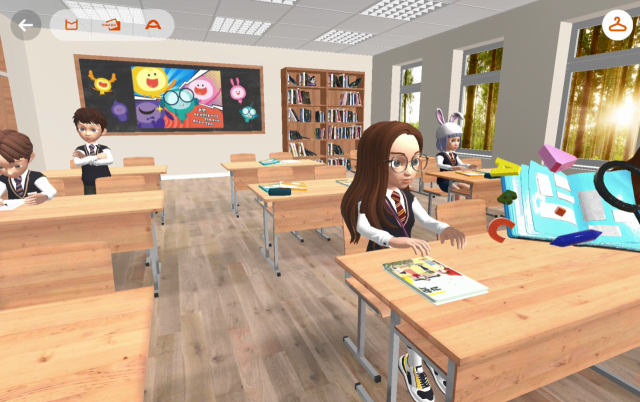
To overcome these hurdles, the new system leverages simulations to evaluate how teachers "judge and respond" in realistic environments. This approach reflects the complex nature of the teaching profession, which requires educators to continuously synthesize student characteristics, reactions, and contextual cues to make critical decisions.

Practical Scenarios in Action

KICE has developed seven prototype items across social studies, science, and mathematics, with social studies and science items fully implemented in the current system.

-Social Studies: Features a scenario where a student fails to participate in group discussions. The teacher must investigate the underlying reason, analyze the context, and select an appropriate pedagogical intervention to support engagement.
-Science: Focuses on laboratory safety. During an experiment involving hydrogen peroxide and manganese dioxide, a student complains of stinging eyes. The teacher must assess the student's condition, evaluate the environment, implement immediate safety measures, and formulate post-experiment improvements.
-Mathematics: Incorporates statistical project classes utilizing digital tools.

Fostering Growth Over Ranking

KICE emphasized that the system's primary goal is professional development, not evaluation or ranking.

The framework operates on a continuous cycle: "Diagnosis $rightarrow$ Practice $rightarrow$ Feedback $rightarrow$ Competency Development $rightarrow$ Re-diagnosis." By repeatedly practicing difficult or rare classroom scenarios through simulations, teachers receive targeted feedback to refine their decision-making skills.

The system holds broad applications for both pre-service teacher education and in-service training. It provides a risk-free environment to practice handling complex challenges—such as student conflicts or safety incidents—thereby easing the transition for new and returning educators.

Looking ahead, KICE plans to refine the diagnosis items, scoring mechanisms, and feedback systems, paving the way for a self-directed growth support network across South Korea's educational sector.

[Copyright (c) Global Economic Times. All Rights Reserved.]
  • #Hormuz Impasse
  • #globaleconomictimes
  • #micorea
  • #mykorea
  • #nammidonganews
  • #singaporenewsk
  • #Samsung
  • #Daewoo
  • #Hyos
Kim Young Min Reporter

Popular articles

  • Global Credit Spreads Widened to 17-Month High Amid AI Investment Concerns

  • Hollys Suffers Personal Information Leak… "Please Change Your Membership Password Immediately"

  • Jeonbuk Special Self-Governing Province Hosts Integrated Animal Healthcare Industry and Pet Culture Exposition

I like it
Share
  • Facebook
  • X
  • Kakaotalk
  • LINE
  • BAND
  • NAVER
  • https://www.globaleconomictimes.kr/article/1065563233949546 Copy URL copied.
Comments >

Comments 0

Weekly Hot Issue

  • Inha University Caught in Campus Culture Clash Over Proposed Rhee Syng-man Statue Revival
  • Honoring a Legacy: Poet Oh Dong-chun Recognized for Lifelong Dedication to Hangul and Sijo Poetry
  • Bongeunsa Temple to Host 2026 Patriotic Buddhism Cultural Festa
  • South Korea Confronts a Growing Health Crisis as Adult Obesity Rates Surge
  • Pain of Chosei Coal Mine Meets Japanese Readers: Moon Young-sook Publishes Japanese Edition of 'Black Sea'
  • Beyond the Trillion-Dollar Mark: China’s Trade Surplus and the Debate Over Global Economic Dominance

Most Viewed

1
US Army Conducts Rare Temporary Burial Drills to Prepare for Worst-Case Large-Scale War Scenarios
2
World Citizens are Flying Directly to Busan... The Era of 4 Million Foreigners is Just Around the Corner
3
Eating 100g of Baechu Kimchi Daily Linked to Lower High-Cholesterol Risks
4
Meeting Christmas Early!… Busan Dessert Sales Event "Daldal The Market" Held
5
November Shopping Festival Sparks Retail War in South Korea: Where to Find the Best Deals
체리가든 스토리
nutri huevos
로타리
동포저널

Hot Issue

Jensen Huang Faces Shareholder Class Action and Leadership Scrutiny Amid Espionage Allegations Involving Former Associate

Disgraced South Korean Scientist Hwang Woo-suk Becomes UAE Citizen

Is South Korea Heading Toward France's Path? Aging Population and Fiscal Pressures Looming Ahead

Fashion Runway Show 2026

Let’s recycle the old blankets in Jeju Island’s closet instead of incinerating them.

Global Economic Times
korocamia@naver.com
CEO : LEE YEON-SIL
Publisher : KO YONG-CHUL
Registration number : Seoul, A55681
Registration Date : 2024-10-24
Youth Protection Manager: KO YONG-CHUL
Singapore Headquarters
5A Woodlands Road #11-34 The Tennery. S'677728
Korean Branch
Phone : +82(0)10 4724 5264
#304, 6 Nonhyeon-ro 111-gil, Gangnam-gu, Seoul
Copyright © Global Economic Times All Rights Reserved
  • News K
  • 반달곰 프로젝트
  • 광고문의
Search
Category
  • All articles
  • Synthesis
  • World
  • Business
  • Industry
  • ICT
  • Distribution Economy
  • Well+Being 
    • 전체
    • Pet Life
    • Halal Horizon
  • Travel
  • Eco-News
  • Education
  • Korean Wave News
  • Opinion
  • Arts&Culture
  • Sports
  • People & Life 
    • 전체
    • International Student Report
    • With Ambassador
  • Column 
    • 전체
    • Cho Kijo Column
    • Cherry Garden Story
    • Ko Yong-chul Column
    • Kim Bong-seon's Photo Column
    • Kim Seul-Ong Column
    • Lee Yeon-sil Column
  • Photo News
  • New Book Guide
  • Overseas Koreans
  • Multicultural News