• 2026.11.27 (Fri)
  • All articles
  • LOGIN
  • JOIN
Global Economic Times
한인동포뉴스(상단)
  • Synthesis
  • World
  • Business
  • Industry
  • ICT
  • Distribution Economy
  • Well+Being
    • Pet Life
    • Halal Horizon
  • Travel
  • Eco-News
  • Education
  • Korean Wave News
  • Opinion
  • Arts&Culture
  • Sports
  • People & Life
    • International Student Report
    • With Ambassador
  • Column
    • Cho Kijo Column
    • Cherry Garden Story
    • Ko Yong-chul Column
    • Kim Bong-seon's Photo Column
    • Kim Seul-Ong Column
    • Lee Yeon-sil Column
    • Professor Lee Soo-young’s Life Essays
  • Photo News
  • New Book Guide
MENU
 
Home > World

U.S. Targets South Korean Chip, Auto, and Petrochemical Subsidies in New Tariff Push

Cho Kijo Reporter / Updated : 2026-11-26 07:34:51
  • -
  • +
  • Print

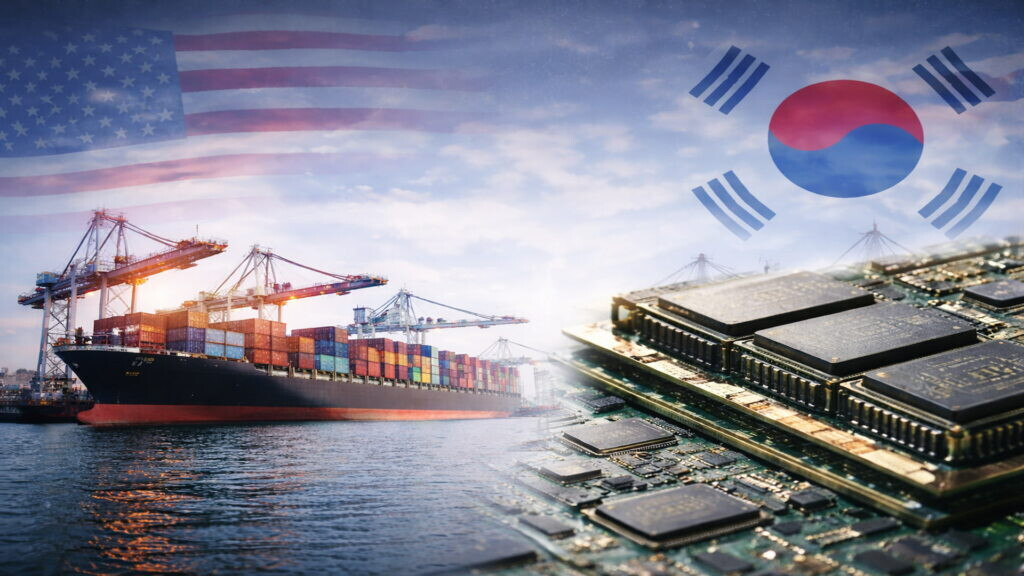
WASHINGTON — The Office of the U.S. Trade Representative (USTR) has unveiled a plan to impose new "overcapacity tariffs" on South Korean imports, pointing directly to Seoul’s state-backed investments in regional semiconductor hubs, electric vehicles, and industrial restructuring.

In a Section 301 report published on the 25th, U.S. trade officials argued that South Korea’s extensive financial subsidies and infrastructure programs artificially sustain or expand manufacturing capacity beyond global demand, undercutting American competitors. Under the proposal, combined duties—incorporating Most-Favored-Nation (MFN) rates and existing Section 301 levies—would be capped at 15% for targeted South Korean products.

Appearing on CNBC, USTR Representative Jamieson Greer criticized Seoul's recent economic initiatives, stating that state-led infrastructure and industrial support announced over the summer distort global markets by inflating supply without generating corresponding demand.

Focus on Chips, Robotics, and AI

The USTR report specifically scrutinized South Korea’s broader strategic push into high-tech sectors, including plans to build a massive semiconductor cluster in the southwestern Honam (Gwangju-Jeolla) region. Trade officials highlighted:

Semiconductor Support: A 15-year, 30 trillion won government commitment covering chip design, manufacturing, and advanced packaging, alongside streamlined permitting, expanded water and power grids, and roughly 800 trillion won in pledged corporate investments.
Tech Benchmarks: Seoul’s goal to double chip exports by 2030 from 2020 levels, capture a 20% share of the global humanoid robotics market, and accelerate AI data center development.

Autos, Petrochemicals, and State Financing Under Scrutiny 

Beyond new capacity, Washington took issue with policies designed to shield existing industries. In the automotive sector, the USTR pointed to South Korea's 2030 future-mobility roadmap—which targets a 10% global share in electric and hydrogen vehicles and allocates 500 billion won for autonomous driving and supply chains—as well as domestic inventory-absorption measures and an expansion of auto-sector policy financing to 15 trillion won.

In petrochemicals, the report questioned whether Seoul’s tax incentives and low-interest loans for shifting toward high-value-added materials would effectively curb regional oversupply, noting delays in facility downsizing. The report also relayed complaints from U.S. firms that South Korean manufacturers rely on low-cost Chinese feedstocks to export acrylonitrile butadiene styrene (ABS) resin to the U.S. market. Furthermore, state-backed lending programs, including a 50 trillion won Korea Development Bank initiative and a 150 trillion won national growth fund, were flagged as market-distorting subsidies.

Potential Hike to 25% and Next Steps

While automobiles and parts already covered under Section 232 national security tariffs are slated for exemption from the new duties, items currently taxed at 12.5% under forced-labor Section 301 rules face a potential 2.5 percentage-point hike.

Crucially, a USTR notice in the Federal Register warned that the combined tariff ceiling could be raised to 25% if bilateral consultations and South Korea's existing trade commitments fail to satisfy Washington's concerns. The USTR will collect public comments through January 5, with hearings scheduled to begin on January 25 to evaluate whether prior U.S.-South Korea trade agreements adequately mitigate these overcapacity issues.

[Copyright (c) Global Economic Times. All Rights Reserved.]
  • #Cherry Garden
  • #HalalFood
  • #Halal
  • #Petlife
  • #Cats
  • #Dogs
  • #Halalhorizone
  • #Hormuz Impasse
  • #Joseon
  • #globaleconomicti
Cho Kijo Reporter
Cho Kijo Reporter

Popular articles

  • Sharing Family Dinners Linked to Lower Pre-Diabetes Risk in Men, Study Suggests

  • KOSPI Plunges Below ‘5,000’ Amid US Midterm ‘Blue Tsunami’ Shock

  • Real Incomes Surge at Fastest Pace in 49 Years, Yet Consumers Keep Wallets Closed

I like it
Share
  • Facebook
  • X
  • Kakaotalk
  • LINE
  • BAND
  • NAVER
  • https://www.globaleconomictimes.kr/article/1065565995993786 Copy URL copied.
Comments >

Comments 0

Weekly Hot Issue

  • Beyond the Pink: Why Meat Color Doesn't Tell the Whole Food Safety Story
  • “Don’t Just Stick to Olive Oil”… The Nutty Oil That Lowers ‘Bad Cholesterol’
  • Beyond the Address: Integrated Jin Air’s Busan Move Hinges on Workforce and Core Operations
  • South Korea’s Chip-Fueled Boom Deepens Economic Divide as Domestic Spending Lags
  • Siheung Turns Parking Lots and Factory Roofs into 16 GWh Solar Powerhouse
  • ‘False Springs’ Double in South Korea, Threatening Honeybees and Future Fruit Supplies

Most Viewed

1
Exercise Beats Diet in Extending Lifespan, Major Review Finds
2
South Korean Burger Chain Lotteria Expands Singapore Footprint with Halal Certification and New Teriyaki Lineup
3
AI Semiconductor Stocks Plummet: Philadelphia Index Drops 5.28% and Micron Plunges 7.59% Amid Executive Shakeup and Export Restrictions
4
"Stay Out, Get Paid, or Have Police Stay With You": Shenzhen Imposes Strict Security Ahead of APEC Summit
5
Taiwan Bans Short-Selling Below Previous Close Starting Nov. 23, Raises Margin Ratio to 150%
체리가든 스토리
nutri huevos
로타리
동포저널

Hot Issue

Elon Musk and SpaceX Pledge $18.35 Billion Stock Giveaway for U.S. Minors

U.S. Compute Restrictions and Anti-Distillation Crackdowns Slow China’s AI Race

Nvidia CEO’s Reinstatement Sparks Fierce Cabinet Divide and Chip Export Fallout

Fashion Runway Show 2026

Let’s recycle the old blankets in Jeju Island’s closet instead of incinerating them.

Global Economic Times
korocamia@naver.com
CEO : LEE YEON-SIL
Publisher & Editor : KO YONG-CHUL
Registration number : Seoul, A55681
Registration Date : 2024-10-24
Youth Protection Manager: KO YONG-CHUL
Singapore Headquarters
5A Woodlands Road #11-34 The Tennery. S'677728
Korean Branch
Phone : +82(0)10 4724 5264
#304, 6 Nonhyeon-ro 111-gil, Gangnam-gu, Seoul
Copyright © Global Economic Times All Rights Reserved
  • News K
  • 반달곰 프로젝트
  • 광고문의
Search
Category
  • All articles
  • Synthesis
  • World
  • Business
  • Industry
  • ICT
  • Distribution Economy
  • Well+Being 
    • 전체
    • Pet Life
    • Halal Horizon
  • Travel
  • Eco-News
  • Education
  • Korean Wave News
  • Opinion
  • Arts&Culture
  • Sports
  • People & Life 
    • 전체
    • International Student Report
    • With Ambassador
  • Column 
    • 전체
    • Cho Kijo Column
    • Cherry Garden Story
    • Ko Yong-chul Column
    • Kim Bong-seon's Photo Column
    • Kim Seul-Ong Column
    • Lee Yeon-sil Column
    • Professor Lee Soo-young’s Life Essays
  • Photo News
  • New Book Guide
  • Overseas Koreans
  • Multicultural News