• 2026.11.27 (Fri)
  • All articles
  • LOGIN
  • JOIN
Global Economic Times
한인동포뉴스(상단)
  • Synthesis
  • World
  • Business
  • Industry
  • ICT
  • Distribution Economy
  • Well+Being
    • Pet Life
    • Halal Horizon
  • Travel
  • Eco-News
  • Education
  • Korean Wave News
  • Opinion
  • Arts&Culture
  • Sports
  • People & Life
    • International Student Report
    • With Ambassador
  • Column
    • Cho Kijo Column
    • Cherry Garden Story
    • Ko Yong-chul Column
    • Kim Bong-seon's Photo Column
    • Kim Seul-Ong Column
    • Lee Yeon-sil Column
    • Professor Lee Soo-young’s Life Essays
  • Photo News
  • New Book Guide
MENU
 
Home > Eco-News

‘False Springs’ Double in South Korea, Threatening Honeybees and Future Fruit Supplies

Hwang Sujin Reporter / Updated : 2026-11-26 19:47:14
  • -
  • +
  • Print
Erratic winter warm spells followed by sudden cold snaps are triggering mass bee die-offs, raising alarms over agricultural pollination and food security.


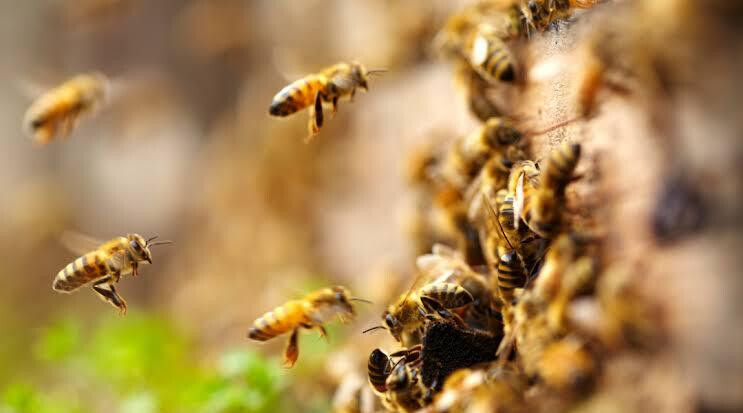
SEOUL — Unseasonably warm winter days, often welcomed by residents bundling up against the cold, are proving fatal for one of agriculture’s most vital workers: the honeybee.

According to a meteorological analysis of seven major South Korean cities—including Seoul, Daejeon, and Busan—the frequency of "false springs" has doubled over the past four decades. Defined by the Rural Development Administration (RDA) as three or more consecutive winter days with daytime highs reaching at least 12°C (53.6°F), these warm spells trick hibernating bee colonies into waking up prematurely.

Data from the Korea Meteorological Administration (KMA) spanning 1973 to 2026 shows that the nation experienced an average of 1.8 false springs per winter over the last decade, up from 0.9 forty years ago. Last winter (2025–2026) set a 53-year record, averaging 20.4 days above 12°C across the surveyed regions. Even colder central areas are seeing the shift; Seoul recorded nine false springs in the last ten winters, compared to just one in the decade starting in 1976.

A Deadly Biological Trap

Warm weather itself does not kill the bees, but the inevitable return of freezing temperatures does. When temperatures stay above 12°C for several days, queen bees mistake the warmth for spring and begin laying eggs. Worker bees immediately shift into nursing mode to care for the brood.

This biological shift triggers hormonal changes that slash a winter worker bee’s lifespan from roughly 150 days down to just 40 days. When cold fronts inevitably sweep back in, the exhausted bees burn through their remaining energy trying to heat the hive, leading to total colony collapse. Over the past decade, two-thirds of these false springs were followed within a week by a temperature plunge of 10°C or more.

South Korea has already witnessed the devastating impact of such swings. During the winter of 2021, an estimated 7.8 billion honeybees vanished nationwide after extreme temperature fluctuations compounded existing threats from parasitic mites and hornets. Similar erratic weather wiped out over 40 percent of the country's overwintering colonies in early 2023.

The crisis mirrors global trends. Recent surveys from Auburn University indicate that U.S. beekeepers lost 55.6 percent of their colonies during the 2024–2025 season—the highest on record—followed by a 39.9 percent loss this year. In the Netherlands, winter colony losses have exceeded 20 percent for four consecutive years.

El Niño and the Threat to the Dinner Table

Forecasters warn that the upcoming winter offers little relief. Driven by a strengthening El Niño—which pushed equatorial Pacific sea surface temperatures 2.6°C above average in October—South Korea is bracing for a warmer-than-normal winter punctuated by sudden, sharp blasts of Arctic air. Early signs appeared this November, as Seoul swung from 19.4°C to 4.9°C in just three days, followed by a dip below freezing and a rapid rebound to 16°C.

Agricultural experts warn that continued bee losses will directly disrupt the food supply. A National Institute of Agricultural Sciences (NIAS) report notes that 27 major crops rely heavily on insect pollination, including 100 percent of strawberries, 93.1 percent of Korean melons, and 92.7 percent of watermelons by cultivation area. Beyond higher grocery prices, a 2022 Harvard T.H. Chan School of Public Health study estimated that reduced fruit and vegetable intake due to pollinator shortages contributes to 427,000 premature deaths globally each year from cardiovascular and related diseases.

To help apiaries adapt, NIAS recently introduced thermal water-pouch insulation capable of cutting internal hive temperature swings by more than half, alongside plans to pilot specialized overwintering storage facilities by 2028.

"When honeybees disappear, the damage extends far beyond beekeepers to the fruit orchards that depend on pollination," said Sung Je-hoon, head of NIAS. "Ultimately, this returns as a direct crisis for our dining tables and the broader ecosystem."

[Copyright (c) Global Economic Times. All Rights Reserved.]

  • #Cherry Garden
  • #HalalFood
  • #Halal
  • #Petlife
  • #Cats
  • #Dogs
  • #Halalhorizone
  • #Hormuz Impasse
  • #Joseon
  • #globaleconomicti
Hwang Sujin Reporter

Popular articles

  • From Kim Whanki to Pokémon Cards... Seoul Auction Opens the Floodgates

  • November Shopping Festival Sparks Retail War in South Korea: Where to Find the Best Deals

  • First Snow and Freeze Hit Korea as Winter Officially Begins on 'Ipdeong'

I like it
Share
  • Facebook
  • X
  • Kakaotalk
  • LINE
  • BAND
  • NAVER
  • https://www.globaleconomictimes.kr/article/1065609935792951 Copy URL copied.
Comments >

Comments 0

Weekly Hot Issue

  • Beyond the Pink: Why Meat Color Doesn't Tell the Whole Food Safety Story
  • “Don’t Just Stick to Olive Oil”… The Nutty Oil That Lowers ‘Bad Cholesterol’
  • Beyond the Address: Integrated Jin Air’s Busan Move Hinges on Workforce and Core Operations
  • South Korea’s Chip-Fueled Boom Deepens Economic Divide as Domestic Spending Lags
  • Siheung Turns Parking Lots and Factory Roofs into 16 GWh Solar Powerhouse
  • Algal Blooms in South Korea’s Nakdong River Spark Health and Livelihood Concerns

Most Viewed

1
Exercise Beats Diet in Extending Lifespan, Major Review Finds
2
South Korean Burger Chain Lotteria Expands Singapore Footprint with Halal Certification and New Teriyaki Lineup
3
AI Semiconductor Stocks Plummet: Philadelphia Index Drops 5.28% and Micron Plunges 7.59% Amid Executive Shakeup and Export Restrictions
4
"Stay Out, Get Paid, or Have Police Stay With You": Shenzhen Imposes Strict Security Ahead of APEC Summit
5
Taiwan Bans Short-Selling Below Previous Close Starting Nov. 23, Raises Margin Ratio to 150%
체리가든 스토리
nutri huevos
로타리
동포저널

Hot Issue

Elon Musk and SpaceX Pledge $18.35 Billion Stock Giveaway for U.S. Minors

U.S. Compute Restrictions and Anti-Distillation Crackdowns Slow China’s AI Race

Nvidia CEO’s Reinstatement Sparks Fierce Cabinet Divide and Chip Export Fallout

Fashion Runway Show 2026

Let’s recycle the old blankets in Jeju Island’s closet instead of incinerating them.

Global Economic Times
korocamia@naver.com
CEO : LEE YEON-SIL
Publisher & Editor : KO YONG-CHUL
Registration number : Seoul, A55681
Registration Date : 2024-10-24
Youth Protection Manager: KO YONG-CHUL
Singapore Headquarters
5A Woodlands Road #11-34 The Tennery. S'677728
Korean Branch
Phone : +82(0)10 4724 5264
#304, 6 Nonhyeon-ro 111-gil, Gangnam-gu, Seoul
Copyright © Global Economic Times All Rights Reserved
  • News K
  • 반달곰 프로젝트
  • 광고문의
Search
Category
  • All articles
  • Synthesis
  • World
  • Business
  • Industry
  • ICT
  • Distribution Economy
  • Well+Being 
    • 전체
    • Pet Life
    • Halal Horizon
  • Travel
  • Eco-News
  • Education
  • Korean Wave News
  • Opinion
  • Arts&Culture
  • Sports
  • People & Life 
    • 전체
    • International Student Report
    • With Ambassador
  • Column 
    • 전체
    • Cho Kijo Column
    • Cherry Garden Story
    • Ko Yong-chul Column
    • Kim Bong-seon's Photo Column
    • Kim Seul-Ong Column
    • Lee Yeon-sil Column
    • Professor Lee Soo-young’s Life Essays
  • Photo News
  • New Book Guide
  • Overseas Koreans
  • Multicultural News