![[등록] 2026-09-01 15:48:31](/support/_updata/banner2/tl181982910_6749.png)


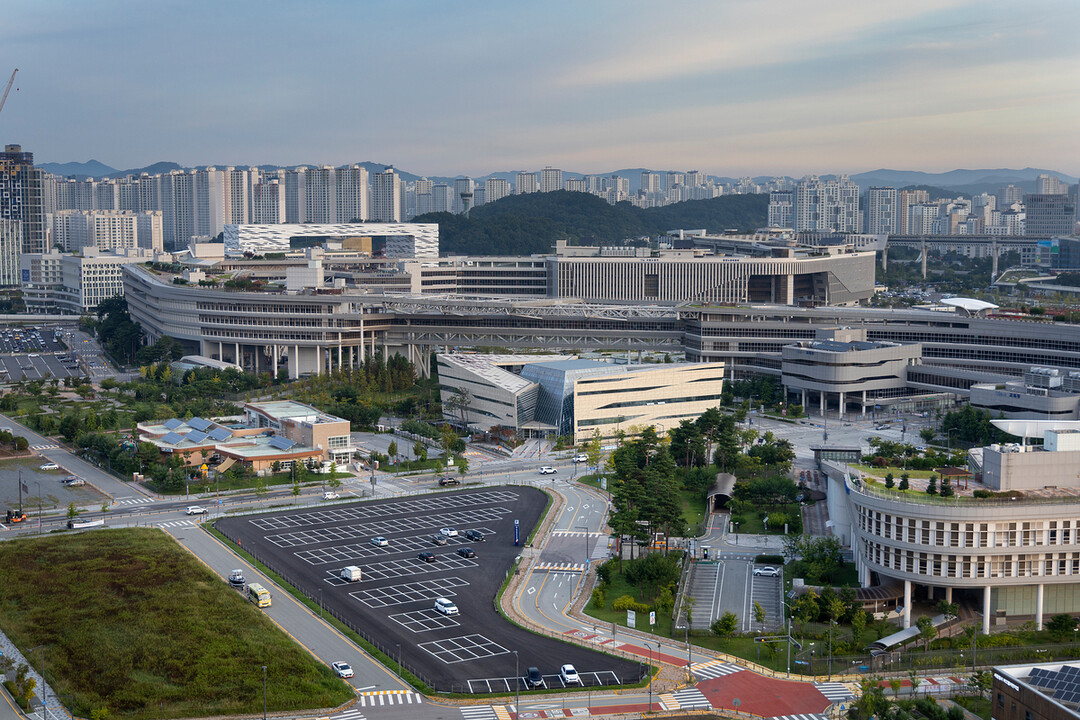
(C) Sejong City
The issue of constructing a new administrative capital is heating up the entire nation along with the midsummer heat. While the Ministry of Construction and Transportation has established the New Administrative Capital Construction Support Team (www.newcapital.go.kr) to push forward with the project, the situation has evolved into a fierce battle between the Blue House and the ruling party against the Seoul Metropolitan Government and the opposition party, fueled by conflicting public opinions. On December 29, 2003, the "Special Act on the Construction of a New Administrative Capital" was enacted by the National Assembly. Consequently, a dispute arose over whether the government’s implementation of such a major national affair—relocating the capital—without a national referendum was unconstitutional, eventually leading to a judgment by the Constitutional Court. The Court is expected to handle this matter swiftly to prevent further national division and waste of national resources.
The "Special Act" aims to reorganize the implementation system, including the formation of the "New Administrative Capital Construction Committee," establish relocation plans for major state institutions, and develop a basic plan for the new capital. Based on site selection criteria research and status surveys, a comparative evaluation of candidate sites will be conducted in the first half of 2004. In the second half of the year, the final site will be determined after gathering public opinion; nationwide public hearings began on July 12. After the final site is selected, development plans will be established and land acquisition will begin by the first half of 2007. Construction is scheduled to start in the second half of 2007, with city construction and government building completion by 2011. Starting in 2012, central administrative agencies will be relocated in stages, and residential move-ins will begin.
The government plans to move 180 to 200 out of 334 public institutions in the Seoul metropolitan area to regions other than the capital and Chungcheong areas. Meanwhile, it intends to select and foster four strategic projects for each of the 16 cities and provinces nationwide to lay the foundation for balanced national development. The Seoul metropolitan area accounts for 11.8% of the national territory but holds 47.6% (23.24 million people) of the total population. The concentration of economic power, politics, culture, and education is even more severe. In contrast, the new administrative capital is planned for a population of 500,000, a city size of 22.91 million pyeong, and a residential population density of 300 people/ha. The total construction cost is estimated at 45.6 trillion KRW (including a 10% reserve), but many reports suggest it will cost much more.
Despite these government plans, resistance to the construction of the new administrative capital persists, primarily because its effectiveness is perceived as minimal. One of the current issues facing the Korean economy is the increasing number of small and medium-sized enterprises (SMEs) going bankrupt or moving overseas due to weakened competitiveness, leading to rising unemployment and industrial hollowing out. Furthermore, critics question the need for a new administrative capital and mini-new towns when there are many unsold industrial complexes across the country. Analysis suggests that if the massive budget were directly invested in SMEs and regional economic development, it would be much more effective in developing regional economies while maintaining the international competitiveness of the Seoul metropolitan area.
Even if the construction of the new administrative capital is deemed justifiable, some point out that it is not a spending priority given Korea’s position between a Japan that has emerged from a decade-long recession and a China whose growth is surging with its opening. It is also unclear how many companies will actually follow public institutions to the administrative-type new city. Even civil servants and employees of these institutions may commute from Seoul or live apart from their families. Critics argue that even if a new city of 500,000 is completed, it would only represent 2.2% of the metropolitan population, which would not significantly help in relieving overcrowding or dispersing the population.
Some believe that since reunification may be possible in the not-too-distant future, the relocation should wait for further developments, or even move further north considering relations with China, rather than moving south. Regardless of the merits of the project, it is regrettable that the government, which should seek national consensus through sufficient discussion, seems to be in a hurry, oversensitive to criticism, and focused only on counterattacking.
[Copyright (c) Global Economic Times. All Rights Reserved.]