• 2026.11.11 (Wed)
  • All articles
  • LOGIN
  • JOIN
Global Economic Times
[등록] 2026-09-01 15:48:31
  • Synthesis
  • World
  • Business
  • Industry
  • ICT
  • Distribution Economy
  • Well+Being
    • Pet Life
    • Halal Horizon
  • Travel
  • Eco-News
  • Education
  • Korean Wave News
  • Opinion
  • Arts&Culture
  • Sports
  • People & Life
    • International Student Report
    • With Ambassador
  • Column
    • Cho Kijo Column
    • Cherry Garden Story
    • Ko Yong-chul Column
    • Kim Bong-seon's Photo Column
    • Kim Seul-Ong Column
    • Lee Yeon-sil Column
  • Photo News
  • New Book Guide
MENU
 
Home > World

US-Iran Tensions Escalate: Severe Economic Sanctions Met With Military Threats

Eugenio Rodolfo Sanabria Reporter / Updated : 2026-08-27 07:45:31
  • -
  • +
  • Print


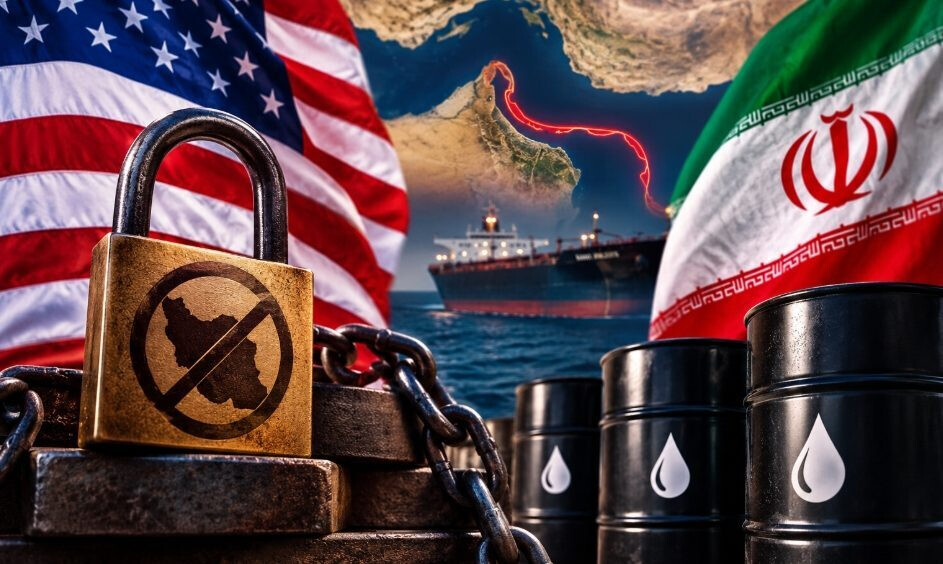
The escalating economic crisis in Iran has brought tensions with the United States to a critical and dangerous tipping point. According to a recent report by The New York Times, the United States is shifting its primary strategy from direct military conflict to an intensive, maximum-pressure economic campaign. Led by the Trump administration and Treasury Secretary Scott Bessent, Washington has introduced sweeping sanctions designed to completely sever Iran's vital oil exports and effectively isolate the country from the global financial system.

However, rather than forcing Tehran to negotiate or capitulate, these aggressive measures have pushed an already cornered regime into a position of fierce defiance. Iranian leadership has responded with severe warnings, explicitly stating that with a collapsing domestic economy, they have virtually nothing left to lose and are fully prepared to resort to military countermeasures to protect their national interests.

The domestic situation inside Iran has deteriorated rapidly in recent months. The combination of strict US naval blockades and secondary sanctions has reduced Iran’s oil production to a trickle, with output now barely covering basic domestic needs. Furthermore, the Iranian rial has plummeted by 41% since widespread anti-government protests occurred last December. This massive devaluation has triggered rampant inflation, causing critical items like medicine prices to skyrocket by up to 500% and leaving many citizens struggling to afford basic necessities. Severe energy shortages have also worsened, with long lines of vehicles frequently gridlocked at gas stations as citizens desperate for fuel wait for hours.

Prominent Iranian officials have acknowledged these existential threats while reacting aggressively to Washington's actions. Mohsen Rezaei, Secretary of the Supreme National Security Council, warned that any nation participating in or supporting the US economic war would be considered a direct combatant. He explicitly threatened that if economic warfare continues, not a single drop of oil will be permitted to pass through the Strait of Hormuz or the wider Persian Gulf. Additionally, Chief of Staff Ali Abdollahi and Defense Minister-designate Majid Ebn Alreza stressed that any outside support for US military or economic operations would be treated as direct participation in a war, vowing that Tehran will expand its operational theater to safeguard its population from starvation and systemic collapse.

Despite Washington's determination, international enforcement of these sweeping sanctions faces major geopolitical hurdles. Analysts point out that China, which accounts for roughly 90% of Iran's total crude oil exports, has firmly refused to recognize or implement the US measures, denouncing them as unlawful pressure. Furthermore, regional trading partners such as Turkey and Iraq, alongside deeply rooted cross-border shadow business networks that have operated for centuries, will make a complete economic blockade nearly impossible to enforce fully. Ultimately, the escalating standoff has transformed into a dangerous high-stakes game of chicken, where both sides are testing who can endure the escalating economic and political pain for a longer duration.

[Copyright (c) Global Economic Times. All Rights Reserved.]

  • #\ormuz Impasse
  • #globaleconomictimes
  • #micorea
  • #mykorea
  • #nammidonganews
  • #singaporenewsk
  • #Samsung
  • #Daewoo
  • #Hyos
Eugenio Rodolfo Sanabria Reporter

Popular articles

  • Nearly 900 Schools Temporarily Closed as 'Flu' Epidemic Sweeps Japan

  • AI Companies Rush to Go Public, But Face Sudden Brakes Amid Cooling Investor Sentiment

  • Singapore and Brunei Sign Landmark MOU on Mutual Recognition of Halal Certificates

I like it
Share
  • Facebook
  • X
  • Kakaotalk
  • LINE
  • BAND
  • NAVER
  • https://www.globaleconomictimes.kr/article/1065566687765616 Copy URL copied.
Comments >

Comments 0

Weekly Hot Issue

  • Inha University Caught in Campus Culture Clash Over Proposed Rhee Syng-man Statue Revival
  • Honoring a Legacy: Poet Oh Dong-chun Recognized for Lifelong Dedication to Hangul and Sijo Poetry
  • Bongeunsa Temple to Host 2026 Patriotic Buddhism Cultural Festa
  • South Korea Confronts a Growing Health Crisis as Adult Obesity Rates Surge
  • Pain of Chosei Coal Mine Meets Japanese Readers: Moon Young-sook Publishes Japanese Edition of 'Black Sea'
  • Beyond the Trillion-Dollar Mark: China’s Trade Surplus and the Debate Over Global Economic Dominance

Most Viewed

1
US Army Conducts Rare Temporary Burial Drills to Prepare for Worst-Case Large-Scale War Scenarios
2
World Citizens are Flying Directly to Busan... The Era of 4 Million Foreigners is Just Around the Corner
3
Eating 100g of Baechu Kimchi Daily Linked to Lower High-Cholesterol Risks
4
Meeting Christmas Early!… Busan Dessert Sales Event "Daldal The Market" Held
5
November Shopping Festival Sparks Retail War in South Korea: Where to Find the Best Deals
체리가든 스토리
nutri huevos
로타리
동포저널

Hot Issue

Jensen Huang Faces Shareholder Class Action and Leadership Scrutiny Amid Espionage Allegations Involving Former Associate

Disgraced South Korean Scientist Hwang Woo-suk Becomes UAE Citizen

Is South Korea Heading Toward France's Path? Aging Population and Fiscal Pressures Looming Ahead

Fashion Runway Show 2026

Let’s recycle the old blankets in Jeju Island’s closet instead of incinerating them.

Global Economic Times
korocamia@naver.com
CEO : LEE YEON-SIL
Publisher : KO YONG-CHUL
Registration number : Seoul, A55681
Registration Date : 2024-10-24
Youth Protection Manager: KO YONG-CHUL
Singapore Headquarters
5A Woodlands Road #11-34 The Tennery. S'677728
Korean Branch
Phone : +82(0)10 4724 5264
#304, 6 Nonhyeon-ro 111-gil, Gangnam-gu, Seoul
Copyright © Global Economic Times All Rights Reserved
  • News K
  • 반달곰 프로젝트
  • 광고문의
Search
Category
  • All articles
  • Synthesis
  • World
  • Business
  • Industry
  • ICT
  • Distribution Economy
  • Well+Being 
    • 전체
    • Pet Life
    • Halal Horizon
  • Travel
  • Eco-News
  • Education
  • Korean Wave News
  • Opinion
  • Arts&Culture
  • Sports
  • People & Life 
    • 전체
    • International Student Report
    • With Ambassador
  • Column 
    • 전체
    • Cho Kijo Column
    • Cherry Garden Story
    • Ko Yong-chul Column
    • Kim Bong-seon's Photo Column
    • Kim Seul-Ong Column
    • Lee Yeon-sil Column
  • Photo News
  • New Book Guide
  • Overseas Koreans
  • Multicultural News