• 2026.08.11 (Tue)
  • All articles
  • LOGIN
  • JOIN
Global Economic Times
fashionrunwayshow2026
  • Synthesis
  • World
  • Business
  • Industry
  • ICT
  • Distribution Economy
  • Well+Being
  • Travel
  • Eco-News
  • Education
  • Korean Wave News
  • Opinion
  • Arts&Culture
  • Sports
  • People & Life
    • International Student Report
    • With Ambassador
  • Column
    • Cho Kijo Column
    • Cherry Garden Story
    • Ko Yong-chul Column
    • Kim Seul-Ong Column
    • Lee Yeon-sil Column
  • Photo News
  • New Book Guide
MENU
 
Home > World

International Oil Prices Hit Four-Month Low as Shipping Resumes in Strait of Hormuz

Eugenio Rodolfo Sanabria Reporter / Updated : 2026-06-24 08:01:41
  • -
  • +
  • Print


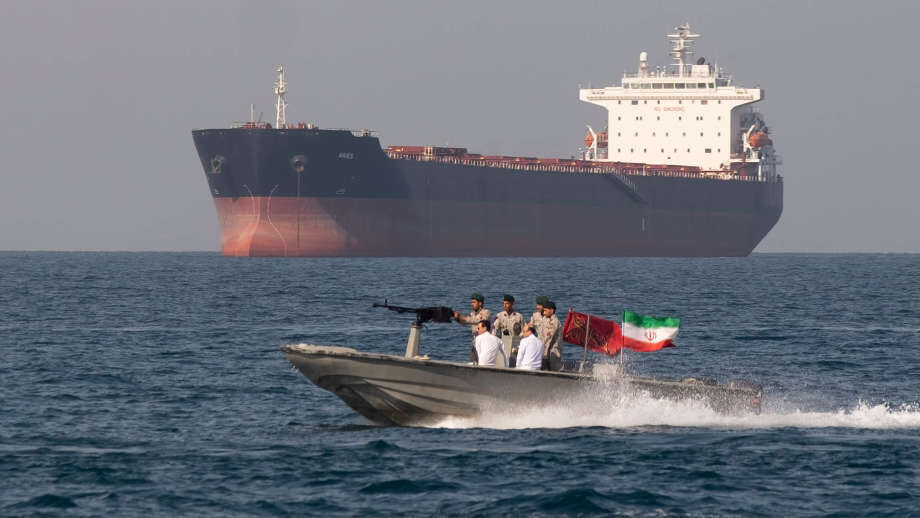
NEW YORK – International oil prices extended their decline on Tuesday, June 23, 2026, dropping to their lowest levels in nearly four months. This market reaction comes as positive signals emerge regarding the resumption of oil transit through the Strait of Hormuz, a critical global energy chokepoint, amid ongoing diplomatic negotiations between the United States and Iran.

On the ICE Futures Europe exchange, August delivery Brent crude settled at $77.08 per barrel, marking a 1.05% decrease from the previous session. Similarly, on the New York Mercantile Exchange (NYMEX), West Texas Intermediate (WTI) for July delivery fell 0.88% to close at $73.21 per barrel. These prices represent the lowest benchmarks for Brent and WTI since February 27 and March 2, respectively—dates immediately preceding the escalation of the U.S.-Iran conflict.

Signs of Normalization and Diplomatic Breakthrough

The primary driver of the current downward pressure on prices is the tangible progress in restoring shipping traffic through the Strait of Hormuz. Following initial peace talks, the United States announced a 60-day sanctions waiver for Iran, which has significantly eased market concerns over the immediate supply of Iranian crude oil.

Ship-tracking data confirms that the waterway is gradually reopening. On Monday, three supertankers successfully transited the Strait, signaling that the de-facto blockade is lifting. Furthermore, the International Maritime Organization (IMO) has initiated a large-scale operation to assist in the evacuation of hundreds of stranded vessels and over 11,000 crew members from the Gulf region, marking a critical step toward restoring order in these waters.

Market Outlook: Cautious Optimism

While the resumption of transit is a welcome development for global energy markets, analysts remain cautious about the speed of a full-scale normalization. Despite the diplomatic breakthrough, the region faces significant logistical hurdles. Experts point to potential hazards such as naval mines, damaged port infrastructure, and lingering distrust between Washington and Tehran.

"The market is clearly pricing in a best-case scenario for the restoration of supply flows," said a senior energy analyst. "However, structural challenges remain. A return to pre-conflict oil price levels is likely to be a gradual process rather than an overnight shift, as the global energy sector recovers from the most severe supply shock in recent history."

Broader Economic Context

The closure of the Strait of Hormuz in early 2026 caused the most significant disruption in the history of the oil market, leading to a temporary, yet dramatic, surge in prices. With global oil supply having been restricted for several months, the current easing of tensions is providing much-needed relief to the global economy.

As the world watches the 60-day negotiation window unfold, the focus of market participants has shifted from military geopolitical risk to real-time supply data. While the current price decline offers a reprieve from record-high energy costs, the volatility witnessed over the past four months serves as a stark reminder of the energy market's vulnerability to geopolitical instability.

Going forward, the international community, including major refiners and energy policy stakeholders, will be closely monitoring the status of the waterway. The continued, safe passage of tankers will be the ultimate litmus test for the success of the current diplomatic framework, which aims to provide stability to the global energy supply chain.

[Copyright (c) Global Economic Times. All Rights Reserved.]

  • #Hormuz Impasse
  • #globaleconomictimes
  • #micorea
  • #mykorea
  • #nammidonganews
  • #singaporenewsk
  • #Samsung
  • #Daewoo
  • #Hyos
Eugenio Rodolfo Sanabria Reporter

Popular articles

  • Saudi Arabia Launches Naval Protection Measures as Houthi Blockade Threat Escalates in Bab-el-Mandeb Strait

  • AI Drones Take to the Skies in Revolutionary Hunt for Mosquitoes

  • Mexican Cinema Legend Elsa Aguirre Passes Away at 96

I like it
Share
  • Facebook
  • X
  • Kakaotalk
  • LINE
  • BAND
  • NAVER
  • https://www.globaleconomictimes.kr/article/1065567631293094 Copy URL copied.
Comments >

Comments 0

Weekly Hot Issue

  • Riot Games Hosts Largest-Ever TFT Festival at The Hyundai Seoul to Launch 'Sylvan Secrets' Set
  • MINISTRY OF EMPLOYMENT AND LABOR DIRECTS IMMEDIATE EXPANSION OF REST FACILITIES AT GIMPO AIRPORT AFTER UNANNOUNCED HEATWAVE INSPECTION
  • XAVIS Secures Contract to Supply Advanced X-Ray Inspection Systems to European Lines of Global Food Sauce Brand
  • Emma Expands Collaboration with Interior Design Experts to Present Sleep Space Solutions
  • Trump Criticizes U.S. Congressional AI Regulations as Threat to Tech Industry
  • Memory Chips Become Dominant Force in Global Semiconductor Industry, Expected to Account for 60% of Total Market This Year

Most Viewed

1
Planting Hope: Ethiopia’s Green Legacy and the Power of National Transformation
2
Japan Estimated to Have Spent ¥6–7 Trillion in Fresh Yen-Buying Intervention as US Joint Action Hints Emerge
3
The 16th Ethiopia-gil World Festival & Meskel Festival
4
South Korea’s Top Three Mobile Carriers Launch Pre-Orders for Samsung’s Galaxy Z Series with Aggressive Subsidies and Service Bundles
5
KT and Amorepacific Complete ‘Data Highway’ Project, Unveiling AI-Specialized Research Platform
광고문의
임시1
임시3
임시2

Hot Issue

MINISTRY OF EMPLOYMENT AND LABOR DIRECTS IMMEDIATE EXPANSION OF REST FACILITIES AT GIMPO AIRPORT AFTER UNANNOUNCED HEATWAVE INSPECTION

Riot Games Hosts Largest-Ever TFT Festival at The Hyundai Seoul to Launch 'Sylvan Secrets' Set

Nable Communications Secures 5G Private Network Upgrade Deal with LG Uplus

Ansan City Pay-as-You-Throw Trash Bag Abandoned in Japan Sparks Controversy in Kamikochi

Fashion Runway Show 2026

Global Economic Times
korocamia@naver.com
CEO : LEE YEON-SIL
Publisher : KO YONG-CHUL
Registration number : Seoul, A55681
Registration Date : 2024-10-24
Youth Protection Manager: KO YONG-CHUL
Singapore Headquarters
5A Woodlands Road #11-34 The Tennery. S'677728
Korean Branch
Phone : +82(0)10 4724 5264
#304, 6 Nonhyeon-ro 111-gil, Gangnam-gu, Seoul
Copyright © Global Economic Times All Rights Reserved
  • 향기네무료급식
  • BCB부천방송
  • 반달곰 프로젝트
Search
Category
  • All articles
  • Synthesis
  • World
  • Business
  • Industry
  • ICT
  • Distribution Economy
  • Well+Being
  • Travel
  • Eco-News
  • Education
  • Korean Wave News
  • Opinion
  • Arts&Culture
  • Sports
  • People & Life 
    • 전체
    • International Student Report
    • With Ambassador
  • Column 
    • 전체
    • Cho Kijo Column
    • Cherry Garden Story
    • Ko Yong-chul Column
    • Kim Seul-Ong Column
    • Lee Yeon-sil Column
  • Photo News
  • New Book Guide
  • Multicultural News
  • Jobs & Workers