• 2026.11.27 (Fri)
  • All articles
  • LOGIN
  • JOIN
Global Economic Times
한인동포뉴스(상단)
  • Synthesis
  • World
  • Business
  • Industry
  • ICT
  • Distribution Economy
  • Well+Being
    • Pet Life
    • Halal Horizon
  • Travel
  • Eco-News
  • Education
  • Korean Wave News
  • Opinion
  • Arts&Culture
  • Sports
  • People & Life
    • International Student Report
    • With Ambassador
  • Column
    • Cho Kijo Column
    • Cherry Garden Story
    • Ko Yong-chul Column
    • Kim Bong-seon's Photo Column
    • Kim Seul-Ong Column
    • Lee Yeon-sil Column
    • Professor Lee Soo-young’s Life Essays
  • Photo News
  • New Book Guide
MENU
 
Home > Business

South Korea’s Bank-First Stablecoin Rule Draws Fire as US and EU Empower Non-Bank Issuers

Yim Kwangsoo Correspondent / Updated : 2026-11-26 08:05:59
  • -
  • +
  • Print


SEOUL — While global financial powers are opening the door for fintech and non-bank firms to lead stablecoin innovation, South Korea’s newly proposed digital asset framework is facing mounting criticism for forcing would-be issuers to secure majority backing from traditional banks before entering the market.

With U.S. dollar-pegged tokens currently accounting for nearly 99% of the global stablecoin market, jurisdictions like the United States and the European Union have established clear, tiered regulatory pathways that allow non-bank enterprises to issue tokens independently while scaling up oversight as systemic risks grow.

Under the U.S. GENIUS Act, slated to take effect on January 18 next year, non-bank entities can apply directly to federal or state authorities for issuance licenses. Issuers with a consolidated balance of $10 billion or less may opt for state-level supervision, automatically transitioning to joint federal-state oversight once they cross that threshold. The legislation even provides a dedicated approval mechanism for non-financial publicly traded companies, giving businesses regulatory predictability from day one.

Europe follows a similar "innovate first, regulate by scale" philosophy. Any licensed Electronic Money Institution (EMI) in the EU is permitted to issue single-currency stablecoins. Enhanced regulatory scrutiny—covering capital adequacy, liquidity, and reserve assets—is triggered only when a token achieves widespread adoption and is classified as "significant," a threshold recently crossed by Circle’s French-issued USDC under the supervision of the European Banking Authority (EBA).

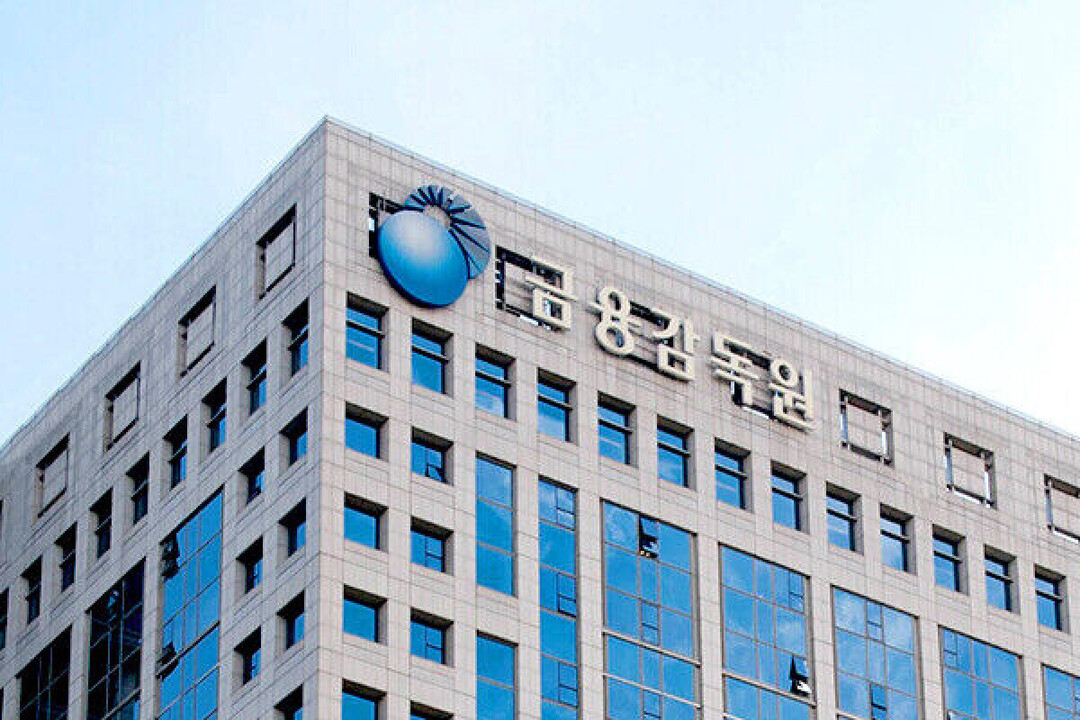
In stark contrast, the Digital Asset Act unveiled by South Korea’s Financial Services Commission (FSC) on November 24 places commercial banks as gatekeepers at the very starting line. Although the bill sets a baseline requirement of 5 billion won ($3.6 million) in equity capital alongside operational and governance reviews, upcoming enforcement decrees are expected to mandate that banks hold a combined majority stake—even in structures where a fintech firm is the single largest shareholder.

This requirement creates a complex structural hurdle due to South Korea’s Banking Act, which generally caps a single bank’s voting stake in a non-financial firm at 15%. Unless regulators carve out specific exemptions, a fintech company aiming to hold a 30% stake would need to assemble a consortium of at least four separate banks—each taking 15%—just to meet the 60% banking majority threshold. Industry insiders warn that negotiating equity splits, capital commitments, and operational control across multiple banks will severely delay or derail private-sector initiatives.

Furthermore, the FSC has left non-bank firms in regulatory limbo regarding future independence. Regulators indicated they would consider allowing standalone non-bank issuance only after initial bank-led stablecoins prove "stable" in circulation and redemption, yet failed to define any quantitative benchmarks or timelines for that transition.

Critics argue that insisting on bank-majority ownership is redundant given the stringent safeguards already built into the Korean bill. The proposed legislation mandates 100% reserve backing via bank deposits or trusts, immediate par-value redemption, monthly third-party reserve audits, and heightened capital rules once issuance surpasses 1 trillion won.

"In a global market already overwhelmingly dominated by dollar stablecoins, forcing domestic innovators to wait for a bank consortium's green light risks stifling South Korea's competitiveness before it even begins," said a Seoul-based digital asset executive. Industry stakeholders are urging regulators to establish transparent, metrics-driven criteria that allow qualified non-bank firms to apply for standalone licenses on a predictable schedule.

[Copyright (c) Global Economic Times. All Rights Reserved.]
  • #Cherry Garden
  • #HalalFood
  • #Halal
  • #Petlife
  • #Cats
  • #Dogs
  • #Halalhorizone
  • #Hormuz Impasse
  • #Joseon
  • #globaleconomicti
Yim Kwangsoo Correspondent
Yim Kwangsoo Correspondent 前 재파라과이한인회장, 前 남미동아뉴스 발행인, 평통자문위원, 현 남미동아뉴스 편집인

Popular articles

  • Digital Detour: Why MZ Generation is Trading Smartphones for "Diginori" and Analog Diaries

  • 16 Gyeongsangbuk-do Carbon Material Enterprises Showcase Cutting-Edge Technologies at 'Carbon Korea 2026'

  • Autumn Harmony in Chuncheon: Gangwon State Wraps Up "2026 Gangwon Music Festival"

I like it
Share
  • Facebook
  • X
  • Kakaotalk
  • LINE
  • BAND
  • NAVER
  • https://www.globaleconomictimes.kr/article/1065567872250424 Copy URL copied.
Comments >

Comments 0

Weekly Hot Issue

  • Beyond the Pink: Why Meat Color Doesn't Tell the Whole Food Safety Story
  • “Don’t Just Stick to Olive Oil”… The Nutty Oil That Lowers ‘Bad Cholesterol’
  • Beyond the Address: Integrated Jin Air’s Busan Move Hinges on Workforce and Core Operations
  • South Korea’s Chip-Fueled Boom Deepens Economic Divide as Domestic Spending Lags
  • Siheung Turns Parking Lots and Factory Roofs into 16 GWh Solar Powerhouse
  • ‘False Springs’ Double in South Korea, Threatening Honeybees and Future Fruit Supplies

Most Viewed

1
Exercise Beats Diet in Extending Lifespan, Major Review Finds
2
South Korean Burger Chain Lotteria Expands Singapore Footprint with Halal Certification and New Teriyaki Lineup
3
AI Semiconductor Stocks Plummet: Philadelphia Index Drops 5.28% and Micron Plunges 7.59% Amid Executive Shakeup and Export Restrictions
4
"Stay Out, Get Paid, or Have Police Stay With You": Shenzhen Imposes Strict Security Ahead of APEC Summit
5
Taiwan Bans Short-Selling Below Previous Close Starting Nov. 23, Raises Margin Ratio to 150%
체리가든 스토리
nutri huevos
로타리
동포저널

Hot Issue

Elon Musk and SpaceX Pledge $18.35 Billion Stock Giveaway for U.S. Minors

U.S. Compute Restrictions and Anti-Distillation Crackdowns Slow China’s AI Race

Nvidia CEO’s Reinstatement Sparks Fierce Cabinet Divide and Chip Export Fallout

Fashion Runway Show 2026

Let’s recycle the old blankets in Jeju Island’s closet instead of incinerating them.

Global Economic Times
korocamia@naver.com
CEO : LEE YEON-SIL
Publisher & Editor : KO YONG-CHUL
Registration number : Seoul, A55681
Registration Date : 2024-10-24
Youth Protection Manager: KO YONG-CHUL
Singapore Headquarters
5A Woodlands Road #11-34 The Tennery. S'677728
Korean Branch
Phone : +82(0)10 4724 5264
#304, 6 Nonhyeon-ro 111-gil, Gangnam-gu, Seoul
Copyright © Global Economic Times All Rights Reserved
  • News K
  • 반달곰 프로젝트
  • 광고문의
Search
Category
  • All articles
  • Synthesis
  • World
  • Business
  • Industry
  • ICT
  • Distribution Economy
  • Well+Being 
    • 전체
    • Pet Life
    • Halal Horizon
  • Travel
  • Eco-News
  • Education
  • Korean Wave News
  • Opinion
  • Arts&Culture
  • Sports
  • People & Life 
    • 전체
    • International Student Report
    • With Ambassador
  • Column 
    • 전체
    • Cho Kijo Column
    • Cherry Garden Story
    • Ko Yong-chul Column
    • Kim Bong-seon's Photo Column
    • Kim Seul-Ong Column
    • Lee Yeon-sil Column
    • Professor Lee Soo-young’s Life Essays
  • Photo News
  • New Book Guide
  • Overseas Koreans
  • Multicultural News