• 2026.11.11 (Wed)
  • All articles
  • LOGIN
  • JOIN
Global Economic Times
[등록] 2026-09-01 15:48:31
  • Synthesis
  • World
  • Business
  • Industry
  • ICT
  • Distribution Economy
  • Well+Being
    • Pet Life
    • Halal Horizon
  • Travel
  • Eco-News
  • Education
  • Korean Wave News
  • Opinion
  • Arts&Culture
  • Sports
  • People & Life
    • International Student Report
    • With Ambassador
  • Column
    • Cho Kijo Column
    • Cherry Garden Story
    • Ko Yong-chul Column
    • Kim Bong-seon's Photo Column
    • Kim Seul-Ong Column
    • Lee Yeon-sil Column
  • Photo News
  • New Book Guide
MENU
 
Home > World

UN Secretary-General Urges AI Industry to Adopt Environmental Transparency Amid Rapid Infrastructure Expansion

Eunsil Ju Reporter / Updated : 2026-06-24 08:05:33
  • -
  • +
  • Print


LONDON — UN Secretary-General António Guterres has issued a stern call to action for the global artificial intelligence industry, demanding full transparency regarding the environmental footprint of AI systems. Addressing leaders at London Climate Action Week on June 23, 2026, Guterres unveiled the "AI Environmental Transparency Initiative," a landmark effort aimed at curbing the ecological costs of the AI boom. 

The Call for Accountability

The Secretary-General urged major AI corporations to disclose the comprehensive environmental impacts of their operations, specifically highlighting carbon emissions, water consumption, and land usage. Furthermore, he set a clear industry target: all data centers must be powered by renewable energy by 2030. 

"There should be no more hidden costs," Guterres stated during his address. "If AI is to help us toward a better future, we must be honest about what it is costing us". He emphasized that the burden of this technological advancement should not fall upon those least equipped to manage it. 

The Escalating Environmental Footprint

The urgency of this initiative is underscored by rapid increases in energy demand. According to recent reports, global data center electricity consumption is projected to climb from approximately 415 terawatt-hours (TWh) in 2024 to 945 TWh by 2030—a figure nearly triple the combined annual energy consumption of countries like Pakistan, Bangladesh, and Nigeria. 

While AI models have gained public attention, the report highlights that daily usage—specifically inference—accounts for roughly 80% to 90% of total energy demand. Beyond electricity, the "water footprint" required for cooling these massive facilities and the physical land demand, projected to exceed 14,500 square kilometers by 2030, represent significant ecological challenges that often go undisclosed by private firms. 

Cities Unite: The Global Urban Data Centres Pact

Complementing the UN’s initiative, a coalition of 41 cities across six continents launched the "Global Urban Data Centres Pact" during the same week. Mayors from major hubs—including London, Sydney, Barcelona, and Phoenix—voiced concerns over the strain placed on local power grids, water resources, and community infrastructure by the proliferation of data centers. 

The pact outlines a vision for data centers that are "strategically integrated" into urban planning, prioritizing sustainability and resource efficiency rather than purely expansionist goals. London Mayor Sadiq Khan noted that while digital infrastructure is central to urban prosperity, residents have a right to ensure that such growth is managed responsibly and sustainably. 

As global AI capacity continues to grow at a compound annual rate of 12%, the dual efforts of the UN and this international mayoral coalition signal a shifting regulatory landscape. The message is clear: for the AI industry to sustain its rapid development, it must align its growth with global climate targets and demonstrate accountability to the local communities that host its infrastructure.

[Copyright (c) Global Economic Times. All Rights Reserved.]

  • #Hormuz Impasse
  • #globaleconomictimes
  • #micorea
  • #mykorea
  • #nammidonganews
  • #singaporenewsk
  • #Samsung
  • #Daewoo
  • #Hyos
Eunsil Ju Reporter
Eunsil Ju Reporter

Popular articles

  • Eating 100g of Baechu Kimchi Daily Linked to Lower High-Cholesterol Risks

  • "No Rest Even After Work"… The 63 Million American Adults Trapped in an Endless Cycle of Caregiving

  • Beyond Product Sales to Services… The Opening of a New 'K-Beauty Intermediation' Industry

I like it
Share
  • Facebook
  • X
  • Kakaotalk
  • LINE
  • BAND
  • NAVER
  • https://www.globaleconomictimes.kr/article/1065567874965633 Copy URL copied.
Comments >

Comments 0

Weekly Hot Issue

  • Inha University Caught in Campus Culture Clash Over Proposed Rhee Syng-man Statue Revival
  • Honoring a Legacy: Poet Oh Dong-chun Recognized for Lifelong Dedication to Hangul and Sijo Poetry
  • Bongeunsa Temple to Host 2026 Patriotic Buddhism Cultural Festa
  • South Korea Confronts a Growing Health Crisis as Adult Obesity Rates Surge
  • Pain of Chosei Coal Mine Meets Japanese Readers: Moon Young-sook Publishes Japanese Edition of 'Black Sea'
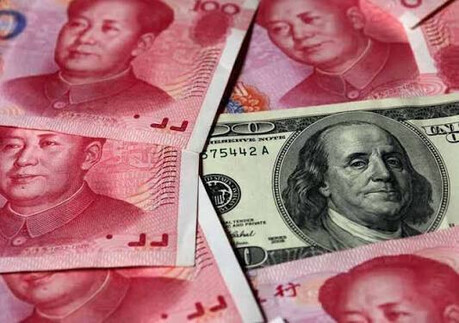
  • Beyond the Trillion-Dollar Mark: China’s Trade Surplus and the Debate Over Global Economic Dominance

Most Viewed

1
US Army Conducts Rare Temporary Burial Drills to Prepare for Worst-Case Large-Scale War Scenarios
2
World Citizens are Flying Directly to Busan... The Era of 4 Million Foreigners is Just Around the Corner
3
Eating 100g of Baechu Kimchi Daily Linked to Lower High-Cholesterol Risks
4
Meeting Christmas Early!… Busan Dessert Sales Event "Daldal The Market" Held
5
November Shopping Festival Sparks Retail War in South Korea: Where to Find the Best Deals
체리가든 스토리
nutri huevos
로타리
동포저널

Hot Issue

Jensen Huang Faces Shareholder Class Action and Leadership Scrutiny Amid Espionage Allegations Involving Former Associate

Disgraced South Korean Scientist Hwang Woo-suk Becomes UAE Citizen

Is South Korea Heading Toward France's Path? Aging Population and Fiscal Pressures Looming Ahead

Fashion Runway Show 2026

Let’s recycle the old blankets in Jeju Island’s closet instead of incinerating them.

Global Economic Times
korocamia@naver.com
CEO : LEE YEON-SIL
Publisher : KO YONG-CHUL
Registration number : Seoul, A55681
Registration Date : 2024-10-24
Youth Protection Manager: KO YONG-CHUL
Singapore Headquarters
5A Woodlands Road #11-34 The Tennery. S'677728
Korean Branch
Phone : +82(0)10 4724 5264
#304, 6 Nonhyeon-ro 111-gil, Gangnam-gu, Seoul
Copyright © Global Economic Times All Rights Reserved
  • News K
  • 반달곰 프로젝트
  • 광고문의
Search
Category
  • All articles
  • Synthesis
  • World
  • Business
  • Industry
  • ICT
  • Distribution Economy
  • Well+Being 
    • 전체
    • Pet Life
    • Halal Horizon
  • Travel
  • Eco-News
  • Education
  • Korean Wave News
  • Opinion
  • Arts&Culture
  • Sports
  • People & Life 
    • 전체
    • International Student Report
    • With Ambassador
  • Column 
    • 전체
    • Cho Kijo Column
    • Cherry Garden Story
    • Ko Yong-chul Column
    • Kim Bong-seon's Photo Column
    • Kim Seul-Ong Column
    • Lee Yeon-sil Column
  • Photo News
  • New Book Guide
  • Overseas Koreans
  • Multicultural News