![[등록] 2026-09-01 15:48:31](/support/_updata/banner2/tl181982910_6749.png)


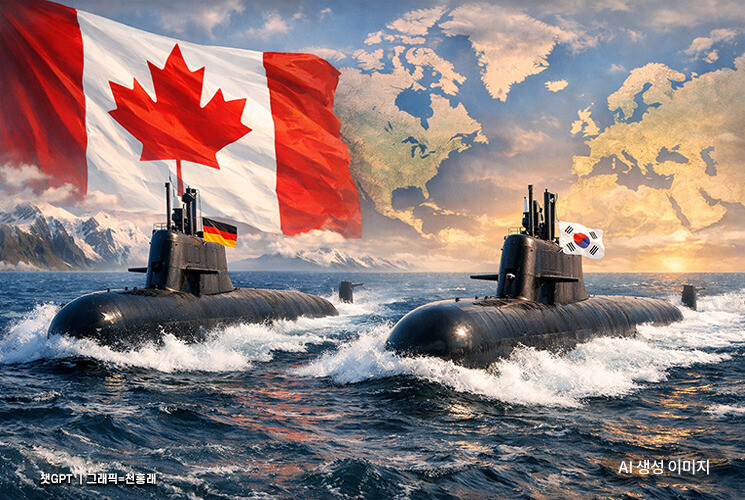
OTTAWA — As the Canadian government nears a historic decision on the $60 billion Canadian Patrol Submarine Project (CPSP), top procurement officials have signaled that the final selection will hinge heavily on the "tangible economic outcomes" promised by the competing bidders.
With the Royal Canadian Navy seeking to replace its aging Victoria-class fleet with up to 12 advanced diesel-electric submarines, the competition between South Korea’s Hanwha Ocean-led consortium and Germany’s ThyssenKrupp Marine Systems (TKMS) has reached a fever pitch. Stephen Fuhr, Canada’s Secretary of State for Defence Procurement, confirmed this week that while both contenders have successfully met the Navy’s rigorous technical requirements, the government’s focus has shifted toward maximizing the industrial benefits that will flow to the Canadian economy.
A Shift Toward Tangible Outcomes
"We'll go from two qualified suppliers to a preferred supplier, and the government of Canada will enter into contract negotiations so we can turn lots of Memoranda of Understanding (MOU) and promises into tangible outcomes for Canada," Fuhr stated in a briefing to journalists.
The government’s evaluation matrix is structured to prioritize long-term sustainability and strategic value:
50% Sustainment: Focus on long-term maintenance, repair, and overhaul (MRO) capabilities.
20% Submarine Capabilities: Performance, stealth, and operational readiness.
15% Cost: Overall project pricing.
15% Economic Benefits & Strategic Value: Domestic job creation, supply chain integration, and broader industrial growth.
The Bidders: South Korea vs. Germany
Both bidders have aggressively marketed their packages to sway Canadian officials, viewing the CPSP not just as a defense contract, but as a catalyst for long-term industrial partnership.
The South Korean Bid:
Led by Hanwha Ocean and backed by HD Hyundai Heavy Industries, the South Korean consortium has pursued an "aggressive campaign". A centerpiece of their strategy is "Project Beaver," a multi-billion dollar initiative to build a national hydrogen-truck ecosystem in Canada, including infrastructure like fueling stations and manufacturing plants. Hanwha has projected that its package could generate over 22,500 jobs annually and provide CA$94 billion in economic benefits over the project’s lifespan. Their pitch emphasizes "proven readiness," noting that their KSS-III submarines are currently in service with the South Korean Navy.
The German Bid:
TKMS, an established global player, has countered by leveraging its deep integration with NATO allies like Germany and Norway. TKMS has pledged CA$86 billion in economic activity and the creation of over 650,000 jobs throughout the project’s duration. The company emphasizes quality over quantity in its partnerships, recently awarding contracts for specialized non-magnetic submarine steel to Canadian firms to bolster domestic supply chains.
Timeline and Next Steps
The decision is expected to be announced by the end of June 2026, with some reports suggesting an announcement could coincide with the upcoming NATO summit in Ankara, Turkey, on July 7.
Following the selection of a preferred bidder, Canada will enter months of intensive contract negotiations to formalize these industrial commitments. With the first submarine deliveries targeted for the early 2030s, the pressure is mounting to finalize infrastructure plans that will ensure the new fleet can be serviced and sustained on Canadian soil for decades to come.
As Canada balances its defense requirements with the need to revitalize its domestic industrial base, the submarine project stands as the most significant procurement endeavor in the nation’s modern history. Whether the contract goes to the "proven readiness" of the South Korean model or the "established innovation" of the German design, the impact on Canada’s defense and industrial landscape will be felt for generations.
[Copyright (c) Global Economic Times. All Rights Reserved.]