• 2026.11.27 (Fri)
  • All articles
  • LOGIN
  • JOIN
Global Economic Times
한인동포뉴스(상단)
  • Synthesis
  • World
  • Business
  • Industry
  • ICT
  • Distribution Economy
  • Well+Being
    • Pet Life
    • Halal Horizon
  • Travel
  • Eco-News
  • Education
  • Korean Wave News
  • Opinion
  • Arts&Culture
  • Sports
  • People & Life
    • International Student Report
    • With Ambassador
  • Column
    • Cho Kijo Column
    • Cherry Garden Story
    • Ko Yong-chul Column
    • Kim Bong-seon's Photo Column
    • Kim Seul-Ong Column
    • Lee Yeon-sil Column
    • Professor Lee Soo-young’s Life Essays
  • Photo News
  • New Book Guide
MENU
 
Home > ICT

Surging Memory Costs Spark Pricing Disputes Across the AI Server Industry

Nathan Ko Special Correspondent / Updated : 2026-11-26 08:24:13
  • -
  • +
  • Print

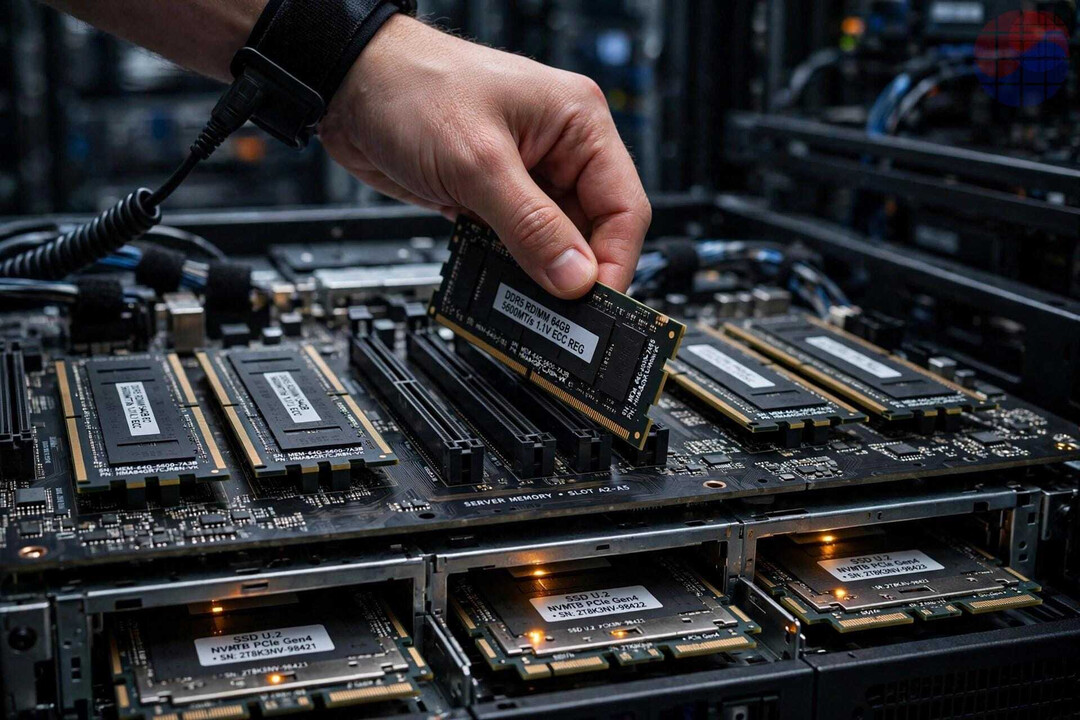
A severe shortage of memory chips is upending long-standing pricing norms in the artificial intelligence hardware sector, forcing server manufacturers to demand steep surcharges on already signed contracts and triggering legal pushback from major buyers.

Leading server vendors—including Dell, Hewlett Packard Enterprise (HPE), Lenovo, and Supermicro—have recently notified clients that final delivery prices will exceed initial contract agreements by 25% to 45%, according to industry sources familiar with the matter. The sudden markups reflect the escalating cost of components integrated into high-performance servers alongside Nvidia and AMD processors.

DRAM Bottleneck Reshapes Contract Norms

The primary catalyst behind the price shock is an acute supply crunch in the memory market. While high-bandwidth memory (HBM) has faced tight supply due to relentless AI data center expansion, shortages have now spilled over into conventional DRAM used in standard servers and personal computers. Analysts at JPMorgan Research project that DRAM prices will climb over 400% between early 2024 and the end of this year.

Consequently, the cost of GPU-equipped servers has jumped by at least 20% to 30%, while memory-intensive CPU nodes have seen prices more than triple. To cope with the volatility, hardware vendors are increasingly abandoning fixed-price contracts in favor of indicative pricing models that allow upward adjustments at the time of shipment.

Quantitative Trading Firms Caught in the Squeeze

The abrupt price revisions have heavily impacted algorithmic and quantitative trading firms, which rank just behind hyperscale tech giants in computing infrastructure spending. Firms such as Jane Street, Optiver, and Hudson River Trading—all of which are building proprietary data centers to power market research—have faced significant gaps between quoted and final billing amounts. Because securing computing capacity is critical to maintaining a competitive edge, most financial buyers have reluctantly absorbed the extra costs.

Legal Battle Erupts Over Fixed-Price Guarantee

However, not all customers are willing to absorb the unscheduled hikes. UK-based algorithmic trading firm XTX Markets initiated legal proceedings against Dell in Ireland this past June over a disputed server order destined for its new data center in Finland.

Court documents reveal that XTX had agreed to a $549 million supply contract and paid an extra $5 million fee specifically to guarantee a fixed price. Dell subsequently demanded an additional $62 million to $70 million prior to delivery, citing rising component expenses. XTX claims Dell executives pressured the firm to settle, while Dell has declined to comment as the case remains before the court.

Winners and Losers in the Supply Chain

The ongoing pricing friction highlights a shifting balance of power across the tech supply chain. Data center operators and AI service providers face mounting capital expenditure pressures, while server assemblers must navigate tighter margins depending on their leverage with clients. Meanwhile, dominant memory chipmakers—most notably South Korean giants Samsung Electronics and SK Hynix—stand to gain substantial pricing power and earnings upside as the global race for AI infrastructure shows no signs of slowing.

[Copyright (c) Global Economic Times. All Rights Reserved.]

  • #Cherry Garden
  • #HalalFood
  • #Halal
  • #Petlife
  • #Cats
  • #Dogs
  • #Halalhorizone
  • #Hormuz Impasse
  • #Joseon
  • #globaleconomicti
Nathan Ko Special Correspondent

Popular articles

  • LG Electronics and Skyscanner Partner to Bring Smart Travel Planning to Living Rooms

  • KakaoBank Expands 'Global Territory' by Becoming Second-Largest Shareholder of Mongolia’s M Bank

  • South Korean Authorities Launch First-Ever Statutory Probe into GS E&C Security Breach

I like it
Share
  • Facebook
  • X
  • Kakaotalk
  • LINE
  • BAND
  • NAVER
  • https://www.globaleconomictimes.kr/article/1065568947201349 Copy URL copied.
Comments >

Comments 0

Weekly Hot Issue

  • Beyond the Pink: Why Meat Color Doesn't Tell the Whole Food Safety Story
  • “Don’t Just Stick to Olive Oil”… The Nutty Oil That Lowers ‘Bad Cholesterol’
  • Beyond the Address: Integrated Jin Air’s Busan Move Hinges on Workforce and Core Operations
  • South Korea’s Chip-Fueled Boom Deepens Economic Divide as Domestic Spending Lags
  • Siheung Turns Parking Lots and Factory Roofs into 16 GWh Solar Powerhouse
  • ‘False Springs’ Double in South Korea, Threatening Honeybees and Future Fruit Supplies

Most Viewed

1
Exercise Beats Diet in Extending Lifespan, Major Review Finds
2
South Korean Burger Chain Lotteria Expands Singapore Footprint with Halal Certification and New Teriyaki Lineup
3
AI Semiconductor Stocks Plummet: Philadelphia Index Drops 5.28% and Micron Plunges 7.59% Amid Executive Shakeup and Export Restrictions
4
"Stay Out, Get Paid, or Have Police Stay With You": Shenzhen Imposes Strict Security Ahead of APEC Summit
5
Taiwan Bans Short-Selling Below Previous Close Starting Nov. 23, Raises Margin Ratio to 150%
체리가든 스토리
nutri huevos
로타리
동포저널

Hot Issue

Elon Musk and SpaceX Pledge $18.35 Billion Stock Giveaway for U.S. Minors

U.S. Compute Restrictions and Anti-Distillation Crackdowns Slow China’s AI Race

Nvidia CEO’s Reinstatement Sparks Fierce Cabinet Divide and Chip Export Fallout

Fashion Runway Show 2026

Let’s recycle the old blankets in Jeju Island’s closet instead of incinerating them.

Global Economic Times
korocamia@naver.com
CEO : LEE YEON-SIL
Publisher & Editor : KO YONG-CHUL
Registration number : Seoul, A55681
Registration Date : 2024-10-24
Youth Protection Manager: KO YONG-CHUL
Singapore Headquarters
5A Woodlands Road #11-34 The Tennery. S'677728
Korean Branch
Phone : +82(0)10 4724 5264
#304, 6 Nonhyeon-ro 111-gil, Gangnam-gu, Seoul
Copyright © Global Economic Times All Rights Reserved
  • News K
  • 반달곰 프로젝트
  • 광고문의
Search
Category
  • All articles
  • Synthesis
  • World
  • Business
  • Industry
  • ICT
  • Distribution Economy
  • Well+Being 
    • 전체
    • Pet Life
    • Halal Horizon
  • Travel
  • Eco-News
  • Education
  • Korean Wave News
  • Opinion
  • Arts&Culture
  • Sports
  • People & Life 
    • 전체
    • International Student Report
    • With Ambassador
  • Column 
    • 전체
    • Cho Kijo Column
    • Cherry Garden Story
    • Ko Yong-chul Column
    • Kim Bong-seon's Photo Column
    • Kim Seul-Ong Column
    • Lee Yeon-sil Column
    • Professor Lee Soo-young’s Life Essays
  • Photo News
  • New Book Guide
  • Overseas Koreans
  • Multicultural News