![[등록] 2026-09-01 15:48:31](/support/_updata/banner2/tl181982910_6749.png)


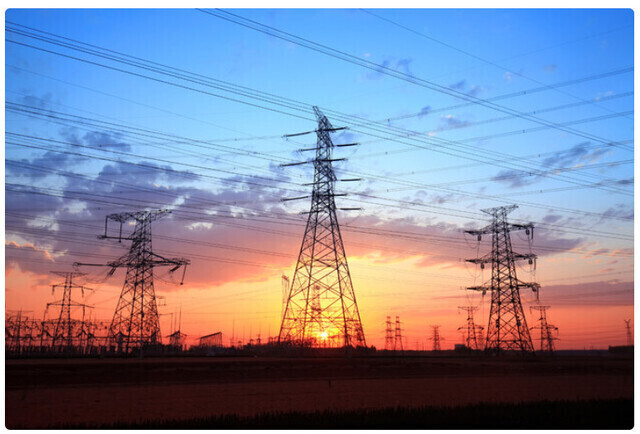
As the surge in electricity bills intensifies across the United States, state governments and political circles are on high alert. New York and Georgia, in particular, are showing divergent responses to electricity price hikes, escalating the debate over consumer protection. With astronomical power demands from proliferating data centers intertwining with the costs of rebuilding aging power grids, experts warn that electricity prices will rise above inflation for the next few years.
New York State, 'Leading the Way' in Consumer Protection with Strong Regulatory Legislation
New York State is actively responding to the soaring electricity bill issue with proactive regulatory policies. The New York State Legislature recently pushed for a strong regulatory bill on electricity price increases, which passed the Senate and was sent to the Assembly. This bill includes provisions to designate additional Public Service Commission (PSC) members as consumer advocates and to mandate refunds to consumers if utility companies exceed their allowed profits. This move is interpreted as an effort to curb the excessive profit-seeking of utility companies, which has been pointed out as one of the primary causes of electricity price increases.
Furthermore, the New York State bill expands the scope of consumer compensation by allowing the PSC to consider the mental and economic stress consumers experience due to power outages caused by utility companies' illegal activities. A clause extending the decision period to 14 months to allow for more careful deliberation on electricity price increase reviews is also noteworthy. Currently, New York's electricity rates are the eighth highest in the nation, and over 1.2 million gas and electric customers are delinquent on their bills for at least two months. Against this backdrop, utility companies are forecasting additional double-digit percentage increases, making the New York political circles keenly aware of the need for strong consumer protection measures. The New York State government and legislature prioritize alleviating consumer burdens, and attention is drawn to the final passage of related bills.
Georgia, Limited Response and the Shadow of Vogtle Nuclear Power Plant
In contrast, Georgia's response to electricity price increases is assessed as limited compared to New York. According to a New York Times report, the anger of Georgia residents over high electricity bills has reached an extreme, which is expected to significantly impact this year's Public Service Commissioner election. Georgia's electricity rates have surged by 33% over the past two years. This is due to the Georgia PSC approving six rate increases for Georgia Power.
The chairman of the Georgia Senate Finance Committee introduced legislation to establish a lawyer to represent consumers in legal disputes and a bill for additional charges on data center electricity bills, but unfortunately, it did not achieve significant results. Although the Georgia governor signed a three-year rate freeze agreement with Georgia Power, it is criticized as a measure taken after a substantial increase had already occurred.
The massive construction costs of the Vogtle nuclear project critically influenced Georgia Power's cost increases. This project was completed at an astronomical cost, three times the original estimate, and was heavily supported by the Georgia PSC. Consequently, these enormous construction costs are being passed on to consumers through increased electricity bills. In Georgia's case, the failure to address the fundamental causes of electricity price increases, coupled with a lukewarm response, has further exacerbated consumer dissatisfaction.
Root Causes of Soaring Electricity Bills: Aging Infrastructure and Exploding Data Center Demand
Industry experts analyze that U.S. electricity rates will increase at a rate exceeding inflation for the next few years. This is not simply because green power plant construction is expensive, but because the costs of rebuilding aging power systems and building all new power plants to meet surging electricity demand have risen.
In particular, the explosive increase in data center demand is pointed out as a key cause of rising electricity bills. The development of artificial intelligence (AI) technology and the acceleration of digital transformation have geometrically increased the need for data centers, demanding a more robust power grid and incurring additional infrastructure upgrade costs. According to the Korea Energy Economics Institute, Georgia Power stated that 80% of its upward adjustment in load forecasts was due to data centers. Furthermore, data centers are expected to account for 14% of U.S. industrial electricity demand by 2027.
Considering the current political situation, there are concerns that consumers, rather than those primarily responsible for the cost increases due to rising electricity bills, are likely to face an excessive proportion of the burden. In Georgia's case, whether consumer anger will be strong enough to elect a Democrat to the PSC for the first time since 2007 is a major point of interest. The issue of electricity bills is emerging as a critical matter that could even shake the political landscape. It is time for U.S. state governments and political circles to redouble their efforts to devise fundamental solutions to alleviate consumer burdens and establish a sustainable electricity supply system.
[Copyright (c) Global Economic Times. All Rights Reserved.]